A bonus buy pays for access to a slot’s bonus round, while the round’s rules and outcomes remain part of the game.
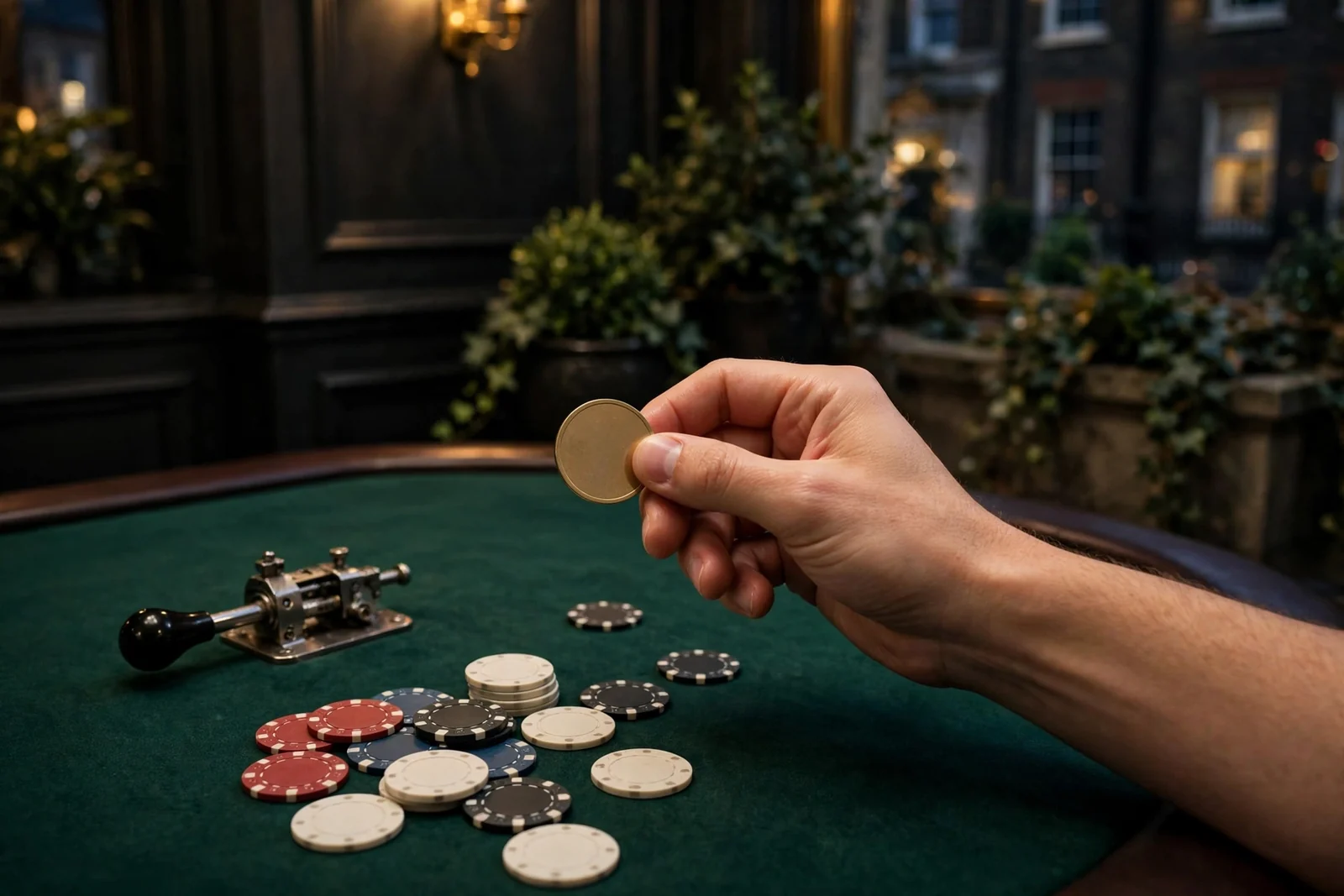
A bonus buy is an in-game option that lets a player pay to enter a slot’s bonus round rather than waiting for ordinary spins to trigger it. The purchase changes the route into that feature; it does not turn the slot into a different kind of game. The bonus round still belongs to the game’s own design, with its own rules and possible outcomes.
That distinction matters because the word “bonus” is asked to do several jobs in casino language. On a slot screen, it can refer to a special game feature. On a casino’s promotions page, it can mean a reward offered by the operator, such as bonus funds or free spins. A bonus buy is the first kind: a paid choice within a game. It is not a welcome package, a no-deposit slot bonus or a gift for opening an account.
The purchase is not a promise of a particular result. Paying to enter a feature gives access to that round, not certainty about what it will produce. Nor does the phrase “bonus buy” establish a standard price across games. The cost, where the option exists, is part of the individual game’s setup; the label alone does not settle it.
When exploring bonus buy casinos in the UK in 2026, consider the practical details alongside the games and offers. This reference highlights the payout speed available for each listed operator.
Zombillion
Zombillion lists a payout speed of 1–3 business days, a useful detail to consider when assessing its fit.
Amunbet
Amunbet lists a payout speed of 1–3 business days. This gives readers a clear point of reference when considering the operator.
Britsino
Britsino's stated payout speed is 1–3 business days, providing a practical detail for readers comparing their options.
Chanze
Chanze lists a payout speed of 1–3 business days, which may help readers assess its convenience.
SpinFormula
SpinFormula lists a payout speed of 1–3 business days. It is a useful practical detail to keep in mind.
Dieselwin
Dieselwin's listed payout speed is 1–3 business days, giving readers a concrete detail to consider.
NightLuck
NightLuck lists a payout speed of 1–3 business days, a relevant point when considering the operator.
Jetsetspins
Jetsetspins lists a payout speed of 1–3 business days. This provides a straightforward reference for readers.
x3bet
x3bet's stated payout speed is 1–3 business days, a practical detail for readers weighing their options.
WinBeast
WinBeast lists a payout speed of 1–3 business days, which readers can factor into their decision.
This is also why “slots with bonus buy features” is a category, not a dependable description of every title in a casino lobby. A casino site may carry games that include the option, but the words do not tell which games are available, whether the feature is enabled, or what the purchase costs. Those details belong to the specific game and its current presentation.
The basic idea behind the feature is direct: instead of relying on the slot’s ordinary play to reach a bonus round, the game offers a paid route to it. That can make the bonus element more immediate, but it does not remove the uncertainty built into the round. The purchase price and the outcome are separate matters.
“Bonus buy slot” therefore describes a slot with an optional way to access its bonus feature, not a slot that pays a bonus simply for being played. The distinction is small in wording and large in meaning. One is a game mechanic; the other would suggest a promotional reward, which is a separate arrangement between a casino and its customer.
The name can sound broader than the feature is. It does not mean that every slot has a buy option, that every casino carries the same games, or that a purchase guarantees a win. It identifies a particular route into a game feature. No more than that.
A bonus-buy feature sits inside a slot, but its online setting is shaped by rules that apply to the game as a whole. In Britain, an online slot cannot be treated as a continuous stream of rapid wagers: each spin must last at least 2.5 seconds. Autoplay is banned, so a game cannot automatically start one spin after another without a fresh action from the player.
That changes the pace around any in-game feature. A slot may offer a way to enter a bonus round, but the surrounding play remains subject to the same limits as other online slots. The rules do not disappear because a game labels an option as a bonus, or because the feature is presented as a shortcut to a different part of the game. There is no separate fast lane.
The restrictions reflect a wider British approach to online gambling: pace and repeated play are treated as matters for regulation, not merely as design choices left to a game maker. The minimum duration makes each spin take time; the autoplay ban prevents a sequence from running on its own. Neither rule says how a particular bonus-buy button must look or what a specific game must charge. Those are questions about individual titles, not the general online framework.
There are also limits on the amount that can be staked on an online slot in a single game cycle. The maximum is £5 for customers aged 25 and over, and £2 for those aged 18 to 24. The lower limit for younger adults is part of the rules for online slots, rather than a special condition attached to bonus-buy games. It belongs to the same regulatory landscape as the spin-duration requirement: the product may vary, but the basic boundaries remain.
The legal framework has a geographical wrinkle. The Gambling Act 2005 applies in England, Wales and Scotland, but not Northern Ireland. For the British market, a remote gambling business taking customers must hold a licence from the UK Gambling Commission; a company’s location does not by itself remove that requirement. Online gambling is legal in the UK at licensed, regulated sites, and the age threshold is 18. The border on a map matters less than the market being served.
That distinction is useful when considering an online casino bonus buy in the UK. The phrase may describe a game feature, but it does not create an exception to the rules governing online slots. Nor does a site’s offshore location make the British requirements irrelevant if it is selling remote gambling into the British market. Licensing is part of the structure, not a decorative badge.
A screen can make a slot feel self-contained, as if its menus and buttons belonged to a private little world. In law, they do not. Spin timing, autoplay and stake limits frame the whole online experience, including the moments when a player is considering a bonus feature. The feature may change the route through a game; it does not change the rules of the road.
The word “bonus” does two different jobs in casino language. Inside a slot, a bonus buy is a paid route to an in-game feature. In a welcome package, a bonus is a promotional reward offered by the casino. The shared label can make the two sound like variations of one offer; they belong to different parts of the experience.
A bonus buy is attached to a particular game. Its cost, where available, is part of playing that slot, and using it does not by itself mean a casino has awarded a new-customer incentive. A welcome bonus, by contrast, is attached to an operator’s promotion and its eligibility rules. It may be credited to an account rather than purchased as a game action. One is a feature within play; the other is a marketing offer around it.
That distinction matters when “bonus buy casino” is used as if it meant a casino hands out a bonus that can be bought. The phrase can point to a casino carrying slots with paid features, or to a promotional reward, but the two should not be collapsed. A player may encounter a bonus-buy slot without receiving any welcome offer, and may be offered a welcome incentive without that incentive having anything to do with a slot’s paid feature.
There is a narrower promotional category sometimes called a no-deposit slot bonus. A specialist review describes offers in which a new user may receive free spins or bonus funds for registering, without making a deposit to unlock them. That is a description of a kind of promotion, not evidence that every casino provides one, or that the offer remains available at any particular moment. The live terms determine what is actually being offered.
The reward itself also differs from a feature purchase. Free spins are promotional turns supplied under an offer; bonus funds are promotional money credited under its conditions. Neither term means that the slot’s own bonus round has been bought. The resemblance is largely linguistic: both may lead to extra activity in a game, but the route by which they arrive is different.
The registration detail is easy to miss. “No deposit” describes the absence of a deposit requirement to unlock the offer; it does not erase other eligibility conditions or turn the reward into an unconditional payment. A registration-based incentive is still a promotion, and its terms define who can claim it and how it is activated. The label alone does not settle those questions.
A specialist review also notes that some no-deposit offers call for a promo code. That is a condition to check in the relevant promotion, not a universal step in registration. If a code is required and omitted, the expected reward may not attach to the account. Equally, the presence of a code does not make the offer a bonus buy: it remains a promotional mechanism, separate from any purchase option inside a slot.
The distinction can be put plainly. A bonus-buy slot feature is encountered within a game and involves a paid in-game choice. A welcome incentive is offered by the casino, may take the form of free spins or bonus funds, and may be available for registration without a deposit. They are not interchangeable currencies, even when both are described with the same inviting word.
That small vocabulary trap has practical consequences. Searching for a casino with bonus-buy slots is not the same as looking for a no-deposit welcome offer, and finding one does not establish the other. The feature belongs to the game; the incentive belongs to the promotion. Different doors, same sign.
A slot’s bonus-buy option and a casino promotion can both carry the word “bonus”, but they belong to different transactions. One is an in-game feature that may be purchased as part of playing a particular slot. The other is an incentive supplied by an operator, such as promotional funds subject to conditions. A wagering requirement attached to the latter does not, by itself, explain the feature’s price or how it works.
That distinction matters when assessing slots where a bonus can be bought. If the purchase is made from a player’s cash balance within the game, it is not automatically promotional bonus money. The conditions on a welcome offer do not therefore automatically set the cost of buying the feature, nor do they necessarily govern its operation. The terms of the particular promotion and the rules shown for the game address separate matters.
The UK framework sets a ceiling for wagering requirements applied to bonus funds. The UK Gambling Commission’s maximum is 10 times the bonus amount. From 19 January 2026, gambling incentives have also been barred from requiring wagering above that same 10-times level on bonus funds. The rule concerns the conditions attached to an incentive; it is not a formula for calculating the cost of a slot feature.
The distinction can be easy to miss in a casino interface. A promotional balance may sit beside cash, and both may be used around the same games, but their conditions need not be the same. A player considering a feature purchase should not assume that promotional funds can be used for it, or that any wagering attached to those funds applies to the purchase. The relevant terms determine what a promotion permits.
For anyone asking whether a bonus-buy slot is legal in the UK, the broader setting matters: online gambling is legal at sites operating under a UK Gambling Commission licence. That does not make every possible promotion or game condition identical. The 10-times ceiling concerns wagering on bonus funds; it does not, on its own, confirm the availability, price or mechanics of a particular slot feature. Those details belong to the game and operator.
Nor does the rule mean that every balance must be wagered before it can be withdrawn. It establishes a maximum requirement for bonus funds when an incentive has wagering conditions. Other terms can still shape a promotion, and the presence of a bonus-buy button says nothing by itself about whether a player has accepted an offer or what that offer requires.
This is where the language of casinos can blur a useful boundary. “Bonus” may describe an advertised reward or a feature inside a slot, but the legal limit is directed at wagering conditions on promotional funds. Treating the two as interchangeable can make a game purchase look like a promotion, or make an incentive’s terms seem relevant to a feature when they may not be.
The number is a ceiling, not a description of every offer. The distinction is the point.
A demo version can seem like a low-stakes way to explore a slot, but the label alone does not explain what happens to its bonus-buy feature. A game may have a feature that can be purchased during real-money play; whether the demo includes that option, and what a click on it does, depends on how that version has been set up. Demo availability and purchase behaviour cannot be assumed from the game’s name or appearance.
That distinction matters. A bonus buy belongs to the game’s design: it is an in-game option, not a free-spin reward or a sum of promotional bonus funds. A demo does not, by itself, turn that option into a casino promotion. Nor does seeing a button in a practice version establish that it is available on a particular casino’s real-money site.
The demo can still help with the parts it actually displays. It may show the game’s ordinary layout, pace and presentation, and, if the feature is present, its on-screen description. That is a look at the interface, not evidence about the value of a real-money purchase or the result it would produce. A practice balance is not a measure of what a feature costs in cash, and a simulated outcome does not promise a future one.
A demo version allows a player to observe the game's layout, pace, and presentation. However, it does not guarantee that the bonus-buy feature is available or behaves the same way in real-money play.
There is a further wrinkle: the word “demo” describes a mode of play, not a standard specification. One version might make a feature visible but not selectable; another might present a different arrangement. Without a clear description from the operator or game provider, it is safer to treat the demo as an illustration of only what it actually shows. A missing button does not establish that the real-money version lacks the feature, just as a visible one does not prove that the casino offers it.
Promotional terms sit on a separate track. A casino’s free spins or bonus funds may carry conditions about eligibility, wagering, excluded games, payment methods and expiry. Those conditions can affect whether winnings are withdrawable; a specialist review has described them as factors to examine. They do not explain how a slot’s own purchase feature works, and they should not be read into a demo simply because both use the word “bonus”.
The useful question, then, is not whether a demo is a preview of a promotion. It is what that particular demo allows someone to observe. If the feature is shown, its displayed rules may clarify the game’s presentation, but they do not settle the terms of real-money play. If it is absent, the demo has little to say about that feature either way.
Practice mode is a window, not a contract. Its limits are part of the picture.
A casino that carries slots with bonus-buy features is offering access to games in which the feature exists; it is not necessarily offering a separate casino reward. The distinction is easy to blur because both are called bonuses. One belongs to a slot’s design. The other is an incentive set by the operator, with its own eligibility rules and conditions.
Nor does a catalogue label establish that every game with the feature is available. A selection can change, and a description of a casino’s range is not a guarantee about any particular title. “Casino slots with bonus buy” is therefore best understood as a description of a category, not a promise that a particular slot will be present or playable under every account condition. The same caution applies to claims about UK slots with the feature: the phrase alone says nothing about the current catalogue.
The word “offer” can make the distinction less clear. In an ordinary promotion, an operator sets a reward and the terms attached to it. A bonus-buy feature, by contrast, is part of a game. A casino may carry slots that include it without granting bonus funds, free spins or another promotional reward. Conversely, a casino promotion does not establish that any particular game has a bonus-buy option.
A specialist review describing one live casino promotion makes the practical point: the promotion’s current terms determine the reward, who can qualify and the significant conditions. Those details belong to that promotion, not to the category of games. They can change, so a past description cannot stand in for the live terms. Dry distinction, important consequence.
This matters when a casino is described as having “bonus-buy slots”. The phrase may indicate a feature found in some games within its catalogue; it does not say that every title has it, that it is available in every version of a game, or that the casino is supplying an incentive to use it. Those are separate claims and need separate evidence. In the British market, an operator offering real-money gambling must hold the relevant UK Gambling Commission licence; that regulatory status does not itself confirm a game’s mechanics or a promotion’s contents.
For the same reason, a list presented as the best slots with bonus buy in the UK cannot be assessed from the category label alone. A meaningful comparison would need identifiable games and substantiated details about them. Without those, a ranking would turn a broad catalogue description into a claim about specific products. That is more confidence than the wording can bear.
The useful boundary is simple: a casino may make games available, while a promotion may offer a separate reward. Availability does not promise an incentive, and an incentive does not promise a particular game. The live promotion and its terms settle the latter’s reward and conditions; the game listing settles only what is presented as available.
“Bonus-buy games” describes a category by an optional feature, not by a shared set of promotional rules. A slot may be associated with a bonus-buy option, while a casino promotion attached to play on that slot has its own eligibility conditions. The two can sit beside one another on the same screen without becoming the same thing.
That distinction matters when promotional funds are involved. A casino may specify which games count towards wagering, and the rate at which each eligible game contributes. A specialist casino review has highlighted the need to check both points. The live promotion’s terms remain the place to establish what applies to a particular offer; a broad label such as “bonus-buy slots” cannot answer it.
Contribution rates affect how much qualifying play is counted towards a promotional requirement. If a game is excluded, or contributes at a different rate from another eligible title, the amount wagered on it may not translate into the same progress. The name of a feature does not settle that accounting. Promotional terms do.
This is why lists of bonus-buy slot games can be less useful than they appear. A list might group games by a feature, but it cannot show whether those titles qualify for a particular promotion today, or how their play is treated under its conditions. Nor does the category itself establish that a game is the latest, better than another, or available at every casino. Those are separate claims, and each needs its own basis.
The same restraint applies to requests for free bonus-buy games. “Free” can describe a promotional arrangement, while the bonus-buy label describes a slot feature. One does not establish the other. Where an offer provides promotional funds or spins, its own terms determine which games are eligible and how play contributes. A game’s association with bonus buys is not a substitute for those terms.
Branding can make categories feel more stable than they are. Promotional rules belong to the offer, not to a general family of slots. The practical question is therefore not simply whether a title sits among bonus-buy games, but whether the particular promotion recognises it and what contribution rate it assigns. That small distinction can decide whether play counts as expected. Labels are tidy. Terms are less so.
The phrase “slot machine” can make a bonus buy sound like a separate product or a casino-wide offer. It is neither. Where a particular slot includes the feature, the purchase belongs to that game. A free-spin promotion, by contrast, belongs to the operator’s offer and its conditions. The two can involve the same kind of game, but that does not make them the same arrangement.
That distinction matters when considering how to buy a bonus on a slot machine. A bonus buy is not something that can be assumed to exist across a casino’s catalogue, or even across all the slots in a familiar style. Its availability depends on the individual game. Without checking the title itself, a general label such as “slots with bonus buy” says little about what is actually available, or how the feature works.
Promotional free spins follow a different logic. A specialist review has reported that such spins may be restricted to specific slots chosen by the operator. That restriction is part of the promotion, not proof that those games contain a bonus-buy option. A free-spin offer could therefore point to a slot for promotional reasons, while the game’s own features remain a separate matter.
Timing adds another distinction. The same specialist-review account describes free-spin expiry periods as potentially short as three to seven days. That is a deadline attached to an incentive. It does not establish how long a game feature remains available, or say anything about the conditions for using one. Promotional clocks and in-game controls occupy different parts of the arrangement.
This is why “bonus buy casino sites” can be an imprecise way to describe what is being sought. A casino may carry games that include the feature, but the presence of those games does not turn a free-spin promotion into a bonus buy. Nor does a casino’s offer reveal, by itself, whether a particular slot has the feature. The game and the promotion have to be read on their own terms.
The distinction also complicates the idea of cheap bonus-buy slots. A promotional free spin may have no purchase price in the ordinary sense, but that does not make it a cheap version of an in-game feature. They are different things, governed by different conditions. Any price or availability attached to a game feature depends on the particular title; a promotional deadline or eligible-slot restriction describes the offer instead.
A slot’s feature is one matter. The casino’s promotion is another. Short distinction.
A ranking needs more than a familiar label. To call one game the best slot for buying a bonus, there would need to be identified titles and a consistent basis for comparing them. Without that, a list of “top” games would be decoration: confident in format, empty in evidence.
The phrase can also conceal different questions. One person may care about the cost of entering a feature; another may want to compare what the games offer or how they feel to play. Those are not interchangeable measures, and a single winner would depend on which one mattered. No specific slot can be named as the best bonus-buy choice on that basis.
The same restraint applies to casinos. A site’s catalogue is not proof that every game with a bonus-buy feature is available there, or that availability is permanent. A comparison of casino sites would need current, verifiable information about their actual selections. Without it, naming a “best” destination would suggest a certainty the comparison cannot support.
Promotional terms complicate the picture further, though they do not tell anyone which game is best. A specialist review notes that eligibility, wagering rules, excluded games, payment restrictions and expiry conditions can affect whether promotional value is withdrawable. Those conditions belong to the offer, not to a game’s ranking; they should not be mistaken for evidence that a slot’s feature is more attractive.
A careful comparison therefore starts by separating the object being judged. Is it the game, the bonus-buy feature, or a casino promotion attached to play? Each calls for different evidence. A favourable offer does not make every game on a site a leading choice, just as a game’s feature does not establish the value of a welcome package.
There is no honest shortcut from a broad category to a shortlist. Until particular games and products can be compared on stated, relevant grounds, a best-of list would turn absence of comparison into a verdict. That is not a ranking. It is guesswork with headings.
A bonus feature belongs to the slot; promotional bonus funds belong to an offer attached to an account. The shared word “bonus” can make them sound like two versions of the same thing. They are not. A feature is part of a game’s play, while bonus funds are promotional value governed by the offer’s conditions.
That distinction matters when winnings are considered. A feature does not, by its name alone, say whether money can be withdrawn. Nor does a casino’s use of the phrase “bonus buy” establish that promotional funds are involved. The relevant question is whether an account incentive applies, and what its terms say about eligibility and withdrawals.
A specialist review identifies several conditions that can affect whether promotional value or winnings become withdrawable: eligibility rules, wagering requirements, excluded games, payment-method restrictions and expiry. These conditions concern the offer, not the meaning of a slot feature. A game may be available while an incentive does not apply to it; a payment route may appear in a cashier without qualifying for a particular promotion. The distinction is practical, not merely verbal.
For a promotion involving slots, the terms need to be read as a connected set. Eligibility establishes who can receive it. Wagering rules describe what must happen before withdrawal, while excluded games can limit which play counts. Payment restrictions can determine whether a deposit qualifies, and expiry can end the opportunity to claim or use an incentive. A balance displayed on screen is not, by itself, a statement that the amount is ready to withdraw.
This is also why searching for the best slot bonuses to buy can lead to a category mistake. Comparing game features is different from comparing casino promotions. A feature’s operation says nothing on its own about an account offer; an offer’s withdrawal conditions say nothing about how a game feature behaves. The useful boundary is simple: game rules govern the feature, and promotion terms govern promotional funds and any associated conditions.
The word “bonus” does little work. The terms do.
No. Operators may restrict wagering to selected games or count different games at different rates, so check the eligible games and contribution rates in the offer terms.
They may advertise larger packages, more free spins, broader game access or higher bonus-play stakes, but that does not automatically make them better value. Compare the wagering requirements and other conditions, and check whether the operator is licensed to serve the UK market.
Yes. Online slot stakes are capped at £5 per game cycle for customers aged 25 and over and £2 for those aged 18 to 24. A bonus-buy feature does not exempt a slot from the rules that apply to online slots.
Check which games count toward wagering and at what rate, along with the permitted stake, expiry date and how free-spin winnings are treated. Also check the claiming and wagering deadlines, eligibility rules and whether your payment method qualifies.