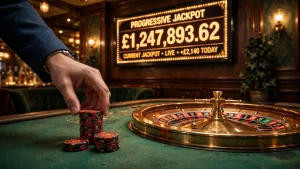
RTP describes a game's theoretical long-run return, while volatility and hit frequency help explain how play can feel from session to session.

A slot’s payout percentage is a theoretical measure of how much of the money wagered on it is expected to be returned as prizes over a very large number of plays. It is commonly called return to player, or RTP. The figure describes the game’s design over time; it is not a promise about what a particular player will receive, or a report of what happened during one visit.
The distinction is easy to lose. A percentage looks precise, and precision has a persuasive air. Yet the figure belongs to a long run of play, not to the next spin. A person can play briefly and receive nothing, or leave with more than was staked. Neither outcome, by itself, proves that the stated payout percentage is wrong. It simply says little about the enormous body of play the measure is intended to describe.
In broad terms, the calculation compares stakes with prizes returned across repeated plays. If the theoretical return is expressed as a percentage, the remaining share is not returned to players in prizes over that same long-run calculation. This is a property of the game’s mathematical design, rather than a record of a particular casino’s takings or a forecast made for an individual account.
Payout percentage is only one factor to consider when choosing online slots; withdrawal speed can also help set expectations. This reference highlights the payout timing information available for each operator.
Zombillion
Zombillion lists a payout speed of 1–3 business days.
Amunbet
Amunbet lists a payout speed of 1–3 business days.
Britsino
Britsino lists a payout speed of 1–3 business days.
Chanze
Chanze lists a payout speed of 1–3 business days.
SpinFormula
SpinFormula lists a payout speed of 1–3 business days.
Dieselwin
Dieselwin lists a payout speed of 1–3 business days.
NightLuck
NightLuck lists a payout speed of 1–3 business days.
Jetsetspins
Jetsetspins lists a payout speed of 1–3 business days.
x3bet
x3bet lists a payout speed of 1–3 business days.
WinBeast
WinBeast lists a payout speed of 1–3 business days.
That distinction matters when people talk about a casino slot machine payout percentage as though the phrase described a typical evening. It does not. A session has a beginning and an end chosen by the player; the theoretical measure has no such boundary. It does not adjust itself to the length of a visit, the size of a player’s stake, or the order in which outcomes arrive. It is an expectation across repeated play, not a settlement figure.
The same applies online. An online casino slots payout percentage may be displayed in a game’s information, but its presence does not turn the number into a personal prediction. It can help explain the game’s stated long-run return, provided the figure is read as a theoretical property and not a promise of repayment. The screen can show a clean percentage. A session remains untidy.
This is why the phrase “online casino payout percentage” can mislead when it is used as if an entire casino had one universal rate. A percentage attached to a particular slot describes that game, not every game offered by the operator and certainly not the result awaiting any one player. A casino may make many games available, each with its own rules and stated return. The relevant figure, where provided, belongs to the game being considered.
Nor does the language of “best” settle the matter. Asking which online casino has the highest payout percentage can combine unlike things: a casino’s collection of games, the return stated for one specific slot, and the outcome a player hopes to experience. Those are not interchangeable measures. A headline about the highest payout percentage online casinos cannot, on its own, establish that every game at a named venue has that return. A comparison is meaningful only when it says what is being compared and keeps the unit of comparison consistent.
The same caution applies to claims about an online casino with the highest payout percentage, or the best payout percentage among online casinos. Without a defined game and a clear basis for comparison, such wording is too broad to tell much. A figure attached to one slot cannot be transferred to the casino as a whole. And a higher stated long-run return, considered alone, cannot tell how a particular session will unfold. That is not a defect in the percentage; it is a limit on what the percentage measures.
An average online casino payout percentage is also not a personal forecast. An average can summarise figures across a group, but it does not identify the return of every game within that group. The selection of games matters, as does the way an average is assembled. A single blended figure may therefore be a poor guide to a specific slot unless its scope is made clear.
For a comparison to be useful, the figure needs its object: which game it refers to, and whether it is a game-specific stated return or a broader summary. Without that context, a percentage can look like a ranking while concealing that different things are being ranked. Neat arithmetic; loose meaning.
The central point is modest but important. A stated payout percentage describes an expected pattern across extensive repeated play. It can help distinguish one theoretical return from another when the figures refer to comparable things. It cannot tell whether a particular session will produce a return, how much it will be, or whether a player will finish ahead. The number is about the game’s long-run design. The session is about what happened this time.
A slot machine does not acquire a single payout percentage by belonging to the slot category. The figure belongs to a particular game configuration. One machine may be designed around a different theoretical return from another, even when both use reels, symbols and a familiar spin interface. “Slot payout percentage” therefore names a comparison, not a standard shared by every machine.
That distinction matters because the visible format can make games seem more alike than they are. A row of reels, a button and a balance display create a recognisable ritual; behind that surface, each game has its own rules and mathematical settings. A familiar theme or similar layout tells little about the return assigned to the game. Appearance is a poor statistician.
The same title may also be offered in more than one return configuration. Where that happens, the percentage associated with the title in one casino may not describe the version available elsewhere. The name on the loading screen is not enough to identify the exact configuration. The relevant figure is the one attached to the version actually offered, rather than a percentage remembered from a review, another casino or an older page.
This makes comparisons less tidy than a table of game names and percentages might suggest. A figure can look precise while the comparison is not like for like: one entry may describe a particular configuration, while another may refer to a title generally. The distinction is easy to miss because the percentage appears to be a property of the game’s name. In practice, it is more useful to treat it as a property of the game as configured.
For a specific slot, the most direct place to look is its information panel, rules or paytable. These materials may state the theoretical return, sometimes under the label RTP or return to player. If the figure is not apparent on the game screen, the operator’s game description or help information may identify it. A percentage quoted without a clear connection to the particular version should be treated cautiously: it may describe a different configuration, or simply leave the comparison unclear.
The paytable has another role, but it should not be mistaken for a substitute for the return figure. It explains the game’s symbols and award structure; the stated percentage describes a broader mathematical setting. Reading one does not automatically reveal the other. A detailed list of possible prizes can make a game look transparent, yet the percentage still needs to be identified separately if the aim is to compare theoretical returns.
A machine with a higher stated return is higher only in relation to another stated return, and only when the figures refer to comparable configurations. This is why claims about the “highest payout percentage slot machines” need careful handling. A ranking can be misleading if it mixes different versions, relies on an unqualified figure, or treats a game title as though it had one immutable setting. The label “highest” sounds conclusive; the underlying comparison may not be.
Nor does a percentage establish that one machine is more entertaining, easier to understand or better suited to a particular taste. Those are different judgements. A return figure is one property of the game’s mathematical design, not a complete description of the experience. It cannot stand in for rules, prize structure or the player’s preferences, and it does not turn a catalogue into an objective league table.
There is also a quiet commercial history in the way these numbers are presented. Slot machines were built to make an abstract calculation coexist with bright symbols and immediate choices. The percentage is the part that can be compared on paper; the machine itself is designed to make the paper feel distant. That is not a reason to dismiss the figure, but it is a reason to ask what exact game version it describes before treating it as a stable label.
So the useful comparison is not between broad families of slots, nor between titles based on names alone. It is between clearly identified configurations whose stated figures refer to the versions under consideration. If a percentage cannot be tied to that precise machine, it is not yet a sound basis for comparing machines. A small qualification with a large consequence.
RTP and volatility often appear beside one another in descriptions of online slots, but they describe different properties. RTP concerns the proportion of stakes a game is designed to return over a very large number of plays. Volatility concerns how that return is distributed: whether results tend to arrive in smaller, more frequent amounts or in less frequent, more uneven bursts.
The distinction is between a long-run measure and a pattern. RTP is expressed as a percentage; volatility is not another version of that percentage. A game can have a relatively high or low RTP and still have a range of volatility profiles. Neither measure replaces the other, and neither tells the story of a particular session.
A slot’s mathematical model combines many possible outcomes, each with its own probability and payout. RTP summarises the expected return across that model over extensive play. Volatility describes something about the shape of those possible results: how widely outcomes can vary and how concentrated the rewards may be. Two games could therefore share an RTP while producing very different experiences. One might return value through modest wins spread across play; another might concentrate more of its potential return in less frequent, larger outcomes.
That difference can be difficult to see in a short run. A session may contain repeated small wins, a long stretch without a notable result, or an abrupt change in balance. Such sequences do not demonstrate that a game’s stated RTP has changed. They are local outcomes within a system whose long-run measure is not designed to describe each short passage through it.
Volatility is sometimes presented through labels such as low, medium or high. These labels can help distinguish broad styles, but they are not a universal scale with identical meaning across every game. The underlying idea is more useful than the label: a more volatile design tends to produce a less even distribution of results, while a less volatile one tends towards a steadier pattern. The terms describe tendencies, not a schedule.
A long-run measure expressing the proportion of stakes a game is designed to return over a very large number of plays.
Describes how the return is distributed, determining whether results arrive in frequent small amounts or uneven bursts.
Combines various possible outcomes and probabilities to define the aggregate return and the shape of results.
This matters because people often read a payout percentage as though it also described the rhythm of play. It does not. RTP cannot establish whether wins will be frequent, whether they will be large, or when they may occur. Volatility cannot establish how much a game is designed to return over the long run. One is about aggregate return; the other, about variation around that return.
The distinction resembles the difference between an average and the route taken to reach it. The same broad destination can be reached through a fairly even series of changes or through sharp rises and falls. In a slot, the destination is theoretical and the route is random; a session may end far from any long-run pattern. A tidy percentage does not make the route tidy.
For comparisons, both measures need to be read on their own terms. RTP can help describe a game’s theoretical return, while volatility gives context about the spread and concentration of outcomes. Neither turns chance into a forecast. They answer separate questions. Not a promise, nor a timetable.
A higher RTP can make a slot look more generous on paper, but it cannot tell anyone what will happen in a particular run of play. The figure describes a theoretical return over extended play, not a schedule of payments owed to each player. A session may end with a return above, below or nowhere near that stated rate. The percentage is a comparison point, not a promise.
That distinction matters when a slot is described as having a high payout percentage. The phrase can suggest a steady stream of wins, or imply that a losing session is unlikely. Neither conclusion follows from the figure. A theoretical return says nothing by itself about when a win will arrive, how large it will be or whether a session will include a result that feels substantial. A slot can have an appealing stated return and still produce an unrewarding stretch of play.
Nor does a higher RTP necessarily mean more winning spins. The percentage concerns the share of stakes theoretically returned over time; it does not count how often a spin wins. A game could return a portion of stakes through frequent small outcomes, or through less frequent larger ones. The headline figure alone does not settle that question. “Pays more” is an imprecise phrase: it may refer to total return, the frequency of wins or the size of a particular prize.
This is why claims about the highest-paying online slots need careful reading. A ranking can only compare figures presented on a consistent basis, and the number at the top cannot establish that the slot will be the most rewarding choice for an individual session. Without the underlying game information, a broad claim about the best high-RTP slots is little more than a label. No list can turn a long-run measure into a forecast.
The same caution applies to the question of whether online slots have higher payout percentages. “Online slots” is a broad category, not a single game with one shared return. A category-wide claim needs a clear comparison and a defined basis; otherwise it blurs differences between individual games and treats a label as evidence. A high percentage can be useful for comparing stated returns, but it does not prove that one session will deliver more wins than another.
The number also does not make a game harmless or remove the possibility of losing the amount staked. That is the quiet limit beneath every attractive percentage. The figure can describe a theoretical tendency across extensive play; it cannot offer certainty to the person playing now. A favourable statistic remains a statistic. It is not a receipt for future winnings.
A payout percentage attached to an online slot is useful only when it can be tied to the game actually being offered. A comparison that presents a figure without identifying the relevant game, or that treats one percentage as applying to every version, gives a cleaner picture than the facts warrant. In the UK, responsible comparisons should distinguish an operator’s general claims from the information shown for a specific game, and should not turn a long-run measure into a promise about a player’s session.
The regulatory setting matters because a slot offered for real money to customers in Great Britain must sit within the UK Gambling Commission’s licensing system, wherever the operator is based. The Gambling Act 2005 governs gambling in England, Wales and Scotland; it does not cover Northern Ireland. Online gambling is legal in the UK at licensed and regulated sites, and players must be aged 18 or over. Operators must verify age before allowing a customer to deposit.
The rules also shape the experience around the percentage. Online slots cannot use autoplay in Britain, and each spin must last at least two and a half seconds. The maximum stake per game cycle is £5 for customers aged 25 and over, and £2 for those aged 18 to 24. A figure in a comparison therefore sits inside a regulated product, not outside the conditions under which the game is played.
There are further protections around funding and limits. UK-licensed casinos cannot accept credit cards for gambling, including through a money-service business, and cannot accept wallet payments where credit-card funds can be used to gamble. New customers must be prompted to set a financial limit before their first deposit, with account-level limit controls available. Licensees must also provide responsible-gambling tools, including self-exclusion, an internal complaints process and access to an approved alternative dispute resolution service.
These safeguards do not make a payout percentage a forecast. Nor does a UK label alone tell what return applies to a particular slot. A useful comparison states the game-specific figure and makes clear what it covers; it does not imply that a higher displayed percentage guarantees a better result in a short session. The rules govern operators and play conditions. They do not repeal chance.
A related caution applies to keno, sometimes placed beside slots in casino comparisons. Keno payouts vary between platforms, so the particular game’s paytable, rules and odds should be checked before wagering. A specialist review reports keno house edges ranging from 5% to 40%; the practical warning is that keno can carry an edge of 25% or more. Its spots and draws belong to a different game, but the comparison still needs to show what is being compared.
“Paying out” can describe several different things. A slot may return a share of stakes over a long run, produce frequent small wins, or deliver a session in which the balance rises and falls sharply. Those descriptions are related, but they are not interchangeable. A machine’s payback figure cannot tell how many spins will produce a win, and a count of winning spins cannot show how much money comes back.
Hit frequency concerns how often a spin results in a win under the game’s rules. The word “win” needs care: a payout may be smaller than the stake, so a winning spin does not necessarily leave the player better off. Frequency alone says nothing about the size of prizes or the net result after a sequence of spins.
That distinction explains why one session can feel busy without being profitable. Repeated small payouts may interrupt losses and create a sense of movement, while the balance still declines. A quieter session may have longer stretches without a return, followed by a larger prize. Neither pattern, on its own, establishes the slot’s long-run payback.
A session is a slice of play, not a miniature verdict on the machine. Its outcome reflects the particular sequence of random results that occurred, while a stated payback percentage describes a theoretical return across play on a much broader scale. Applying that figure to a short visit would make it sound like a personal allowance. It is not one.
The same caution applies to “average slot machine hit frequency”. Unless the game’s rules define exactly what counts as a hit, the phrase can conceal different things: any prize, a prize that exceeds the stake, or a particular type of feature. A useful comparison therefore needs the game’s own information, not just a frequency label. Otherwise, two apparently similar claims may be counting different events.
Casino hold percentage is another way of describing retained stakes over a period: the amount not returned, considered against the amount wagered. That calculation concerns an aggregate, not what a particular player must lose in a session. The accounting language is tidy; play is not.
A brief distinction is also needed for keno, where payout structures vary between platforms. Keno has a house edge of 25% or more; its paytable, rules and odds should be checked before wagering. Spot selection does not make a draw predictable.
For slots, the useful reading is modest: payback describes a long-run tendency, hit frequency describes how often qualifying outcomes occur, and a session records one particular run of events. None can stand in for the others. The distinction is plain. The experience is not.
An RTP figure is easiest to misread when it looks most precise. A percentage printed beside an online slot appears to describe a result with tidy certainty; in fact, it describes the game’s designed return across play over time, not the outcome waiting for any particular spin or session.
The wording around the figure matters. “RTP” means return to player, while “payout percentage” is often used for the same kind of measure. Still, labels should be read in context: the game information should make clear what the percentage refers to. A number without that context is less useful than it looks.
The figure is not a personal forecast. It does not say what a player will get back after a chosen stake, nor does it set a schedule for returns. A session may finish far above or below the stated rate. The percentage cannot tell when a return will occur, or whether one will occur during a particular spell of play.
That distinction is easy to lose because percentages belong to the language of accounts and summaries. They make a game seem as though it can be balanced like a household budget: money in, a known share out. But an RTP figure is a theoretical description of the game, not a promise that the difference will settle neatly for each person. The arithmetic belongs to the design; the session belongs to chance.
When comparing online slots RTP figures, the first task is to compare like with like. The figures need to refer to the same measure and to the specific game being considered, rather than to a general claim about slots. The surrounding game information is where the meaning of a displayed percentage should be checked. A prominent figure on a promotional page is not a substitute for details attached to the game itself.
There is also a difference between understanding a percentage and using it as a verdict. A higher stated return can be relevant to a comparison, but it cannot establish what a particular session will feel like or deliver. “Best” therefore needs a defined meaning: the largest displayed RTP is one narrow comparison, not a complete account of a game.
A useful reading is both literal and restrained. Take the percentage as a long-run property of the game, check what the label refers to, and leave individual outcomes outside its reach. No percentage can do that last bit of work.
RTP describes the share of stakes a slot is designed to return over time. House edge describes the remainder: the game’s theoretical advantage for the casino. They are two readings of the same relationship, not separate forces acting on a spin. If one figure rises, the other falls.
That makes the house edge a useful companion to RTP, but not a measure of what an operator will earn from a particular player or session. It is a theoretical rate applied across play over the long run. Actual results can sit far from that expectation, especially across a short stretch of play. The edge is not a fee visibly removed from every stake, nor a prediction that a fixed share of each deposit will be lost.
The term “hold” can add a little confusion. In casino language, hold may refer to the portion of money wagered that remains with the casino over a period of play. A slot’s stated theoretical edge, by contrast, comes from its design. Actual hold can differ because real play is finite and outcomes vary. The two measures may point in a similar direction, but they do not describe the same thing.
A stated slot hold percentage therefore needs context: is it a theoretical game figure, or a record of actual results over a particular body of play? Without that distinction, a percentage can look more exact than the evidence behind it. The arithmetic is neat. The experience is not.
Figures should be checked against the individual game’s paytable, rules and odds before any wagering; payout arrangements vary between platforms. This matters especially for keno, whose house edge is 25% or more. Its paytable and rules can differ by platform, so a general statement about one game cannot safely stand in for another.
House edge is the theoretical advantage the casino holds, representing the remainder of the stakes not returned to players. It is the opposite side of the RTP calculation: if the RTP rises, the house edge falls.
In practical terms, RTP is the return side of the calculation; house edge is the casino’s theoretical share. Neither tells how a session will end, and neither turns a game into a predictable exchange. The casino advantage is built into the terms, not announced in the timing of an individual result.
An average payout figure is useful only when its scope is clear. It describes a long-run expectation for a particular game configuration, not a result that every player, or every session, should receive. The word “average” can sound like a promise of balance: losses on one stretch, returns on another, with the account eventually settling near the displayed rate. Random play offers no such timetable.
A stated average slot payout percentage can therefore be accurate as a description of the game’s theoretical return and still say little about what happens during a short run. The gap is not necessarily evidence that the figure is wrong. It reflects the difference between a statistic across extensive play and the small sample formed by an individual session. A handful of spins cannot be expected to reproduce a long-run average.
The label also needs to refer to the actual version being played. A percentage attached to one configuration cannot safely be carried over to another merely because the games look alike or share a title. A comparison that omits this distinction may make unlike figures appear directly comparable. Precision in the decimal places cannot repair imprecision in the description.
That is the practical test for claims about average online slots RTP: does the figure identify the game and the version to which it applies, and is it presented as a long-run measure rather than a forecast? Where the basis is unclear, the number may be difficult to interpret, even if it looks exact. A clean percentage is not the same thing as a complete explanation.
So, are online slot payout percentages accurate? They can be meaningful descriptions of theoretical averages, but their usefulness depends on what exactly they describe. They do not certify that a particular session will track the average, nor do they reveal when a return might occur. The number has a proper job; prediction is not it.
There is a social comfort in averages: they turn disorder into something that looks settled. In gambling, that comfort can be misleading. The figure may describe the game faithfully while remaining a poor guide to any one stretch of play. Accurate, perhaps. Personal, no.
A slot’s win rate describes how often spins produce an outcome classed as a win. RTP describes the share of stakes the game is designed to return over time. The figures answer different questions: one concerns frequency, the other value.
A spin can register as a win without returning the full stake placed on it. Conversely, a less frequent prize can be large enough to contribute substantially to the game’s overall return. The label “win” therefore needs care: its exact meaning depends on how results are counted, while RTP is not a count of winning spins.
This is why a high online slots win percentage does not, by itself, establish that a game returns more money. Frequent small prizes may create a steady sequence of apparent successes, yet the total returned can still be lower than the total staked. A game with fewer winning outcomes may return a greater share overall if those outcomes are worth more. Frequency alone cannot settle the comparison.
The distinction also matters when a session feels unusually active. A run of winning spins says something about what happened during that run; it does not reveal the game’s long-run return rate. Nor does a slots winning percentage predict how many wins a future session will contain. Random results do not arrange themselves around a convenient schedule.
The two measures can be read together, but neither substitutes for the other. Win frequency gives a rough description of how often prizes occur, subject to the game’s definition of a win. RTP indicates the theoretical return across play over time. Neither tells a player what the next spin will do.
A fuller picture. Not a forecast.
Keno’s house edge can range from 5% to 40%. Online versions usually have a higher house edge, so check the game’s paytable before playing.
No. Keno outcomes are random, and no number selection or strategy guarantees a win.
Select your numbers manually or use a random selection, then choose your bet size before the draw. The available picks and betting options vary by game, so check its rules and paytable.
Choose numbers on a card showing numbers from 1 to 80, set your stake, and wait for the draw. Your winnings depend on how many of your selections match the numbers drawn.
Minimum stakes start at £1.
Yes. Rules, payouts and the number of numbers drawn can vary between games; some also offer side bets such as multipliers. Check the specific game’s paytable and rules.
The number of picks depends on the game. Players commonly can choose up to 10–15 numbers, while some versions allow selections from 1 to 20.