A card can fund a casino account, but it does not change slot play, and debit and credit cards are subject to different rules.
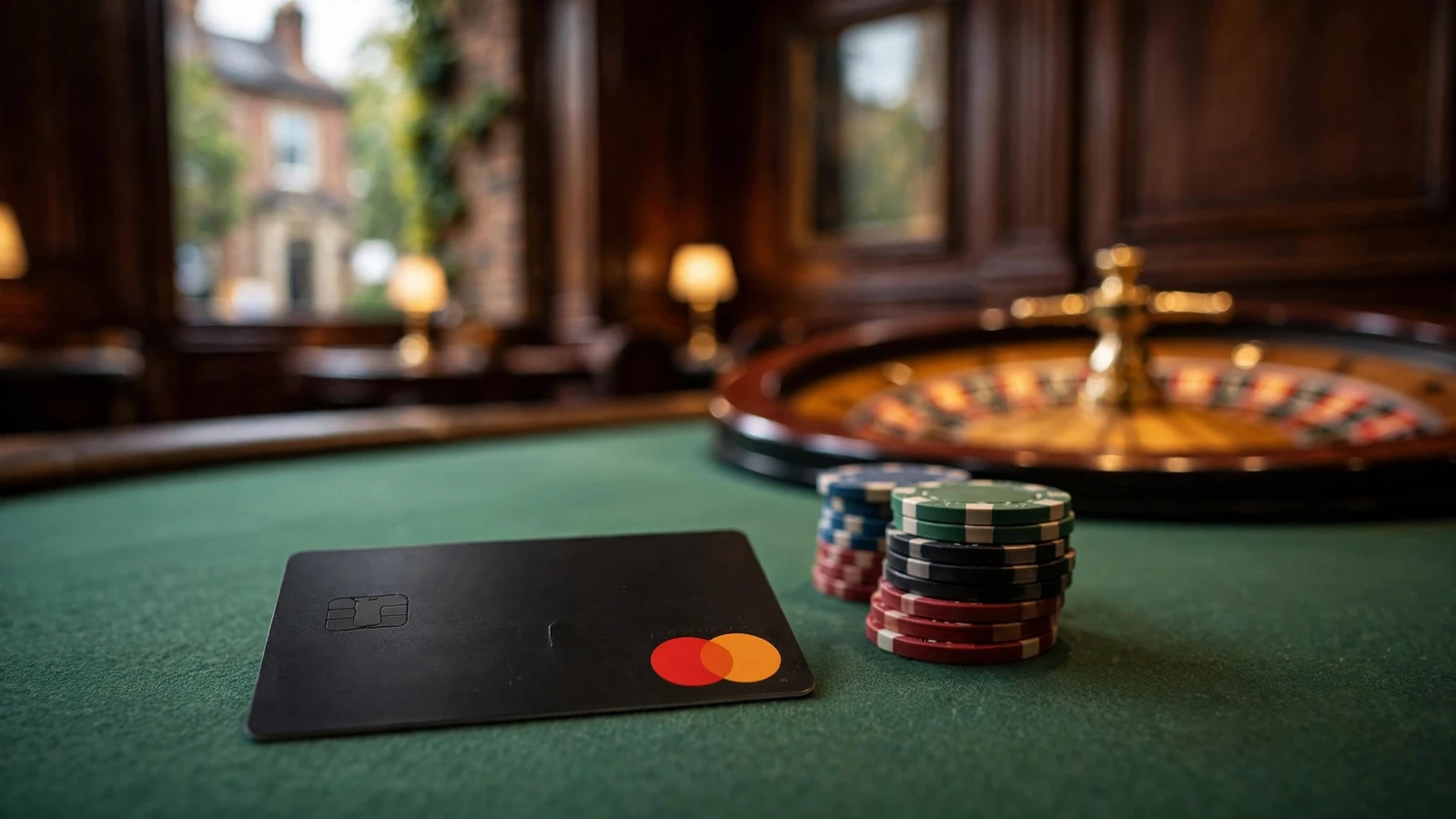
A Mastercard deposit is a way to put money into a casino account; it is not a separate kind of slot play. Once funds have been credited, the payment method does not turn a game into a different product or confer a special status on a spin. The distinction matters because the word “Mastercard” covers different card products, while British gambling rules draw a firm line around which card funds may be used for gambling.
UK casinos commonly accept debit cards, including Mastercard. That makes a Mastercard debit card a familiar route into an online casino account, but acceptance is not a promise that every card carrying the logo will work. The card funds the account; the account is where gambling takes place. A deposit can therefore be understood as the small piece of infrastructure between a bank account and the slot screen, rather than as a feature of the slot itself.
The slot screen, meanwhile, is governed by rules that do not depend on the payment brand. In Britain, online slot autoplay is banned, and each spin must last at least 2.5 seconds. The restrictions make the pace of play part of the product’s design, not a setting that a cashier payment can alter. A card deposit does not make spins faster, remove pauses or offer a different version of the game.
When choosing a UK casino that accepts Mastercard, payment details matter alongside the games. This list offers a quick reference to the payout speed stated for each operator.
Zombillion
Zombillion lists a payout speed of 1–3 business days.
Amunbet
Amunbet lists a payout speed of 1–3 business days.
Britsino
Britsino lists a payout speed of 1–3 business days.
Chanze
Chanze lists a payout speed of 1–3 business days.
SpinFormula
SpinFormula lists a payout speed of 1–3 business days.
Dieselwin
Dieselwin lists a payout speed of 1–3 business days.
NightLuck
NightLuck lists a payout speed of 1–3 business days.
Jetsetspins
Jetsetspins lists a payout speed of 1–3 business days.
x3bet
x3bet lists a payout speed of 1–3 business days.
WinBeast
WinBeast lists a payout speed of 1–3 business days.
There is also a statutory stake ceiling for online slots. For customers aged 25 and over, the maximum stake is £5 per game cycle; for those aged 18 to 24, it is £2. The £5 ceiling for all adults took effect on 9 April 2025. These limits sit on the gambling side of the transaction, not the payment side. A Mastercard deposit does not enlarge them, and the card brand does not decide how a game applies them.
That separation reflects a particular British approach to gambling: payment systems are not treated as neutral pipes once they carry money into a regulated activity. The rules intervene both in the mechanics of play and in the means by which gambling is funded. One intervention is visible in the pace and stake of slots; another is the exclusion of credit cards as a funding route. The same account can bring these rules together, but it cannot make them interchangeable.
The regulator banned credit card gambling on 14 April 2020, and the restriction has not been relaxed. As a result, a casino’s acceptance of Mastercard does not mean that a Mastercard credit card can be used to deposit for slots. The practical meaning is narrower: Mastercard acceptance concerns eligible debit cards, while credit-card payments for gambling are not permitted. This distinction is easy to lose in shorthand, where “Mastercard casino” can sound like a statement about the logo alone.
That shorthand also obscures the difference between opening an account and being able to use it. Remote gambling operators must verify a customer’s age before allowing a deposit. Legal online gambling in the UK is for people aged 18 and over at sites holding a UK Gambling Commission licence. The payment card is only one part of that controlled sequence; it cannot replace the checks required before gambling funds are accepted.
Nor does the presence of a card logo imply that a particular collection of slots is available. A payment method says something about funding, not the catalogue of games, their themes or their mechanics. Those are separate features of the casino account. A request for slots that accept Mastercard therefore compresses two different questions into one: whether an eligible card can fund the account, and what gambling products the operator makes available within it.
The separation is useful, even if it is less tidy than the language of online advertising. Payment branding offers a quick label; regulation insists on the less glamorous detail of card type, age checks and permitted play. On the slot side, the rules shape what can happen after the deposit has arrived. On the payment side, they restrict what may arrive in the first place. Neither can be inferred from the other.
So a Mastercard deposit can be the entry point to online slots when it is made with an eligible debit card and the account meets the operator’s requirements. It does not promise a particular game, alter slot rules or make credit-card funding lawful. The logo is not a licence to play.
A Mastercard deposit is one way to move money into a casino account. Its reach is narrower than the familiar logo suggests: the card brand identifies a payment network, but does not by itself establish which card products an operator will accept, what currency the account uses or what amount the cashier will permit. Those details belong to the account and the payment terms, not to the name printed on the card.
That distinction matters because a deposit is not a general-purpose pass. It funds the casino balance through a particular payment route, subject to the operator’s current rules and the details entered at the point of payment. It does not settle every question about account access or make every card bearing the same brand interchangeable. A specialist review may list Visa and Mastercard among the available methods, but that is a starting point, not confirmation of present eligibility for a UK account. Payment menus change; the account’s own cashier is the more relevant place to check.
There is also a difference between the advertised method and the product behind it. A page may display Mastercard without spelling out which card products it supports. A useful check is therefore not merely whether the logo appears, but whether the cashier accepts the particular card being used. A payment method listed in general terms can still leave an important practical question unanswered. No mystery, just the small print doing its usual work.
Currency is the other detail worth settling before a first transaction. Specialist review pages describe GBP as supported, but the casino account’s own currency should be confirmed before money is sent. If the account is denominated in another currency, conversion may enter the transaction. The amount debited from a bank account and the amount credited to a casino balance may then not correspond as neatly as the displayed figures suggest. Checking the account denomination first avoids treating a currency choice as a decorative setting.
The deposit amount is similarly a matter of the selected method and the operator’s terms. A specialist review gives a broad minimum-deposit range of £10–£20, varying with payment route. That range is not a promise that every Mastercard deposit will fit it: the cashier’s stated minimum is the operative figure for that account and method. It is also not a recommended amount to spend. The minimum describes the threshold for a transaction, not a measure of what is prudent or affordable.
The balance created by a deposit is confined to the casino account. A successful payment does not guarantee that a particular table, feature or game will be available, nor does it alter the conditions attached to account use. The card is the funding route; the casino balance is the result. Keeping those two ideas separate helps explain why a payment logo cannot answer every question about what happens after the deposit.
The account itself sits within a regulated setting. In Great Britain, remote gambling licensees serving customers must hold the relevant UK Gambling Commission licence, and operators must verify a customer’s age before accepting a deposit. New customers must also be prompted to set a financial limit before their first deposit, with account-level controls available. These requirements make the deposit more than a simple card transaction: it takes place inside an account governed by financial and identity controls. The payment method does not replace them.
For a Mastercard-funded account, then, the practical scope is defined by three separate checks: whether the current cashier accepts the card product, which currency the account holds, and what deposit terms apply to that route. The brand alone answers none of them in full. A listing can be useful, but the live account details decide whether a payment can proceed and how it will be recorded.
This is a modest promise. A deposit can fund an account when the route is supported and the transaction is accepted. It cannot make a general listing equivalent to a live payment option, remove the need to check currency, or turn a minimum into a sensible spending target. In online gambling, even a familiar card logo has boundaries.
A Mastercard logo does not tell the whole story. It identifies the card network, not whether the card draws on money already held in an account or provides borrowed funds. At a UK casino, that distinction is decisive: Mastercard acceptance concerns eligible debit cards. A credit card bearing the same familiar mark is not an alternative way to fund gambling.
This can make payment pages look simpler than the rules behind them. A casino may list Mastercard alongside other card networks, but the logo is not a blanket invitation to use every product carrying it. The relevant question is what kind of card is being presented. Debit cards draw on a bank balance or linked account; credit cards draw on a credit facility. For gambling deposits, only the former can be considered under the UK rules.
The regulator banned credit-card gambling on 14 April 2020, and the restriction remains in force. Remote gambling licensees cannot accept credit-card payments for gambling. The rule applies to the payment’s substance, not merely the label shown at checkout: credit-card funding routed through a money service business is not a permitted workaround. A familiar card brand cannot turn borrowed credit into an allowed gambling payment.
That boundary was introduced as a consumer-protection measure. Credit cards can make spending feel remote from the money owed, because the immediate transaction is separated from the later bill. Gambling adds another layer: funds can be staked and lost before the debt is due. The UK restriction reflects a judgment about that particular combination, not a general objection to card payments. Debit cards remain part of ordinary casino payment practice; credit cards do not.
For people wondering whether Mastercard can be used at online casinos in the UK, the short answer is yes, when the card is an eligible debit card and the casino accepts it. UK casinos commonly accept debit cards, including Mastercard and Visa. That broad pattern should not be mistaken for a guarantee about every account, card product or payment attempt. The detailed question of whether a particular card is available belongs to the casino’s current payment process; the underlying legal distinction is stable.
The word “Mastercard” often appears to describe one thing, when it actually names a network used by different financial products. A debit Mastercard and a credit Mastercard may look alike and pass through some of the same payment infrastructure. Yet they are not interchangeable for gambling. The first accesses the cardholder’s own funds; the second extends credit. The payment rules follow that difference.
This is why “Mastercard accepted” should be read narrowly rather than as a promise that any Mastercard will work. It does not mean that credit cards are accepted, nor does the network logo override the ban. A cardholder may be accustomed to using a credit card for ordinary purchases, but casino deposits sit inside a separate regulatory category. The ordinary flexibility of a payment network ends at that line.
Nor does changing the route make a prohibited credit-card payment acceptable. UK rules prevent remote gambling licensees from taking credit-card funds for gambling, including where a money service business is used between the card and the gambling account. The point is not to police the appearance of the transaction while leaving the same source of borrowing untouched. It is to prevent credit-card payments from financing gambling.
The distinction is particularly easy to miss because people often speak of “paying by Mastercard” as if the network alone determined the transaction. In practice, payment identity has two parts: the network and the type of product issued under it. A Mastercard debit card can be a valid casino payment route; a Mastercard credit card cannot. The branding is shared. The regulatory treatment is not.
A refusal at the point of payment may therefore have little to do with the brand itself. The rule does not say that Mastercard is excluded from UK gambling. It says credit-card payments for gambling are prohibited. That difference matters to anyone comparing card options, and to operators that must distinguish permitted debit transactions from barred credit funding. A logo is not a loophole.
There is also a broader social distinction in the rule. Card payments are woven into ordinary commerce, but gambling is not treated as just another retail purchase. The state has drawn a line around the use of borrowed money for betting, leaving debit payments available while excluding credit. The result is less a rejection of modern payments than a limit on what one particular source of money may be used to do.
In everyday terms, the useful dividing line is not Mastercard versus another card brand. It is debit versus credit. Mastercard debit cards are among the debit cards commonly accepted by UK casinos; credit cards cannot be used for gambling deposits, whatever network appears on the front. Simple, but consequential.
A Mastercard deposit and a slot promotion belong to different parts of a casino account. The card is a way to move eligible funds into the balance; it does not, by itself, decide whether a bonus is available, which games count towards its conditions, or how winnings can be withdrawn. Those questions sit in the promotion’s terms.
That distinction matters because payment logos and promotional banners often appear close together on casino pages. Their proximity is not a contract. A site may accept Mastercard deposits while applying separate eligibility rules to a welcome offer or another promotion. The deciding detail is the wording attached to that offer, including any payment-method exclusions and any restrictions on slot play.
A specialist casino review reports that PayPal may be excluded from bonus eligibility, while Skrill and Neteller are available at some sites and are often left out of promotions. Those are observations about particular terms, not a dependable rule for every operator or every offer. Promotion conditions can differ between casinos and can change; the cashier’s acceptance of a method does not establish that funding through it qualifies for a bonus.
The same separation applies to slots. A promotion may define which games contribute to its conditions, or exclude games altogether. Without checking the current offer terms, no particular title can be described as eligible simply because it is a slot, or because the account was funded by Mastercard. Nor does a card payment establish that a casino has a special catalogue of Mastercard slots. The payment method funds the account; it does not create a distinct class of games.
This is why claims about the best Mastercard casino bonuses or games require more than a payment badge. A useful comparison would need current, offer-specific terms and verified game eligibility, not merely a page showing Mastercard among its deposit options. There is no sound basis for treating a broad site label as proof that every bonus, every slot, or every mobile session works on identical terms. The detail is in the conditions.
On mobile, the same principle holds. A casino’s mobile presentation does not change the distinction between depositing and qualifying for a promotion. The payment route may be available through the cashier while a bonus remains subject to its own requirements. Reading the offer before opting in helps separate a funding choice from an agreement to promotional conditions.
Slot play in Britain also sits within rules that do not depend on the card used. Online slot autoplay is banned, and each spin must last at least 2.5 seconds. The maximum stake per game cycle is £5 for adults aged 25 and over and £2 for those aged 18 to 24. These are limits on play, not Mastercard conditions.
A deposit can open the door to the account balance. It cannot settle the small print.
Mastercard is not the only route into a casino balance. Bank transfers, open banking, prepaid vouchers, e-wallets and Apple Pay each work differently, and a method that suits one account may not be offered or eligible on another.
A bank transfer moves money from a bank account to the casino. Open banking can also connect a payment to a bank account, with the transaction authorised through the banking service rather than entered as a card payment. A specialist review describes some sites as supporting instant deposits and fast withdrawals through open banking or bank transfer. That is a reported service, not a promise for every operator or transaction; bank transfers still depend on how the relevant service is set up.
Directly moves money from a bank account; some sites support instant deposits and fast withdrawals.
Deposit-only options, such as Paysafecard, that separate the payment from a bank-card transaction.
Services like PayPal, Skrill, and Neteller that route funds through a separate account, though some may be excluded from bonuses.
Allows deposits using a payment card held within a digital wallet at supported UKGC-licensed casinos.
Prepaid vouchers separate the payment from a bank-card transaction. Paysafecard is a deposit-only option: it can put funds into an account, but it is not a route for taking winnings back out. That distinction matters when choosing a method, since the word “payment” can make deposit and withdrawal functions sound like a single package. They are not.
E-wallets hold or route funds through a separate payment account. PayPal is known for convenience and speed, although a specialist review notes that some operators may exclude it from bonus eligibility. Skrill and Neteller are also offered at some sites; a specialist review reports that promotions may exclude them. These terms can change, so a wallet’s presence does not settle whether it qualifies for a particular offer. UK rules also prevent remote gambling operators from accepting wallet payments where the wallet allows credit-card funds to be used for gambling.
Apple Pay offers another way to make a deposit, using a payment card held in the digital wallet. Some UK Gambling Commission-licensed casinos accept it for deposits. Its availability does not mean it is supported for every account, nor does a deposit option by itself establish how withdrawals work.
The most practical Mastercard alternative depends on the job the method needs to do. A voucher is deliberately limited to funding; a bank-linked service may cover both sides of an account; an e-wallet adds a separate layer between the bank and casino; Apple Pay presents a card through a digital wallet. A method can be swift at the point of deposit and still have different conditions elsewhere.
Payment systems are often presented as interchangeable buttons. They are not. Their differences lie in where funds begin, what the method can support, and whether the casino’s rules allow that route for the intended transaction.
A payment logo on a casino’s website is an indication, not a promise that every customer can use that route. A specialist casino review may list Visa and Mastercard among the available methods, but the live cashier is where current UK availability and eligible card products need to be confirmed. A page can describe the operator’s general offering; the cashier reflects what is presented for a particular account.
That distinction matters because “Mastercard accepted” can conceal several separate questions. Is Mastercard currently displayed as a deposit method for the account? Does the cashier accept the specific card product? Is the account set up in a currency that avoids an unwanted conversion? A general payments page may not answer all three. The practical test is the payment screen reached after signing in, before any deposit is submitted.
The wording on a casino’s pages can also be broader than the actual route. A Mastercard symbol does not, by itself, establish that every Mastercard-branded product is supported, or that availability is identical for all UK customers. Card eligibility can depend on the operator’s current payment arrangements and the details of the account. If the method is absent from the cashier, a logo elsewhere is not a reliable substitute.
Currency deserves a separate glance. Specialist casino pages may state that GBP is supported, but the account currency should still be checked before the first transaction. A sterling card payment into an account held in another currency can involve conversion; confirming the account setting first makes the likely route clearer. The cashier and account profile are more useful here than a generic claim about payment options.
Consistency between the account and the payment route can prevent basic ownership details from becoming an avoidable obstacle. The account information and card should belong to the same customer, with names and other relevant details aligned. This is not a guarantee that a transaction will be accepted, but it removes a straightforward source of mismatch. Payment systems, like paperwork, have a low tolerance for ambiguity.
A careful check therefore means more than spotting a familiar logo: confirm that Mastercard appears in the signed-in cashier, that the particular card product is eligible, and that the account currency is understood. If any of those details remain unclear, the operator’s payment terms or support channel can clarify them before a deposit is attempted. The website’s broad promise and the cashier’s actual menu are not the same thing.
A Mastercard deposit and a Mastercard payout are separate stages, not two halves of one guaranteed service. UK anti-money laundering rules generally call for winnings to be returned to the payment source used to fund the account. That return-to-source approach helps operators trace funds and deter fraud, but it does not mean every card can receive a withdrawal directly.
The route depends on the casino’s payment arrangements and the card transaction itself. If a direct return to Mastercard is unavailable, the operator may ask for another method or further checks before releasing funds. That does not make every alternative automatically suitable: closed-loop rules and identity checks can shape where money can go. The account and payment details belonging to the same person can reduce avoidable ownership questions.
Timing is another matter. A card deposit may appear in an account immediately, while a payout can take several business days. A specialist casino-payment review describes that contrast, but it should not be treated as a fixed timetable for every operator or transaction. A withdrawal involves more than moving money back over the same rails.
The operator first has to approve the request internally. The process may take longer for a first withdrawal if KYC is still in progress. Until an account is fully verified, a request can be held while the operator checks identity or payment ownership. Any time estimate therefore needs to be read as conditional, not as a promise that a Mastercard withdrawal will arrive on a particular day.
This distinction matters when comparing casinos that advertise Mastercard deposits with casinos that support Mastercard withdrawals. A payment logo alone establishes neither the payout route nor its speed. The cashier’s terms should explain whether the card is eligible for withdrawals, whether another route may be required, and what checks apply.
The same caution belongs around claims about casinos operating without a UK licence. A Mastercard option does not make an offshore site part of the UK regulatory system: remote gambling licensees serving the British market must hold the relevant UK Gambling Commission licence. Payment branding says nothing about that status.
Fast in, slower out. A card is a funding rail, not a timetable.
The amount shown in a casino’s cashier is only one part of the cost of a Mastercard deposit. A payment may also involve a charge from the casino, the payment provider, the card issuer or bank, or the card network. Which of these applies depends on the transaction; a listed payment method does not, by itself, establish that it is free.
Currency matters too. If the casino account is not held in pounds sterling, the deposit may be converted, with an exchange-rate spread affecting the amount credited or charged. A specialist payment review notes that this spread can outweigh a visible flat fee. The headline charge is not always the whole price.
There is no universally cheapest route. A fair comparison needs to account for the casino’s charge, any provider or bank fee, the conversion rate and network costs for the particular transaction. A route with no obvious fee can still cost more after conversion; one with a stated charge may have a more favourable overall cost. The arithmetic belongs to the transaction, not the logo on the card.
Deposit thresholds and caps are separate from those charges. Specialist reviews describe minimum deposits in the £10–£20 range, but the amount can depend on the payment method and the casino. Maximum deposits may also differ by transaction, day or month, and can depend on account status. A Mastercard option therefore does not imply that every amount will be accepted. Small deposits, including a proposed £5 payment, need to meet the cashier’s current minimum.
Before paying, the account currency and the displayed minimum, maximum and fees are worth checking together. A pounds-denominated account can avoid a casino-side currency conversion, but it does not rule out charges from the card issuer or other parties. Nor does a fee-free deposit make a payment route the cheapest if its exchange rate is less favourable.
The useful figure is the final cost of the specific deposit: what leaves the bank account, what reaches the casino balance, and whether any charges are disclosed along the way. A fee can be visible. A spread often hides in the rate.
A Mastercard logo in a casino cashier says something about a payment route; it says nothing, by itself, about GamStop. The two belong to different systems. Card acceptance concerns how an eligible customer may fund an account. GamStop concerns self-exclusion from gambling with participating operators. One cannot be inferred from the other.
That distinction matters when searching for Mastercard casinos described as “not on GamStop” or “not covered by GamStop”. Such wording is not evidence that a site is outside the scheme, nor that it is safe or lawful for a UK customer to use. In Great Britain, remote gambling operators serving local customers must hold a UK Gambling Commission licence. UK-licensed casinos must also provide self-exclusion tools. A payment method does not cancel those obligations.
Self-exclusion is an account-control decision, not a cashier setting. A card cannot reopen a closed route to gambling, and changing from one payment method to another does not alter an exclusion. Treating Mastercard as a workaround confuses the movement of money with permission to play. The confusion is convenient for nobody but the advertisement.
For someone considering an account, the relevant checks are the operator’s current licensing status and its stated relationship with GamStop, rather than whether Mastercard appears among its deposit options. If self-exclusion is in force, seeking a casino said to be unaffected by it runs against the purpose of that safeguard. UKGC-licensed operators must provide self-exclusion and accessible account controls; remote operators must also prompt new customers to set a financial limit before their first deposit.
These controls address different risks. A financial limit helps manage spending within an account; self-exclusion is intended to restrict access to gambling. Neither is a payment feature, and neither should be treated as one. Mastercard acceptance cannot establish GamStop participation, exemption, or suitability. The boundary is plain.
Returning money to the original payment source is a common anti-fraud and anti-money-laundering control. Using another route may require extra verification.
PayPal, open banking services and debit cards linked to fast payout systems are generally among the quickest options. The casino’s approval process and your verification status also affect how soon funds arrive.
Common options include Visa and Mastercard debit cards, bank transfers, e-wallets and, at some sites, Apple Pay. Paysafecard is for deposits only, and the available methods can be checked in the casino cashier.
The minimum deposit usually starts at £10–£20, depending on the payment method.
Yes, GBP is supported. Check the account currency before depositing to avoid conversion.
Yes, Skrill is available at some UK-friendly casino sites and is a common deposit option. It may be excluded from promotions.
No. The Visa or Mastercard logo alone does not confirm the card type or eligibility; UK gambling deposits must use an eligible debit card, as credit-card gambling is prohibited. Check that your specific card is accepted in the casino cashier.