Deposits and withdrawals can follow different routes, with payment options shaping how money enters and leaves a casino account.
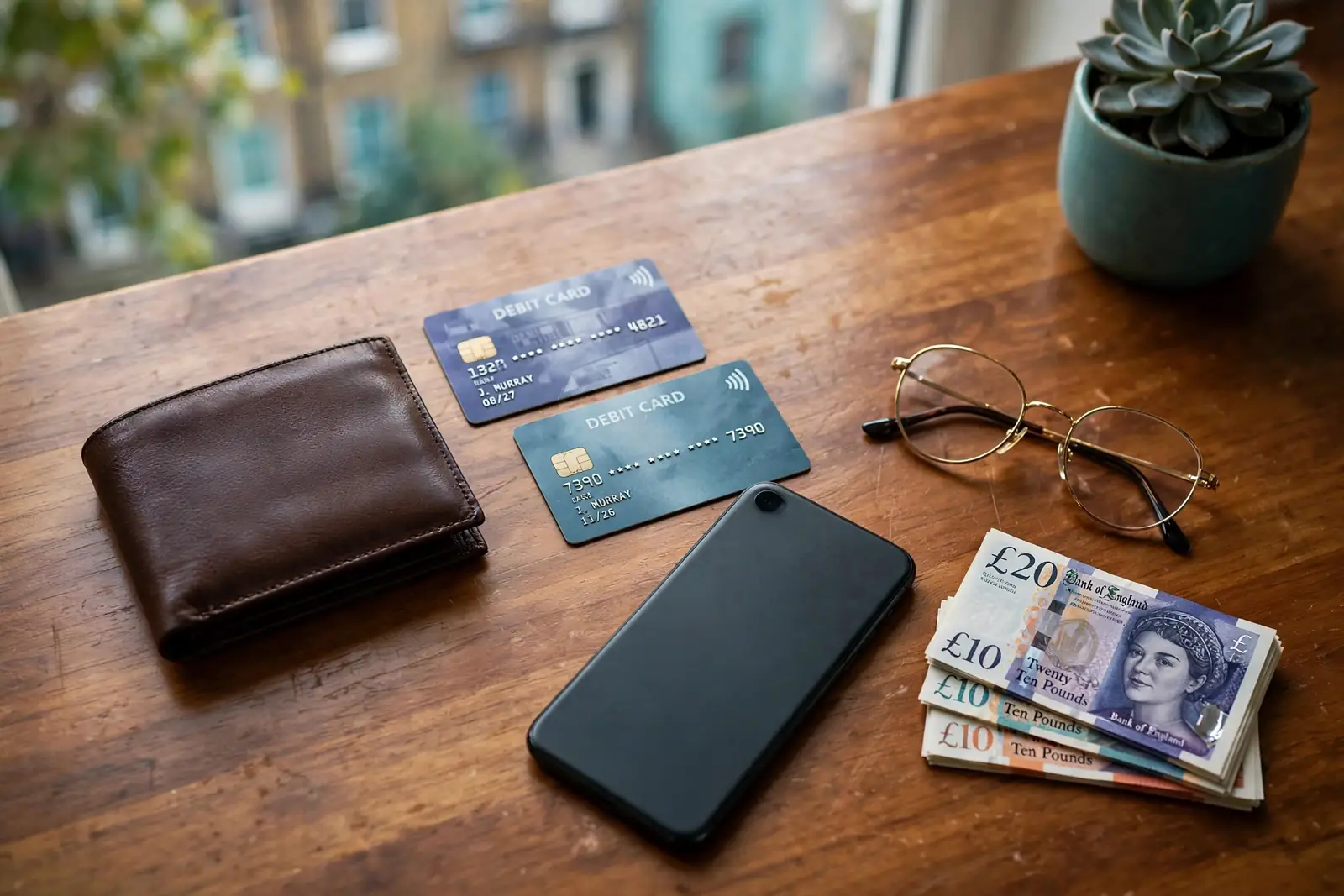
A casino account creates a small financial route: money enters, becomes available for gambling, and may later be requested back. The deposit method is the point of entry; withdrawal is the point at which funds leave the account. That sounds like a simple loop. In practice, the two ends deserve separate attention, because a method shown at the cashier is not automatically a promise about how every later movement of money will work.
The first distinction is between a casino’s games and the account that holds its balance. Choosing where to play is one decision; deciding how to put money into that account, and how to retrieve any balance, is another. Payment methods sit between the player and the operator, but they do not determine whether a game is fair, whether a site is properly licensed, or whether gambling is affordable. Those are separate questions, though the checkout can make them look like one.
In Britain, the legal setting is not incidental. Operators offering remote gambling to customers in England, Scotland and Wales must hold a UK Gambling Commission licence. Online gambling is legal for adults at licensed sites, and a legal casino serving British players must have a current operating licence. The Gambling Act 2005 provides the framework for England, Wales and Scotland; Northern Ireland has a different legal position. A familiar payment logo cannot substitute for that regulatory status. Money may pass through recognised financial services while the gambling operator itself remains outside the British system.
Choosing a casino payment method means looking beyond deposits to how long withdrawals may take. This list highlights the payout timing available for each operator, a useful detail when deciding what suits your needs.
Zombillion
Zombillion lists a payout speed of 1–3 business days, giving you a clear timeframe to consider when assessing its payment options.
Amunbet
Amunbet lists a payout speed of 1–3 business days. This provides a stated timeframe for withdrawals.
Britsino
Britsino lists payouts as taking 1–3 business days, a useful detail when weighing payment options.
Chanze
Chanze gives a payout speed of 1–3 business days, so readers have a stated timeframe to keep in mind.
SpinFormula
SpinFormula lists a payout speed of 1–3 business days. That timing is the available point of reference for its withdrawals.
Dieselwin
Dieselwin lists payouts as taking 1–3 business days, providing a clear withdrawal timeframe.
NightLuck
NightLuck gives a payout speed of 1–3 business days, which is worth considering when reviewing its payment options.
Jetsetspins
Jetsetspins lists a payout speed of 1–3 business days. This offers a stated timeframe for withdrawals.
x3bet
x3bet lists payouts as taking 1–3 business days, providing a concrete detail to consider.
WinBeast
WinBeast lists a payout speed of 1–3 business days, giving readers a stated withdrawal timeframe.
The order of events also matters. Operators must verify a customer’s age before allowing a deposit, and new customers must be prompted to set a financial limit before their first deposit. These requirements place checks before the first movement of funds, rather than treating them as paperwork to be completed after play begins. The account is not simply a container waiting to be filled. It is part of a regulated service, with obligations attached to the operator.
At the other end of the route, a withdrawal request concerns the balance held by the casino, not just the method used to deposit. The two actions may be presented in the same account area, but they answer different questions: what can be used to fund play, and what arrangements apply when money is being taken out. A tidy interface can make these seem interchangeable. They are not.
This is why comparisons of online casino payment methods should begin with the whole journey, rather than a single button. A deposit method is relevant at the moment funds are added; a withdrawal route matters when a balance is leaving. Any claim about one should not quietly be taken as a claim about the other. Nor should a method’s presence be mistaken for a judgement on the operator behind it.
There is one clear boundary in the British market: remote gambling operators cannot accept credit-card payments for gambling. That prohibition also covers credit-card funds routed through a money service business. It reflects a regulatory choice about how gambling is funded, not merely a preference in the design of a cashier. The payment path is therefore subject to rules before it becomes a matter of taste.
The phrase “best online casino payment methods in the UK” can suggest that one route wins for everyone. But a useful comparison starts more modestly: whether the method is offered, whether it fits the intended direction of payment, and whether the casino is operating under the required licence. Those checks do not make every method equivalent. They establish what the comparison is actually about.
The route matters. So does the gatekeeper.
A casino’s deposit menu is more than a row of logos. It marks the routes an account can use, and the gaps between them. One player may want a familiar way to fund play; another may prefer to keep gambling money apart from everyday spending. The labels alone do not settle which option fits. What matters is what each route asks of the player, what it permits afterwards, and whether it is available at the particular site.
That last point is easy to overlook. A method’s existence in Britain does not mean every casino offers it, and a method appearing at registration does not by itself explain the terms attached to its use. The menu belongs to the operator as much as to the payment industry. It can narrow a choice before a deposit is made.
Comparing casino payment options therefore starts with access, not with a winner. Is the chosen method offered to new and existing account holders? Does it suit the way the account is funded? Are there conditions attached to a welcome bonus? Some offers exclude particular deposit methods, and a bonus may be limited to new customers. Those details can make an otherwise available option a poor fit for someone intending to claim an offer. The offer and the deposit method are not separate decisions.
In Britain, the distinction between credit and debit matters particularly. Remote gambling operators cannot accept credit-card payments for gambling, including credit-card funds routed through a money service business. A wallet that allows credit-card funds to be used for gambling is also outside the permitted route. That rule is not a preference hidden in small print; it sets a boundary around the choices available at a licensed casino. Debit cards are not credit cards, but their presence or terms at any particular site still need checking.
Other categories—bank-linked services, e-wallets, prepaid options and mobile billing—answer different practical preferences, but the category name cannot establish availability, fees, withdrawal access or timing. Nor does the word “instant” settle what happens to a transaction from start to finish. The button is only the visible part of a commercial arrangement. The account rules and the operator’s own terms still matter.
A useful comparison also asks whether the route serves only deposits or can be used across the account’s wider money movement. That should not be assumed from the name of a method or from its prominence on a checkout screen. If the intended use is cashing out as well as paying in, the operator’s stated conditions are the relevant evidence. No method should be treated as universally suitable simply because it is widely recognised.
The British framework puts another condition before the payment choice: age must be verified before an operator allows a deposit. New customers must also be prompted to set a financial limit before their first deposit, with account-level controls available. These requirements place the checkout inside a larger system of account oversight. A payment menu is not a substitute for that system, nor does a familiar logo establish that a casino is licensed.
The best payment option for an online casino is consequently not an abstract champion. It is the option that the licensed operator actually permits, whose terms match the account’s intended use, and whose restrictions are understood before money is committed. Choice, here, means knowing what remains possible after the first click.
A phone can be the screen, the account interface and the device used to confirm a transaction. Those roles are easy to collapse into one idea: mobile payment. But paying at an online casino on a phone does not, by itself, say how the money is sourced or which deposit method is involved. The same small screen can host a bank-linked option, a digital wallet or a payment charged to a mobile account. The device is the setting; the funding route is a separate choice.
That distinction matters because “mobile payment” can describe two different things. It may mean making a deposit while using a phone, or it may mean charging the amount to a phone account. The first is about where the transaction is made. The second is about where the charge appears. A casino mobile payment is not automatically a phone-bill payment, just as using a laptop does not define the underlying method.
A mobile-first design can make the route through an account feel continuous: a balance is visible, a payment screen opens, and a confirmation follows. Yet the smoothness of a screen does not establish what the transaction does behind it. The method’s own terms still determine whether it is suitable for a deposit, how it is funded and whether it can be used for later account activity. Interface and payment method are not synonyms.
This separation is particularly important in Britain, where gambling rules attach to the transaction rather than to the shape of the device. Remote operators serving customers in Great Britain must hold the relevant UK Gambling Commission licence. A casino does not become lawful because its site fits a phone screen, nor does an app’s polished appearance establish that the operator is licensed. Mobile presentation is a design choice; legal status is not.
There are also safeguards that remain in place when registration and payment happen on a handset. Operators must verify a customer’s age before allowing a deposit into a gambling account. New customers must be prompted to set a financial limit before their first deposit, and accessible account-level controls must be provided. These requirements can make an early payment screen more than a checkout: it is also a point at which the account’s boundaries are set.
That is a quiet but telling feature of British regulation. The system treats the deposit not merely as a transfer of funds, but as an entry into a regulated gambling account. A phone may compress the steps into a narrow column, but it does not remove the obligations around them. Small screen, full rules.
The word “mobile” can also obscure the funding source. A debit card, a wallet or a phone-account charge may all be encountered through the same handset, but each describes a different route. In particular, a wallet is not exempt from gambling payment restrictions simply because it is digital. UK operators cannot accept wallet payments where credit-card funds can be used for gambling; remote gambling operators also cannot accept credit-card payments for gambling, including credit-card funding routed through a money service business.
This means that the relevant distinction is not phone versus computer. It is the source of the funds and the rules attached to that source. The screen can make several routes look equally close at hand. Their legal and practical character remains different.
A casino with mobile payment options may therefore be described in broad terms, but the phrase alone tells little about the actual choices available in an account. It does not establish that a particular method is offered, that it can be used for every transaction, or that a deposit can be returned through the same route. Those details belong to the operator’s payment terms and account controls, not to the fact that the site is being viewed on a phone.
The same caution applies to mobile slots. A game opened on a phone is still subject to the rules for online slots in Britain. Each game cycle has a maximum stake of £5 for customers aged 25 and over, and £2 for customers aged 18 to 24. Autoplay is banned, and a slot spin must last at least 2.5 seconds. The smaller display does not create a separate version of the law.
Mobile access does change the texture of the transaction. A payment choice is made in the middle of another activity, often with the account and game only a few taps apart. That proximity can make the deposit button feel like part of the entertainment rather than a decision about money. British rules push in the opposite direction: age checks, limit-setting and restrictions on credit funding preserve a boundary between access and spending, even when both fit on one screen.
So “mobile payment” is best understood as a context, not a promise about a particular method. It describes a deposit made through a phone interface, while carrier billing and digital wallets describe distinct ways funds may be routed. The handset brings them together visually. It does not make them interchangeable.
Apple Pay and Google Pay can look like natural choices at an online casino checkout, particularly when a phone is already being used to reach the site. But a wallet is not simply another name for paying by mobile. It is a distinct way of presenting a payment, and whether it can be used for gambling depends on how its funding works as well as whether an operator offers it.
That distinction matters in the UK. Remote gambling operators cannot accept credit-card payments for gambling, and the restriction also reaches wallet payments where credit-card funds can be used for that purpose. A familiar wallet logo does not make the source of the money irrelevant. The rule follows the funds, not the polish of the checkout.
Apple Pay and Google Pay therefore cannot be treated as universally available casino deposit methods. Their presence on a phone, or at other kinds of checkout, does not establish that either one will appear as an option at a particular casino. Nor does a search for online casinos with Apple Pay or Google Pay answer the important question on its own: the operator’s terms and the wallet’s permitted funding arrangements still matter.
The same caution applies when comparing the two. They are separate services, but the practical point for gambling is not which interface feels more familiar. It is whether the operator accepts that wallet and whether the payment route complies with the UK restriction. A checkout button, where shown, is not a substitute for those conditions.
This is where the phone and the payment method are easily confused. A casino may be accessed on a mobile device without using a mobile wallet; conversely, a wallet may be used through an interface that is not unique to a phone. The screen is the setting. The wallet is the instrument. Treating them as interchangeable obscures what the checkout is actually asking the customer to authorise.
The words “Apple Pay casino UK” may suggest a single, settled category, as if every operator either belongs to it or does not. In practice, a payment option is specific to the operator and the circumstances of its use. A casino’s general statement that it accepts wallet payments may not settle whether a particular wallet can be funded in a way permitted for gambling. The terms and the checkout need to be read together.
There is a small cultural oddity here. Digital wallets are designed to make payment feel less like handling money: a tap, a confirmation, a familiar device. Gambling regulation pulls the transaction back into view. It asks what funds stand behind the tap. That is not a technical flourish. It is the boundary that determines whether a wallet payment may be accepted.
For anyone comparing popular online casino payment methods, Apple Pay and Google Pay belong in the wallet category, not in a general basket of mobile features. Their names alone do not establish availability, withdrawal use, fees or processing times. Those details must come from the operator’s own current terms, while the credit-card restriction remains a condition of the UK market.
A convenient button is not permission.
SMS payments, carrier billing and Paysafecard all sit outside the familiar picture of entering bank details at a casino checkout, but they are not interchangeable. One may charge through a mobile account, another may use a prepaid voucher, and the labels shown at checkout can make these distinctions look smaller than they are. The useful comparison is not which sounds simplest. It is what account or balance is involved, and what happens when the casino’s own terms are applied.
Carrier billing places a charge against a mobile account rather than presenting itself as a direct bank transfer. An SMS-based payment may use a text message as part of that arrangement, though the precise process depends on the service being offered. These descriptions explain the category, not a promise that a particular casino supports it. A method’s name in an article or payment guide does not establish that it will appear for every account at every operator.
That distinction matters because a deposit method is a choice made inside a specific service, not a general property of online casinos. A casino may display one set of options while another displays a different one. The checkout, account conditions and payment terms are the relevant places to establish what is actually available. A list of casino payment methods can be a starting point, but it cannot substitute for the operator’s own information.
A charge associated with a mobile account can feel removed from gambling because it does not look like a conventional card transaction. It is still a payment connected to real-money play. The route through which a charge appears does not change the underlying activity, nor does the word “mobile” make the method automatically suitable for every person or circumstance.
The same caution applies to SMS. A text message may be part of the payment route, but that fact alone says little about the terms, the operator’s arrangements or whether the option is available for deposits, withdrawals, or both. Those are separate questions. The name of a method is not a complete description of its limits.
A method is not a safeguard by itself. Safety depends on the licensed operator, the specific account being charged, and the conditions attached to the transaction.
This is one reason “safe casino payment methods” is not a useful category by itself. Safety cannot be read from a button, a text prompt or the absence of bank details on a screen. A familiar-looking route may still leave important questions about the account being charged and the conditions attached to the transaction. A method is not a safeguard.
Paysafecard belongs to a different idea: prepaid value. Instead of drawing directly on a bank-linked account at the point of payment, a prepaid option begins with value acquired in advance. That boundary can help explain why a casino payment with Paysafecard is not the same thing as paying by debit card or through a bank-linked wallet. It does not, by itself, establish how a particular operator handles the method.
For anyone comparing Paysafecard casinos in the UK, the practical question is whether the named option is currently offered in the casino account and what the operator’s terms say about its use. A general reference to Paysafecard does not guarantee that it can be used at a chosen site. Nor does the prepaid label answer questions about withdrawals or other account conditions. These need to be checked separately rather than inferred from the way the deposit is made.
The word “prepaid” can sound like a boundary: money is set aside, then spent. But the label does not settle every question about control or suitability. The payment route should be understood on its own terms, and not mistaken for a promise that spending will be limited or that an account will be protected from every risk.
Carrier billing and prepaid vouchers belong in a broader list of casino deposit methods, but they occupy different places in it. The first is associated with a mobile account; the second with value obtained in advance. Neither is a bank transfer, and neither should be treated as a bank-linked wallet merely because all may appear among checkout options.
For online casinos with Boku in the UK, the same distinction applies: the name of a service does not prove that it is offered by a particular casino, or explain its conditions. Availability and permitted uses need to be confirmed with the operator. Marketing labels are brief by design. Payment terms are where the edges show.
There is also a regulatory boundary around funding. UK remote gambling operators cannot accept credit-card payments for gambling, including credit-card funds routed through a money service business. A wallet that allows credit-card funds to be used for gambling cannot be accepted either. Changing the visible route does not erase the source of the money. The rule is about the funds, not the vocabulary of the checkout.
SMS, carrier billing and Paysafecard therefore call for different questions, even when they appear side by side. The method’s label tells only part of the story. The rest is in the operator’s terms and the actual options offered.
Trustly belongs in the conversation about bank-linked casino payments, but the name alone does not settle what a particular casino offers. A payment brand can appear familiar and still leave practical questions unanswered: whether it is available at a given operator, what account arrangements it requires, and whether it can be used for both deposits and withdrawals. Those details belong to the operator’s terms, not to the label.
That distinction matters because a casino cashier is not a universal catalogue. Its payment options are chosen and presented by the operator, and a method’s presence elsewhere does not establish its availability here. So “Trustly casino” is not a dependable description of a single, standard arrangement. It is shorthand for a possibility that must be checked at the individual site.
The bank-linked part of the description is useful, though limited. It places Trustly in a different conceptual corner from a prepaid voucher or a charge added to a mobile account. It does not, by itself, prove how a payment is authorised, how long it takes, what fees apply, or whether the route can be used when withdrawing. A brand name is not a set of terms.
Nor does a bank-linked route erase the rules governing gambling payments in Britain. Remote gambling operators serving British customers must hold a UK Gambling Commission licence. UK-licensed casinos cannot accept credit-card payments for gambling, including credit-card funds routed through a money service business; wallets that permit credit-card funds to be used for gambling are restricted too. A payment option therefore has to be considered within the operator’s legal obligations, not as a workaround around them.
This also explains why “best online casino payment methods” has no answer independent of the player’s circumstances and the operator’s conditions. A method that appears in one cashier may be absent from another; a deposit facility does not automatically imply a matching withdrawal route. Trustly’s name cannot fill those gaps. The terms do that.
The same care applies to claims about safety. A bank connection is not, on its own, proof that a casino is properly regulated or that every aspect of its payment service is suitable. For a British-facing real-money casino, the UK Gambling Commission’s public register is the relevant place to confirm that the operator holds a current licence. The register addresses the operator’s status, not the fine print of a particular payment method.
Trustly can therefore be treated as a bank-linked option to investigate, rather than a promise of access, speed or withdrawal terms. That is a less dazzling answer than a list of supposed Trustly payment casinos. It is also the more honest one.
Neteller belongs to the e-wallet category: the casino transaction is framed around a wallet account rather than a direct payment from a bank account at the checkout. That distinction is useful, but it does not settle whether Neteller can be used at a particular casino, or whether it can serve for both deposits and withdrawals. Those are operator-specific details, not properties that follow from the name of a payment service.
The boundary matters because “wallet” describes how funds are presented for a transaction, not necessarily where those funds began. A balance may be connected to different funding routes, and the route can affect whether a gambling payment is permitted. In the UK, remote gambling operators cannot accept wallet payments where credit-card funds can be used for gambling. The rule applies to the wallet’s funding capability, not merely to the label shown beside a button.
That makes the checkout more than a menu of familiar logos. A Neteller option, if displayed, is not a blanket statement that every way of adding money to the wallet is acceptable for gambling. Nor does its presence establish that a withdrawal can be sent back through the same route. The casino’s payment terms and the wallet’s own funding conditions need to be read together; a payment method is a relationship between accounts, not a magic tunnel.
This is where e-wallets differ from direct bank-linked services such as the one discussed in the preceding section. One presents a wallet balance as the payment source; the other is linked more directly to a bank account. The distinction is conceptual, not a promise about speed, availability or the path money will take. Those details depend on the relevant provider and casino.
Searches for a Neteller casino payment method often sit beside questions about Revolut. The names should not be treated as interchangeable merely because both may be associated with digital finance. Whether a service is offered as a casino deposit method, and whether its use is allowed under its funding arrangements, must be established for the particular account and operator. A familiar brand is not evidence of acceptance.
For anyone comparing online casino deposit and withdrawal methods, the practical test is therefore narrow: check whether Neteller is listed for the intended transaction, read the casino’s conditions for deposits and withdrawals, and confirm that the wallet’s funding route does not involve credit-card funds being used for gambling. A logo answers only one question. Often not the important one.
PayPal occupies a familiar place in online shopping, but that familiarity does not make its presence at a casino checkout automatic. A search for PayPal casinos in the UK can suggest a fixed category of sites; in practice, acceptance is a matter for each operator and its current terms. No casino should be assumed to offer PayPal simply because it is a recognised online wallet.
The useful distinction is between the brand on the checkout button and the route by which funds reach it. UK rules prevent gambling operators from accepting credit-card payments, including payments routed through a money service business. They also prevent operators from accepting wallet payments when the wallet allows credit-card funds to be used for gambling. A wallet label, then, does not remove the restrictions attached to the money behind it.
That rule is not peculiar to PayPal. It marks a boundary around how gambling may be funded, rather than a judgement about one company. For an online casino with PayPal payment, the relevant questions are therefore practical and specific: whether PayPal appears among the operator’s accepted deposit methods, what the operator’s terms say about its use, and whether the account and funding route comply with the gambling restrictions. Availability can vary, and a payment option shown in general information may not be offered in every circumstance.
There is a further distinction between a payment logo and a lawful place to gamble. Remote operators selling into the British market must hold a UK Gambling Commission licence, wherever they are based. The licence is not conferred by accepting a familiar payment service, any more than a familiar payment service confers a licence. The Commission’s public register is the place to confirm an operator’s status before depositing.
To confirm a gambling operator's legal status in the British market, users should consult the UK Gambling Commission’s public register.
This makes PayPal a narrow question, not a shortcut through the rules. Its name may make a checkout feel ordinary; the activity being paid for is not ordinary retail. Casinos remain subject to gambling-specific controls, and the funding route remains part of that picture. The button is only a button.
A Boku-labelled option belongs in a different mental drawer from a bank transfer. A transfer draws on a bank account; a phone-bill route, where an operator offers one, associates the charge with a mobile account or bill. Neither description establishes that a particular casino accepts Boku, or that it supports withdrawals through it. The name on a checkout screen is not a complete account of the money’s route.
That distinction matters because “deposit method” can sound like a promise of a two-way channel. It is not. A method displayed for adding funds does not, by itself, show how winnings can be withdrawn. Nor does the appearance of Boku at one casino establish that it will appear elsewhere, or on every account. Those details belong to the operator’s own payment terms, not to the name of a service.
Phone-account charges also should not be folded into the category of casino bank payment methods. A bank transfer and a charge associated with a mobile account draw on different arrangements, even if both begin with a digital confirmation. A prepaid voucher is different again: it is a value held in advance rather than a charge routed through a phone account. The distinctions can be obscured by the neat row of logos at checkout. Neatness is not explanation.
In Britain, the legal boundary remains the same whichever label appears on the payment screen. A remote operator serving the market must hold a UK Gambling Commission licence, and age must be verified before a customer can deposit. Credit-card payments for gambling are prohibited, including credit-card funds routed through a money service business. A phone-bill label does not make that restriction disappear.
The practical question is therefore narrow: what does the operator say this Boku option can do, and what route does it specify for withdrawals? If the terms do not answer that plainly, the logo has supplied recognition, not clarity.
A payment method can look quick at the point of selection without telling the whole story. Depositing and withdrawing are separate events, and the button itself says little about how either will proceed. Without dependable information about a particular operator’s arrangements, claims about fast online casino payments amount to guesswork dressed as reassurance.
Safety is a different question again. A familiar name or a smooth checkout does not establish that a casino is authorised to serve people in Britain. Remote operators taking part in the British market must hold the relevant licence from the UK Gambling Commission. The register is the place to check that status before depositing; a logo on a page is not a substitute for the public record.
The rules also shape what counts as an acceptable deposit method. UK-licensed casinos cannot accept credit cards for gambling, including credit-card funds routed through a money service business. Nor may they accept wallet payments where the wallet permits credit-card funds to be used for gambling. These restrictions are not a speed feature. They are a boundary around how gambling can be financed.
There is another safeguard before money enters the account: the operator must verify a customer’s age before allowing a deposit. In Britain, online gambling is legal for adults aged eighteen and over when the operator holds a UK Gambling Commission licence. Compliance begins before the first transaction, not after a payment has gone through.
So the safest casino payment methods cannot be identified by their labels alone. The relevant questions concern the licensed operator, the funding route and the rules applied at the account. Speed and safety may meet at checkout, but they are not the same measure. A fast button proves very little.
Often, yes: free-spin winnings commonly come with a wagering requirement before withdrawal. Some offers pay winnings as cash with no playthrough, so check the offer’s terms.
For bonus funds under the Great Britain licensing regime, the requirement cannot exceed 10 times the bonus amount. For example, a £20 bonus can require up to £200 in stakes.
A welcome offer is a promotion for new customers, often involving a qualifying deposit and free spins. The spins may require a qualifying stake before they are credited, and winnings can have wagering, expiry or withdrawal conditions.
Some offshore sites advertise larger, multi-stage welcome packages, lower wagering requirements and higher bonus-play stake limits than British-licensed casinos. However, offshore operators do not have UKGC regulation, GAMSTOP coverage or UKGC dispute resolution.