Boku is a phone-bill payment method, not PayPal; its availability at some UK-licensed casinos does not confirm PayPal acceptance.

PayPal and Boku are different payment services, and the distinction matters when looking at casino deposits. The UK picture described here concerns Boku: a small number of casinos holding UK Gambling Commission licences still accept it, while the number of operators offering it has been shrinking since 2023. That does not establish which casinos accept PayPal.
The change is part of a broader retreat from Boku. Since 2023, operators have moved towards alternatives such as Fonix and Siru Mobile, or removed Pay by Phone options altogether. A specialist review describes that shift, though payment menus can change and an old listing is not proof that a method remains available. The practical point is less dramatic than a ban: a payment option can disappear from one cashier while remaining elsewhere.
There was no UK Gambling Commission rule introduced specifically to prohibit Boku. The withdrawals have been individual operator decisions, made in response to compliance risk. That distinction is easy to lose when a familiar method vanishes. A payment route may be absent because a business has reconsidered its own arrangements, not because the regulator named and outlawed the service.
When choosing a UK casino that accepts PayPal, check the payment options available to you as well as how quickly withdrawals are processed. The details below provide a brief reference point for the payout speed stated for each operator.
Zombillion
The stated payout speed is 1–3 business days. No PayPal payment information is provided here.
Amunbet
The stated payout speed is 1–3 business days. No PayPal payment information is provided here.
Britsino
The stated payout speed is 1–3 business days. No PayPal payment information is provided here.
Chanze
The stated payout speed is 1–3 business days. No PayPal payment information is provided here.
SpinFormula
The stated payout speed is 1–3 business days. No PayPal payment information is provided here.
Dieselwin
The stated payout speed is 1–3 business days. No PayPal payment information is provided here.
NightLuck
The stated payout speed is 1–3 business days. No PayPal payment information is provided here.
Jetsetspins
The stated payout speed is 1–3 business days. No PayPal payment information is provided here.
x3bet
The stated payout speed is 1–3 business days. No PayPal payment information is provided here.
WinBeast
The stated payout speed is 1–3 business days. No PayPal payment information is provided here.
Payment menus are not permanent fixtures. A casino can add, replace or remove a method as its commercial and compliance decisions change. For someone comparing ways to fund an account, this makes dated claims particularly fragile: a page that once named a service may preserve a snapshot, not the present cashier. The same caution applies to lists of casinos. A list of Boku sites cannot be repurposed as a list of PayPal casinos, because the payment methods are not interchangeable.
There is also a difference between a service’s broad availability and its availability at a particular gambling operator. Pay by Phone arrangements involve mobile payment services, and casinos have not all made the same choice about which arrangements to retain. Some have turned to Fonix or Siru Mobile; others have removed the category entirely. The market therefore does not show one uniform replacement, but a set of separate decisions.
That fragmentation is revealing. A payment method is not merely a button in a cashier: it connects a casino, a payment provider and, in this case, the mobile-payment environment. When operators judge that arrangement to carry compliance risk, they can alter their own offer without a named ban forcing every business to act at once. The result is an uneven landscape, not a single national switch being thrown.
For searches about PayPal deposits, that Boku history is useful only as context. It explains why one form of Pay by Phone may be harder to find; it does not answer whether a casino accepts PayPal, whether a PayPal deposit qualifies for a bonus, or whether a site appears on any particular list. Those are separate questions, and the presence of one payment method does not establish the presence of another. No inference should be smuggled in through a familiar brand name.
The word “disappearing” can suggest that a method has been prohibited or has vanished everywhere. Neither description fits Boku. A small number of UK-licensed casinos still accept it, even as operators have been moving away from it since 2023. Its status is better understood as reduced and uneven availability: still present in some places, but no longer a dependable feature across the market.
There is a quiet asymmetry here. The operator decides which payment options to present, while a customer looking at a list may assume that a named method is a stable part of the casino’s identity. It is not. The cashier is a live commercial choice, and old descriptions can lag behind it. A current check of the specific payment page is more meaningful than treating a past mention as a standing promise.
So the relevant distinction is between PayPal and Boku, and between a regulatory prohibition and operators’ changing decisions. Boku has not been banned by name; its footprint has narrowed as businesses have chosen alternatives or withdrawn Pay by Phone altogether. That is the market context. It should not be mistaken for evidence about PayPal acceptance.
Boku’s deposit ceiling is not simply a cashier setting. The amount a casino displays may sit alongside a limit applied by the mobile network, and the two do not necessarily match. A deposit can therefore be refused even when the casino’s own screen appears to allow it.
The figures reported for Boku in the UK do not align neatly. One account of network-level limits puts the typical allowance at £10 for a transaction and £30 across a day. Another gives a daily limit of £30 but specifies no per-transaction cap. The disagreement matters: the daily figure is repeated, while the transaction figure is not consistent across accounts. Neither should be treated as a universal promise.
A specialist gambling review also describes £30 as the standard per-transaction limit, while noting that some casinos and network operators may permit deposits of £40 or £50. That higher allowance is an exception, not a safe assumption for planning a payment. Limits can vary by operator and can change; a figure shown in one casino’s cashier does not establish what another will accept.
The distinction between a casino allowance and a network ceiling is practical. The casino may set the amount it is prepared to take, but a mobile operator’s daily restriction can still prevent a further payment. A casino’s stated maximum is therefore only one part of the calculation. The network has its own gate.
This also explains why a single advertised number can be misleading. A per-transaction maximum describes one payment; a daily maximum describes the combined room available over the day. Where the network-level account gives a daily total but no transaction cap, it does not establish that every individual deposit can reach that total. And where a separate account names a transaction ceiling, it conflicts with that omission rather than resolving it.
For someone comparing casinos that accept PayPal deposits in the UK, these Boku limits answer a different question: they are not evidence about PayPal acceptance. They describe only the constraints associated with Boku, a separate Pay by Phone method. Payment names are not interchangeable just because both appear in a casino cashier.
The amount a player can put through Boku may consequently be lower than the casino’s own maximum, or lower than an amount accepted by another casino. The mobile network’s rules, the operator’s setup and the particular limit account being relied on all matter. The available figures are useful as a warning against assuming a large deposit will work, but not as a fixed tariff shared by every UK network and casino.
A cautious reading keeps the two kinds of limit apart. The daily ceiling is attributed to the mobile operator in a specialist account of Boku limits, rather than to the casino. Transaction-level reports differ: one sets out a small per-payment figure, another leaves that cap unspecified, and a specialist review describes a higher standard figure with possible exceptions. These are competing descriptions, not a single settled schedule.
That leaves the cashier’s displayed maximum with a narrower role: it shows what the casino may be willing to accept, not necessarily what the phone account can process. A payment may fit the casino’s allowance yet meet a network restriction. Conversely, an operator’s higher permitted amount does not make it a general Boku limit.
The small scale of these ceilings reflects the particular character of Pay by Phone payments: they are bounded by mobile billing arrangements, rather than functioning like an unrestricted bank transfer. Yet the exact boundary cannot be compressed into one figure without concealing the disagreement between reported transaction limits. The daily amount and the per-payment amount are separate questions, and the latter is less consistently described.
In practice, Boku is best understood as a low-value deposit route with limits that depend on the network and casino combination. The £30 daily figure appears in differing descriptions, while transaction caps are variously reported or left unstated. Higher allowances are reported for some operators, but they should not be read as a market-wide rule. Small ceilings, unevenly drawn.
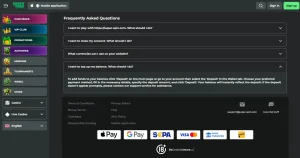
A Boku deposit begins in the casino’s cashier, not in a separate payment app. Once Boku appears among the available methods, the player selects it, enters the deposit amount and supplies a mobile number. The transaction then pauses for a verification code sent by SMS. Entering that code confirms the phone number and authorises the payment.
That is the essential sequence: choose, enter, confirm. The phone is part of the payment itself, rather than merely a device for browsing the casino. Without access to the number entered, the SMS step cannot be completed as described. A mistyped number can therefore stop the process before the deposit is made.
The cashier is also where the method’s availability becomes visible. Payment options are presented by the operator, and Boku must appear there for the deposit route to be used. A description elsewhere on a site, or a remembered payment option, is not the same as seeing it offered for the account in question. The practical check is the cashier’s current list.
This matters for anyone arriving with a different payment method in mind. Searches for casinos that accept PayPal do not establish that PayPal is available at a particular casino; nor does the presence of Boku say anything about PayPal. They are distinct methods. The steps above describe a Boku transaction only, not a PayPal deposit or a list of casinos taking PayPal.
The SMS code is more than a routine formality. It connects the transaction to the mobile number supplied during payment, placing confirmation in the hands of the person able to receive that message. It is a small checkpoint in a process otherwise designed to be brief: no card details are entered in the sequence described, and the deposit is confirmed through the phone.
That simplicity has a limit. The cashier must offer Boku, the entered number must be correct, and the verification message must be received and used. If any part fails, the deposit has not been confirmed through this route. The code is the hinge.
Boku Deposit Process
Selection
Choose Boku in the casino cashier, enter the deposit amount, and provide your mobile number.
Verification
Wait for a verification code to be sent via SMS to the mobile number provided.
Confirmation
Enter the SMS code in the cashier to authorise the payment and complete the deposit.
For a casino that still lists Boku, the process is straightforward, but it should not be mistaken for a promise that every account will see the same menu or that another payment method is accepted too. The available choices are those the operator displays in its cashier. A Boku logo or reference can identify the method; only the actual payment flow shows whether it is currently selectable.
So the question of how to deposit is narrower than the question of which casinos accept a particular brand. With Boku, the sequence is clear: select the option in the cashier, provide the amount and mobile number, then confirm with the SMS code. PayPal acceptance cannot be inferred from any of those steps.
Boku moves a casino deposit onto the mobile account rather than taking it directly from a bank card. For a customer on a monthly contract, the charge is added to the phone bill. For someone using pay as you go (PAYG), it is deducted from the credit already available on the handset. The payment route therefore depends not only on the casino’s cashier but on the kind of mobile account behind the number.
That distinction changes what “paying by phone” means in practice. A monthly-bill customer sees the gambling transaction among charges collected by the network provider. A PAYG customer spends part of a finite balance immediately: the phone credit is the source of the payment, not simply a record of it. In both cases, the mobile account acts as the link between the casino deposit and the eventual charge.
A specialist payment-method review says PAYG users cannot deposit more than the credit remaining on their account. That is a practical constraint of prepaid billing: without enough credit, there is no pool of funds from which the charge can be taken. It should not be confused with a casino setting a deposit amount, or with a general guarantee that every mobile account can be used for every transaction. The operator’s payment arrangements still matter.
The distinction has social history in miniature. Monthly contracts turn spending into a line on a bill that arrives later; prepaid credit makes the available sum visible in advance. Neither system makes a gambling payment disappear. One postpones collection, the other draws on a balance already paid for.
In the UK, EE, O2, Vodafone and Three support Pay by Phone services, including services such as Fonix. That establishes that these networks support the broader payment channel; it does not mean that every casino offers Boku through each network, or that every mobile tariff is eligible. Network support and a casino’s choice of payment provider are separate parts of the arrangement.
The wording can obscure that separation. “Pay by Phone” describes a way to charge a mobile account, while Boku and Fonix are payment services that may provide the link. A network can support such services without every operator accepting every service. Likewise, a casino’s acceptance of one phone-payment provider does not establish acceptance of another.
The gambling transaction is added as a charge to the user's monthly phone bill.
Funds are deducted immediately from the existing prepaid credit available on the handset.
For people looking up PayPal casinos or mobile casinos that accept PayPal, this billing route is a different matter: a Boku charge is collected through a mobile account, not proof of PayPal acceptance. A phone number may be central to the payment, but it does not turn the transaction into a card or digital-wallet payment. The names of payment methods matter because the route of collection matters.
The bill is part of the payment.
A payment method and a promotion are separate parts of a casino account. Choosing Boku at the cashier does not, by itself, create a bonus or determine which games qualify for one. The offer is set by the operator, and its terms decide whether a particular deposit counts.
A specialist review reported no Boku-specific bonus at the casinos it assessed. That is not a universal rule: an operator can change its offers or set different conditions for different payment methods. Pay-by-phone bonus eligibility varies between casinos. The same kind of review identified MrQ, Duelz, Mr Vegas and Videoslots as operators that accepted pay-by-phone deposits for bonus eligibility. The detail matters, but it is not a standing promise that every promotion at those sites will apply to every deposit.
Bonus wording is often more exact than its headline. An offer may depend on the payment method used, the qualifying deposit, or the games played after the funds arrive. A deposit can therefore be accepted without being eligible for a welcome offer. Those are separate decisions: one concerns whether money reaches the account, the other concerns the operator’s promotion rules.
Games sit further down the chain. Boku is a way to fund an account, not a type of slot or a measure of a game’s quality. The casino’s game catalogue and the terms attached to a bonus are distinct from the cashier’s payment options. A slot being available does not establish that it contributes towards a promotion, and a payment option does not identify a particular game.
This distinction is easily blurred by the language of casino marketing, where payment, bonus and games can appear together on one page. Their proximity does not make them interchangeable. A promotion can have its own conditions; a game can have its own rules; a deposit method simply describes how funds are added.
The same caution applies to claims about PayPal. Boku’s bonus treatment cannot be used to establish that a casino accepts PayPal, that a PayPal deposit qualifies for an offer, or that a particular slot promotion is available when using PayPal. Those are operator-specific matters, not consequences of using another payment route.
The useful comparison is therefore not between a payment method and a game, but between the cashier’s accepted methods and the bonus terms attached to an offer. For Boku, the reported position is mixed: one specialist review found no dedicated Boku bonus among the platforms it assessed, while pay-by-phone eligibility was confirmed at several named operators. The terms, not the payment label, settle the question.
A payment option and permission to offer gambling are separate matters. A casino cashier may display a method for adding funds, but that tells little about the operator’s legal standing. The question of whether a casino accepts PayPal is not answered by the UK licensing framework; payment acceptance and regulatory status are different checks.
In Great Britain, the Gambling Commission regulates commercial gambling, including remote gambling offered to consumers. Its reach does not depend on where an operator keeps the equipment that runs its service. A business cannot avoid the British framework simply by placing its servers elsewhere. The regulator is the sole authority for commercial gambling in Great Britain.
Licensing also has two levels. The Commission issues operating licences to businesses and personal licences to relevant individuals working in the sector. The distinction reflects the machinery behind a casino: a company may provide the service, while people involved in operating it may also fall within the licensing system. A familiar brand name, polished website or recognisable payment mark is not a substitute for checking the operator’s authorisation.
For people comparing casinos that accept PayPal in the UK, this distinction matters before any deposit is made. A payment label answers a narrow practical question about how funds might be sent. A licence concerns whether the business is authorised to provide gambling services to customers in the market. One does not prove the other.
The Gambling Commission’s public register is the place to verify an operator’s licence and its status. The check should be made against the exact business named in the casino’s terms, rather than relying on a brand alone: names used to advertise a casino may not be the legal name of the licensed company. The licence number should also be checked on the register before depositing. This is a small piece of administrative work with a larger purpose: identifying who is responsible for the service.
That framework covers remote gambling offered to consumers in Great Britain, wherever the key equipment is located. It is a rule about the market being served, not a claim about the physical location of a casino’s offices or servers. The Commission’s authority is therefore tied to the offer of gambling to people in Great Britain, rather than to the geography of the technology.
A list of casinos that take PayPal, even if accurate at the time it is compiled, would still not settle the licensing question. Payment arrangements can change; regulatory permission is a separate matter to verify. The cashier is not the regulator. Nor does a logo do the regulator’s work.
A missing Boku button does not mean every route through a mobile phone has disappeared. Pay by Phone services include Fonix and Siru Mobile, which are separate payment services rather than other names for Boku. A specialist review identifies MrQ and Duelz as accepting Fonix, and Mr Vegas and Videoslots as accepting Siru Mobile. Those details can change as operators revise their cashier options, so a service’s presence has to be checked at the casino itself.
That distinction matters when looking for a PayPal alternative for online casino payments. The services described here are documented as Pay by Phone options; that does not establish that they work like PayPal, or that PayPal is accepted at any particular casino. Each method has its own route into an account, and a familiar label is no promise of identical terms.
There is also an indirect route involving Neteller. A specialist review describes funding a Neteller account with Boku, then using Neteller to deposit at a casino that accepts it. In that arrangement, Boku is used to put money into the e-wallet; the casino receives the deposit through Neteller. It is not a direct Boku payment at the casino, and it depends on the relevant services being available for the accounts involved.
The extra step changes the shape of the transaction. Instead of choosing Boku in a casino cashier, the player would first need to add funds to Neteller and then select Neteller at a casino where it is offered. The route is therefore not a universal workaround: it connects services that each have to support the transaction. A wallet sitting between a mobile payment and a casino does not make every casino cashier interchangeable.
For someone comparing PayPal deposit options with other ways to pay, the useful question is narrower: which method is actually listed by the chosen operator, and what route does it take? The named Pay by Phone services are distinct from Boku, while Neteller can provide an intermediate step in the Boku-to-casino route described above. None of those points, by themselves, confirms PayPal acceptance.
Payment menus are less a catalogue of universal choices than a map of separate arrangements. A method may be familiar from one operator and absent from another; a mobile service may replace Boku without reproducing its exact process. The cashier, rather than the resemblance between brand names, determines which route is available. Short detours, sometimes.
Boku can move money into a casino account, but it cannot carry winnings back out. The distinction is more than a small cashier detail: a payment method that works for deposits is not necessarily available for withdrawals. Boku is deposit-only.
That leaves a separate step before a deposit is made. A player using Boku must register another withdrawal method with the casino, such as a debit card, e-wallet or bank transfer. The chosen route needs to be one the operator supports for withdrawals; the fact that it accepts money going in does not establish that it can receive money coming out.
This is why searches for casinos offering both PayPal deposits and withdrawals, or for direct withdrawals to PayPal, cannot be answered by Boku’s availability. Boku does not provide that return route, and its presence in a cashier says nothing about whether another named payment service is accepted. Deposit and withdrawal options have to be checked separately.
The practical consequence is an account with two payment arrangements: one for funding and another for cashing out. That need not be unusual, but it should be understood before money is deposited. A withdrawal method added only after a win can introduce an avoidable administrative step, while an unregistered route cannot simply be assumed to work because the casino accepted the original deposit.
Nor does the deposit method establish how quickly a withdrawal will be processed. Boku’s role ends at the casino account; it cannot set or shorten the operator’s payout process. Claims about instant or fast withdrawals therefore require information about the withdrawal method and the casino’s own handling, not an inference from a Boku deposit.
The asymmetry is plain, if not especially elegant: Boku opens the inward door and leaves the outward one to another method. A separate withdrawal option must be registered, and its availability should be confirmed before depositing.
A specialist review describes Boku deposits as restricted to amounts divisible by ten: £10, £20 and £30 are examples of the permitted pattern. That detail matters at the point of choosing a deposit: an amount that does not fit the denomination rule may not be available through Boku, even if the casino’s cashier offers the method. The restriction concerns the payment amount, not the size or structure of a welcome offer.
Bonus eligibility is a separate decision made under each operator’s terms. A deposit made through Pay by Phone may be left out of a welcome promotion, so the presence of an offer on a casino’s site does not establish that a Boku payment qualifies. The relevant conditions are those attached to the promotion, including which deposit methods count. Payment acceptance and promotional eligibility are not the same thing.
A specialist review gives one illustration of the scale and conditions of a casino welcome offer: a full match on a deposit capped at £100, with winnings subject to a 35-times wagering requirement. That is a reported example, not a rule shared by UK casinos. Promotions differ, and a headline match says little by itself about how much wagering is required or whether a particular payment route is included.
For a Boku deposit, the practical distinction is plain: the amount follows the payment method’s denomination rule, while any bonus follows the casino’s written promotion terms. The two should be checked independently before a deposit is made. Small print decides.
“Accepts PayPal” and “is not on GamStop” are separate claims. A payment method does not establish a casino’s relationship with a self-exclusion scheme, and a statement about GamStop does not confirm which deposit options a casino offers. Neither label should be inferred from information about another payment method.
The same applies to claims about PayPal-funded slots: a casino’s games and its payment arrangements are different matters.
The wording “outside GamStop” also needs care. It can describe a claim about an operator’s status, but it is not proof of that status. Likewise, seeing PayPal mentioned in a casino’s promotional material would not, by itself, settle whether it is available for deposits, whether fees apply or whether a bonus is eligible. Those are distinct terms, not one package.
For UK-facing gambling, licensing is a separate question again. A UK Gambling Commission licence concerns whether an operator is authorised to serve customers in Great Britain; it does not establish PayPal acceptance or GamStop status. The distinctions matter because payment branding can make a site seem more settled than its actual terms.
Searches for PayPal casinos outside GamStop often bundle together payment access, self-exclusion status, offers and games. Each requires its own confirmation. That would be false precision, not useful guidance.
Yes. A small number of UK-licensed casinos still accept Boku, although many operators have moved to other services or removed pay-by-phone deposits.
Yes. Some casinos offer alternatives such as Fonix or Siru Mobile; availability depends on the casino. Pay by mobile and Fonix are supported by EE, O2, Vodafone and Three.
It may exceed the mobile network’s transaction or daily limit, or your remaining PAYG balance may be too low. Boku deposits must also be in amounts divisible by ten.
Yes. Bonus eligibility for pay-by-phone deposits varies by operator, so check the casino’s promotion terms. MrQ, Duelz, Mr Vegas and Videoslots accept these deposits for bonus eligibility.
You choose Boku in the casino cashier, enter the deposit amount and your phone number, then confirm with an SMS verification code. The deposit is charged to your monthly phone bill or deducted from your PAYG credit.