A look at the physical wheel behind live streams, roulette bets and house edge, plus demo play and ways to keep play within a set limit.
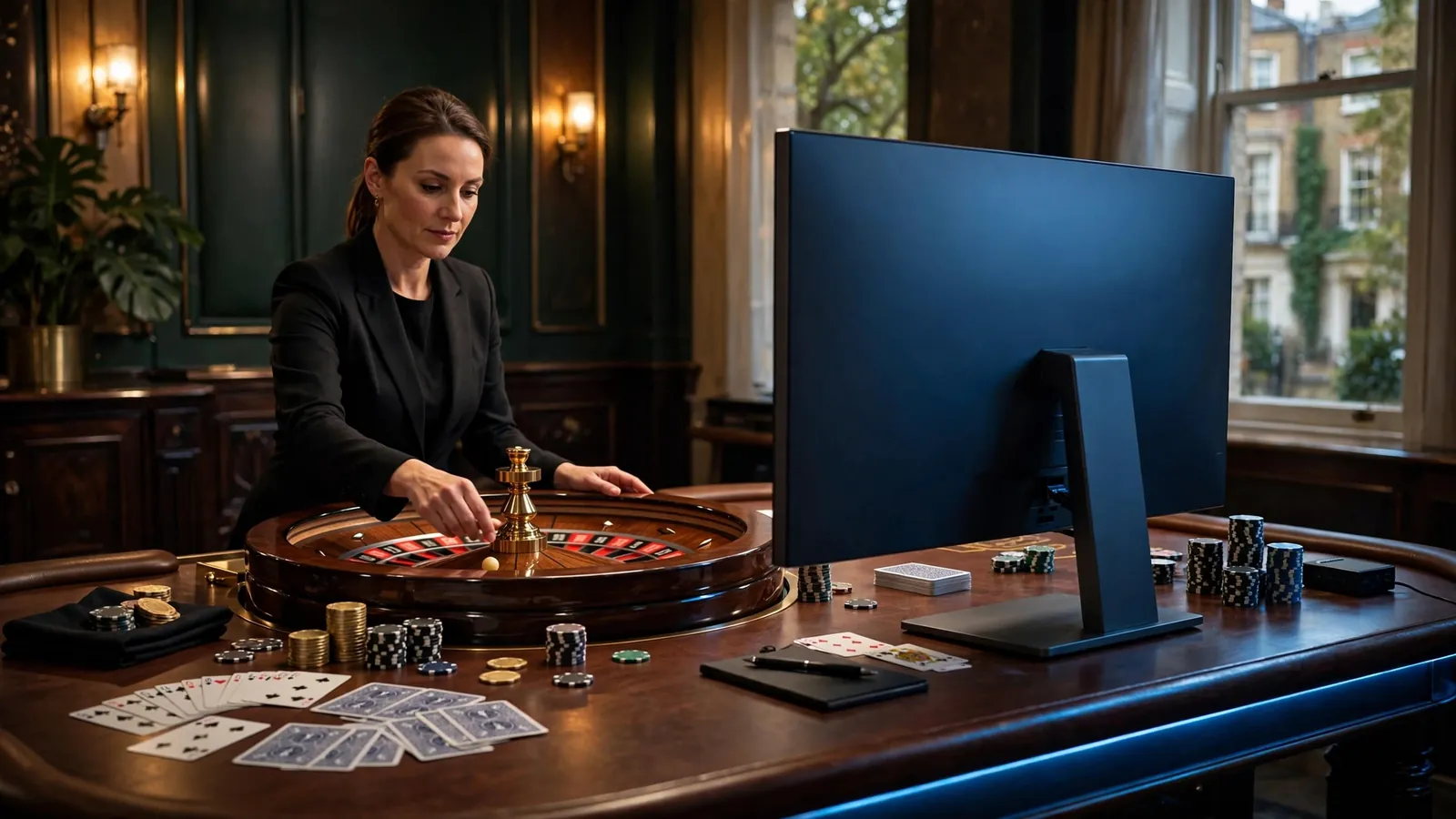
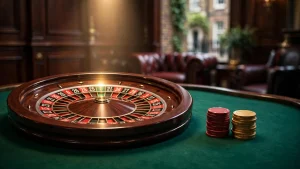
A live roulette table begins with an object that can be seen turning: a physical wheel, spun by a dealer. The online version carries that scene into a screen, but the result still comes from the movement of the wheel and ball rather than from a computer selecting an outcome. Computerised roulette works differently. It uses a Random Number Generator, or RNG, to produce the result. The two formats share a game name, but not the same visible process.
That distinction matters when a title such as Lightning Roulette appears in an online casino. The words identify a game offering, but do not, by themselves, say whether a particular version is live or computerised. The format is indicated by how the game is presented: a live dealer roulette stream shows a person spinning a physical wheel; a computerised game generates its result through an RNG. The distinction is plain enough, though the interfaces that contain it can make unlike things look much the same.
Choosing a venue for live casino Lightning Roulette means considering practical details as well as the game itself. This list provides a concise reference to help you assess the available options.
Zombillion
Zombillion lists a payout speed of 1–3 business days, a practical detail to consider when choosing where to play.
Amunbet
Amunbet lists a payout speed of 1–3 business days. This gives you a stated timeframe to factor into your choice.
Britsino
Britsino’s listed payout speed is 1–3 business days, offering a clear practical detail for players to consider.
Chanze
Chanze lists payouts as taking 1–3 business days. Keep this stated timeframe in mind when considering the venue.
SpinFormula
SpinFormula has a listed payout speed of 1–3 business days, providing a useful point of reference for players.
Dieselwin
Dieselwin lists a payout speed of 1–3 business days. It is a relevant practical detail when weighing your options.
NightLuck
NightLuck’s stated payout speed is 1–3 business days, giving players a clear timeframe to consider.
Jetsetspins
Jetsetspins lists payouts as taking 1–3 business days. This stated timeframe is worth noting when choosing a venue.
x3bet
x3bet lists a payout speed of 1–3 business days, a practical detail to factor into your decision.
WinBeast
WinBeast’s listed payout speed is 1–3 business days. This provides a stated timeframe for players to consider.
A screen is an efficient disguise. Both formats can put a wheel-shaped image in front of a player, show places to make selections and announce an outcome. In the live format, however, the image is a view of a real wheel in motion. In the computerised format, the displayed wheel is part of a game whose outcome comes from software. One is a filmed event; the other is a generated one. The essential difference is not whether the screen looks convincing, but what produces the result.
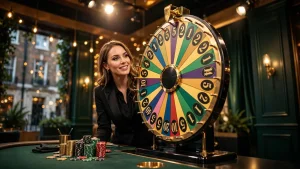
The live table also has a human centre. The dealer performs the spin, and the camera makes that action visible to people joining remotely. This gives online play a connection to the traditional casino table without moving the table into the home. It is still an online interface, not a physical seat at the venue: the wheel is in the studio, while the player’s participation takes place through the screen.
That arrangement belongs to a longer history of turning gambling into something watched as well as played. A wheel has always made chance visible. Its motion gives a result a small public ceremony: the spin, the circling ball, the moment when movement ends. A computerised game can represent that sequence, but its result is produced by the RNG. In a live game, the camera records a physical action; in a digital one, animation presents an outcome generated by software. The spectacle may resemble itself. Its source does not.
Neither format makes the outcome more readable. A filmed wheel does not become a promise of certainty because it can be watched, and an RNG does not become a meaningful pattern because its results appear on a screen. The difference is about the mechanism and presentation, not a clue to what will happen next. Watching an event unfold and knowing its result in advance are very different privileges.
This is particularly useful when comparing online casinos with Lightning Roulette. A game’s name or graphic treatment is not enough to establish its format. The live-dealer version belongs to the filmed-table category when a dealer spins a physical wheel on camera. A computerised version belongs to the RNG category when software produces the result. The label may be prominent; the method is the more important detail. Names travel easily between interfaces. Mechanics do not.
The live format has a human presence, but that does not turn it into a conversation or a private performance. The dealer’s role is visible because the wheel is being spun in real time. The camera frames an event taking place elsewhere and makes it available to remote participants. Computerised roulette removes that filmed dealer-and-wheel scene and presents a software-generated result instead. One format places a person and a physical object between the player and the outcome; the other places a programme there.
There is a modest cultural difference in those arrangements. The live table preserves the theatre of a casino: a person acts, a wheel turns, and others watch from a distance. The computerised table belongs to a quieter logic of screens and generated outcomes. Neither is more authentic simply because it looks more familiar. The live stream shows a physical wheel, while the computerised game uses an RNG; that is the dependable distinction, without dressing one format up as a better bet.
So an online casino offering roulette may present two different kinds of experience under a shared family name. Live play makes the wheel an event on camera. Computerised play makes the result a product of a Random Number Generator. The screen is common ground. The source of the spin is not.
Roulette reduces a large event to a small question: where will the ball stop? A player selects a number, and wins if the ball lands on that number. The wheel’s green pocket matters because it adds an outcome that sits outside the numbered choices people tend to notice first. It is not decoration, nor a pause between rounds. Zero is part of the result.
That distinction is easy to overlook when attention goes to a particular game name, including Lightning Roulette. The name may suggest an added feature, but the underlying roulette question remains the same: which pocket receives the ball, and which selection matches it? The wheel, rather than the label attached to a version of the game, sets the basic odds.
European Roulette has one green pocket: 0. American Roulette has two: 0 and 00. That extra pocket changes the field against which a chosen number must succeed. The stated odds of winning are 1 in 37 on the European wheel and 1 in 38 on the American one. The difference is small enough to disappear in the theatre of a single spin, but it belongs to the structure of the game, not to a temporary run of results.
Green is an unusual colour in a game otherwise organised around numbered outcomes. It marks the house’s place in the arrangement: a result that is neither the player’s selected number nor a reason for the wheel to be treated as having failed to produce one. In the American layout, the second green pocket gives that place more room. The wheel has not become more generous or more dramatic; the odds have shifted against a winning selection.
This is the quiet arithmetic beneath any roulette table. A choice can feel personal: one number rather than another, perhaps made with conviction or inherited from habit. But the feeling does not alter the number of possible outcomes. On the European wheel, a selected number faces odds of 1 in 37; on the American wheel, it faces odds of 1 in 38. The pocket that wins is determined by the result, not by how confidently the choice was made.
For someone considering a Lightning Roulette casino, this basic distinction is more useful than the suggestion of novelty in a game title. The comparison between European and American wheels concerns the number of green pockets and the resulting odds. It does not depend on whether the game is presented as a standard table or under a branded name. No label can make the zero vanish from the wheel.
A player’s selection also needs to be understood plainly. Winning on a selected number means that the ball lands on that number. The outcome is not a general judgement on a pattern, a past sequence or a feeling about what should come next. Each spin produces a landing place; the bet either corresponds to it or does not. The zero pockets count as possible landing places, too.
Features one green pocket (0), providing a 1 in 37 chance of winning on a selected number.
Features two green pockets (0 and 00), providing a 1 in 38 chance of winning on a selected number.
There is a cultural neatness to roulette’s design. It gives chance a visible destination and makes the result legible at a glance: a ball, a pocket, a winning selection or a losing one. Yet the visual simplicity can disguise the role of the green spaces. They are part of the same wheel, but they complicate the apparent contest between the player’s chosen number and all the others. The American double zero makes that complication explicit.
The European wheel offers the better odds of the two comparisons here, with a 1-in-37 chance of winning on a selected number rather than 1 in 38. That does not make any particular spin predictable. It means only that the wheel’s arrangement differs, and that this difference is built into every outcome. A previous result cannot remove a pocket from the next spin, and a run of one colour or number does not rewrite the layout.
When the subject is live casino Lightning Roulette, it is tempting to begin with the spectacle or the special name. The more dependable starting point is plainer: identify the wheel, note whether it has one green pocket or two, and understand what a winning selection requires. The rest of the game’s appeal may lie in how it is presented, but the zero remains a piece of the arithmetic.
One pocket more. A real difference.
A live casino is not made legitimate by the theatre of a studio. For customers in Great Britain, the more consequential distinction is whether the operator holds a current UK Gambling Commission operating licence. Remote gambling operators serving the British market must be licensed, wherever their business is based. A polished set, a recognisable game title or a stream that looks convincingly real cannot substitute for that requirement.
That makes licensing a practical starting point when assessing a casino offering live dealer roulette, including a Lightning Roulette table. The relevant question is not which site has the most dramatic presentation, but whether the operator itself is authorised to offer real-money gambling to British customers. A game’s appearance on a casino page does not, on its own, establish the status of the site hosting it. The regulator is the UK Gambling Commission; its rules define the boundary between a licensed service and one operating outside the British system.
This is not a decorative legal detail. Britain has chosen to regulate remote gambling through the operator, not through the apparent nationality of its studio or the location of its servers. A casino may stream from a studio elsewhere, yet still need the relevant UK licence if it sells gambling to customers in the British market. The camera can cross borders with little ceremony. The permission to trade cannot.
The live format itself has visible signs. Gameplay is streamed in real time from a studio, where a human dealer conducts the game. Bets are entered through an on-screen interface, so the experience combines a physical scene with digital controls. The dealer and wheel occupy the video; the betting choices and submitted stakes are handled through the site’s interface. It is a hybrid arrangement, not a camera pointed at a private screen.
That distinction matters when judging what the casino is actually presenting. A live stream shows a dealer-led game in progress; the interface shows how a player participates. Both parts should be legible enough to understand what is happening on screen and where the available betting controls sit. The stream is not itself proof of a fair or licensed service, any more than an interface is proof that the operator has regulatory permission. Presentation and authorisation answer different questions.
For a casino associated with Lightning Roulette, the name may draw attention to the game, but the broader checks remain the same. The operator’s licence is a matter of legal status; the live feed and controls describe the format. Neither tells the whole story alone. A studio can look immaculate while leaving the crucial question unanswered, and a familiar game label is not a regulatory credential.
There is a quieter point in the UK model. Regulation is attached to the business offering the service to customers, rather than being inferred from the spectacle on the screen. That may be less exciting than the lighting around a wheel, but it is the more useful signal when comparing places to play. A short list of “best” casinos would obscure the underlying test: any operator considered for real-money play in Britain needs the appropriate UKGC licence, and a live table should actually be presented as a real-time studio game with an on-screen betting interface.
No ranking can replace those checks. The stream describes what is being watched; the licence describes who is permitted to offer it.
“First-person” describes a point of view, but in an online casino it can also sound like a promise about how a game is presented. Those meanings are not identical. A title such as Lightning Roulette may be encountered through a live-dealer stream, yet the phrase first-person Lightning Roulette raises a narrower question: what, exactly, is being seen from the player’s position?
The distinction matters because a camera angle is not the same as a new way to play. A close view of a wheel, a table-level image or an interface that places controls beside a stream could all feel immediate, but none by itself establishes a separate game format. Nor does the label tell much about what is on screen, how the controls are arranged, or whether a particular casino offers a dedicated first-person version. The wording invites an image; the image is not evidence.
That gap is familiar in digital entertainment. “First-person” carries associations from games in which the screen adopts a character’s viewpoint. In a casino setting, the phrase may instead be used loosely to suggest proximity to a table or a more intimate visual frame. Roulette remains a game in which bets are selected through an interface, while a live table is presented through a real-time studio stream. A perspective can change the feeling of distance without changing the underlying relationship between the player and the game.
This is why the phrase first-person roulette is best understood as a question about presentation, not as proof of a special mechanic. It does not establish that the player controls a camera, sees the wheel from a particular seat, or participates in a different way. Those details depend on the individual game and casino display. The label alone cannot settle them.
The same caution applies when looking for a first-person Lightning Roulette casino game in the UK. The name may refer to an interface choice, a viewing style, or simply a way of describing a live experience. Without clear information from the operator about what the version includes, it is safer to treat the phrase as descriptive rather than technical. A polished viewpoint can still be only a viewpoint.
In a casino setting, this phrase may be used loosely to suggest proximity to a table or a more intimate visual frame, rather than a technical change in game mechanics.
There is a small social history folded into this expectation. The casino table was once a place arranged around a shared centre: wheel, dealer, players, wagers. Online presentation rearranges that circle into a screen, where each participant occupies a private viewing position while watching a public event. “First person” promises to reverse that distance, to bring the isolated viewer closer to the table. The promise is potent because the screen is still a screen.
For anyone considering whether to play first-person Lightning Roulette, the useful distinction is between what the description suggests and what the actual interface shows. The game name does not, on its own, confirm a particular camera perspective or set of features. A live stream and on-screen betting controls describe the broad live-casino arrangement; the first-person label needs to be assessed separately, on the terms used for that specific offering.
That is less cinematic than the phrase. It is also more precise. A point of view can alter the atmosphere, but it should not be mistaken for a change in the rules, the table, or the nature of the wager.
A welcome offer can look generous in a headline and prove irrelevant at the live table. A specialist review describes most UK welcome offers as free spins on slots, which cannot be used at live tables. That is a report about offers, not a permanent rule for every operator: the terms attached to a particular promotion decide what it covers.
The distinction matters because a bonus is not simply extra money set aside for any game. Its conditions can name eligible games and set different contribution rates towards wagering requirements. Live games may count for only a small share; one stated example is a 10% weighting. In practice, that means live play can move the wagering requirement forward much more slowly than a player might assume from the headline alone.
The arithmetic is less visible than the bright wording. A promotion may welcome a new account while excluding the very table that prompted the search. Or it may include live games but assign them a limited contribution. Neither arrangement is inherently mysterious; the problem is treating “casino bonus” as if it meant “usable across the casino”. Terms are written to distinguish games, and those distinctions govern the offer.
Before opting in, the relevant conditions are the eligible games, wagering requirements, game weighting and any maximum bet limits. The last condition can matter even when the table itself is permitted: a promotion may attach restrictions to how bets are placed while it is active. The exact conditions vary by offer, so a general description cannot substitute for the specific terms. Small print, in this case, is the actual product.
For someone comparing places to play Lightning Roulette, the bonus should therefore sit behind the table conditions, not in front of them. A headline offer says little about whether it applies to a live game. A useful comparison asks whether live play is eligible, how it contributes to wagering, and whether any bet limit affects play during the promotion. If those answers are unclear, the advertised value is difficult to assess.
There is also a difference between declining an offer and losing access to the game. A player who does not opt in can judge a table without carrying the promotion’s wagering conditions; an offer is optional, not a required entrance fee. The choice is less about finding the largest headline and more about deciding whether its rules suit the intended play. A bonus can be worth less than the attention spent decoding it.
Any referral link should be identified as such, since it is advertising rather than neutral information. This article is for entertainment purposes only and is not gambling advice. A promotion is a set of conditions, not a change to the game.
A roulette bet is not priced only by its possible payout. The house edge describes the mathematical share retained by the casino over time, and the figures differ slightly according to the kind of wager: a straight-up bet carries a 2.9% house edge, while other bets carry a 2.7% edge.
A straight-up bet selects one number. It is the most concentrated form of the game: the wager depends on a single result, rather than a broader group of outcomes. Other bets cover more possibilities, spreading the stake across a wider part of the betting menu. The distinction is not simply one of boldness or caution. It is reflected in the house edge attached to each category.
The gap between the figures is small, but it is still part of the cost of play. A lower edge does not make a bet profitable, nor does it promise that a particular session will go well. It describes the game’s long-run mathematics, not a forecast for the next spin. In the short term, outcomes can differ sharply from that average.
That distinction matters when considering a live Lightning Roulette table. The dramatic presentation may draw attention towards individual numbers and the possibility of a striking result; the underlying cost of a wager remains a separate question. A special feature or a vivid screen cannot, by itself, erase the house edge. The ordinary arithmetic remains in the room.
For anyone comparing ways to play a roulette casino game in the UK, the useful comparison is therefore not merely between a single-number wager and the broader alternatives, but between their respective costs. The straight-up option has the higher stated edge. Other bets have the lower one. Neither figure identifies the outcome of an individual round, and neither turns a losing result into evidence that the next result is due to compensate.
The language of roulette often makes risk sound like temperament: the daring player chooses one number, the cautious player covers more ground. But the mathematics is less theatrical. Each bet type has a defined price in house advantage, whether the table is presented as a standard live game or as a Lightning Roulette casino game. The difference deserves attention before any stake is placed, not after a run of results has encouraged a new theory.
A wager’s shape changes the experience of choosing; it does not remove the house’s margin. That is the quiet accounting beneath the spectacle.
A Lightning Roulette demo, where a casino offers one, belongs to the category of practice rather than income. It can provide a way to become familiar with an online game without staking money, but free play should not be mistaken for a route to real winnings. Results on a demo screen do not create a cash balance to withdraw. The distinction is plain, though promotional language can make it seem less so.
Availability is not universal. A UK casino may provide a demo, may restrict access to it, or may offer no free-play version of the game. The label alone says little about what is included: it does not establish whether the game’s full presentation is reproduced, how access works, or what conditions apply. Those details belong to the individual offer, not to the word “demo”.
For anyone considering play, the useful question is modest: does the practice mode clarify the interface enough to make its buttons and options legible? It may help with that. It cannot establish what a future real-money session will feel like, and it does not change the financial terms of actual play. A string of favourable demo results is no evidence of a future payout; a losing run is no forecast either. Each result is confined to the play taking place on screen.
That limit matters especially with a game whose name carries a hint of spectacle. The word “Lightning” can suggest speed or a special promise, but a free-play label does not itself explain the rules, the odds, or any conditions attached to a real-money version. Those require separate attention before money is involved. The demo is not a substitute for reading the game’s rules and paytable.
Free play is also not a bonus balance in disguise. It should not be described as cash, or as winnings waiting to be claimed. If a casino presents a practice option, its value is simply the chance to explore without treating the screen as a source of income. That is a smaller promise, and a more honest one.
A lightning roulette demo in the UK is therefore best understood as a possible preview, not a product that every casino must provide. Any claims about cash prizes or withdrawable returns would confuse practice with gambling for money. This article is for entertainment purposes only and is not gambling advice.
At a live dealer roulette table, the dealer is not a decorative face beside a graphic. The game is streamed from a studio as it happens, with a human at the wheel and an on-screen interface for placing bets. The screen divides the work: the dealer conducts the table; the software carries each player’s selections into the game.
That arrangement gives the round a human rhythm. A dealer’s actions unfold in sequence, while a digital version can move through its stages more quickly. Live play therefore tends to be slower, not because the wheel has acquired a taste for ceremony, but because events are shown as they happen. The pause between decisions and the next spin is part of the format.
This matters to anyone comparing a live dealer roulette table with a computerized one. A brisk interface may leave more room for rapid rounds; the studio stream keeps attention on a shared table and its pace. Neither presentation changes the basic nature of roulette, but they ask for different kinds of patience. One is a sequence on a screen. The other has a person conducting it.
The price of that slower, more visible setting can be a higher minimum bet than on digital tables. No single minimum describes every table, so the amount displayed at the table matters more than a general impression of what live play costs. The minimum is not a footnote: it determines whether a table fits the scale of play being considered before a round begins.
There is also a practical dependency that a digital game may make less obvious. A live stream needs a stable internet connection. If the picture stalls or the connection drops, the table’s careful rhythm becomes a technical problem instead. A stable connection is part of the conditions for following the game, not an optional refinement.
The appeal of a live dealer casino in the UK is thus partly social in appearance and partly logistical in fact: a human dealer, a slower sequence, a higher entry point than many digital versions, and a stream that depends on the connection holding steady. Presence has its costs.
Choosing to play Lightning Roulette online in the UK does not make the money involved less real. A live stream can give the game the texture of a public room, but the account balance remains a private limit, and one worth deciding before play begins.
A budget is most useful when it is treated as a boundary rather than a target. Once the planned amount has been spent, adding more to the session changes the decision made before play started. The same applies after a win: a larger balance is not an invitation to keep going until it has been returned to the table. Chasing losses or winnings can turn a defined leisure expense into an open-ended one.
There is no need to make the session longer to justify its cost. Roulette outcomes do not owe a player a recovery, and a run of results does not make another spin a way to repair the previous one. The wheel has no memory. The account does.
Online gambling in the UK is legal for adults aged eighteen and over when it takes place with an operator holding the relevant UK Gambling Commission licence. That legal framework sets conditions for operators; it does not remove the need for a personal spending limit. Regulation and restraint do different jobs.
A set limit also makes it easier to distinguish entertainment from an attempt to make money. Live play may feel socially immediate, but that feeling does not alter the financial risk. The sensible measure is not whether a session ends in profit, but whether it ends when the planned budget is reached.
If play begins to spill beyond that boundary, stopping is more useful than revising the boundary in the moment. No elaborate system can make roulette dependable income. It is entertainment, not gambling advice.
An online Lightning Roulette casino game may add a more theatrical layer to a familiar wager, but the underlying odds remain tied to the roulette game being played. The distinction between European and American roulette is not cosmetic: the stated chance of winning is one in 37 on the European game and one in 38 on the American game. That difference reflects the rules of each version, not a change in fortune from one session to another.
Online play can make results feel unusually legible. Spins arrive in sequence, numbers are displayed, and the interface may preserve a record of what has appeared. Such records describe the past; they do not make a number more or less likely on the next spin. A run of one colour is a sequence, not a promise that the other colour is due. The wheel has no memory, however persuasive the pattern looks on a screen.
This is where the house’s margin becomes a matter of arithmetic rather than atmosphere. A dramatic presentation can make each result seem charged with significance, while the probabilities remain fixed by the game’s rules. The added spectacle does not turn an earlier outcome into evidence about a future one.
The same restraint applies to any online roulette format. The chance attached to a bet belongs to the game’s structure, not to a tracker, a streak, or a story assembled after the result. That is less mysterious than the lights suggest.
This material is for entertainment purposes only and is not gambling advice.