See how Boku deposits reach a casino account, why mobile billing has limits and what happens when Boku is unavailable.
Boku has not disappeared from British casino cashiers, but it has become a less dependable feature to expect. A small number of casinos holding UK Gambling Commission licences still take deposits this way; the available list has contracted since 2023. The change is real, but its cause is often misunderstood.
There was no UK Gambling Commission rule that singled out Boku for a ban. The Commission regulates gambling, not a named payment button in isolation. Decisions about which payment methods to keep have been made by individual operators, who have dropped Boku amid compliance concerns. That distinction matters: a shrinking cashier option is not evidence of a Boku-specific prohibition.
The pattern also reflects a wider change in how operators handle Pay by Phone. A specialist review describes some casinos replacing Boku with Fonix or Siru Mobile, while others removed mobile-payment options altogether. That is a snapshot of a market in motion, not a permanent directory: a cashier can change, and an operator’s payment arrangements are not necessarily identical across every account or point in time.
When considering casinos that accept Boku in the UK, it helps to check the available information on withdrawals as well as payment options. The details below provide a concise reference for each listed operator.
Zombillion
Zombillion lists a payout speed of 1–3 business days.
Amunbet
Amunbet lists a payout speed of 1–3 business days.
Britsino
Britsino lists a payout speed of 1–3 business days.
Chanze
Chanze lists a payout speed of 1–3 business days.
SpinFormula
SpinFormula lists a payout speed of 1–3 business days.
Dieselwin
Dieselwin lists a payout speed of 1–3 business days.
NightLuck
NightLuck lists a payout speed of 1–3 business days.
Jetsetspins
Jetsetspins lists a payout speed of 1–3 business days.
x3bet
x3bet lists a payout speed of 1–3 business days.
WinBeast
WinBeast lists a payout speed of 1–3 business days.
For players, the practical result is less certainty. Searching for a casino that accepts Boku may lead to old pages, incomplete payment lists or information that no longer matches the cashier. The word “Boku” can also be used loosely in descriptions of phone-based payments, even when the named service offered by the casino is different. A familiar payment category is not the same as a confirmed Boku option.
The reasons operators cite here are about compliance risk, rather than a formal ban. That does not mean every operator reached the same conclusion, or that the Commission required them all to make the same change. Each business has made its own decision about the payment methods it will support. The small remaining set is therefore uneven: Boku is available at some licensed casinos, absent at others, and liable to be replaced as cashiers are revised.
This is a less dramatic story than a regulator crossing out a payment provider. It is also a more consequential one for anyone trying to plan around a particular method. Operators control their own cashier choices, so yesterday’s availability is no promise about today’s. The payment landscape has narrowed by individual decisions, one cashier at a time.
The phrase “best Boku casino” can obscure that basic problem. Before comparing casinos, the first question is simply whether Boku is actually present as a deposit choice. Its continued appearance at a few UK-licensed sites shows that it has not been prohibited by name; its reduced reach shows that acceptance is no longer something to assume. A payment method can remain lawful and still become difficult to find.
Boku has not vanished from every UK casino cashier, but the remaining picture is uneven. A specialist review of payment options reports a broad group of operators accepting Boku deposits: BoyleSports, Sun Bingo, William Hill, Sky Vegas, PlayOJO, Genting Casino, Betfred, Lottoland, bwin and 888 Casino. That is a useful set of names to investigate, not a permanent promise that each cashier will show Boku today. Payment menus can change, and availability may depend on the account or mobile network involved.
The distinction between a casino reported to accept Boku and a direct-Boku casino matters. Some listings group together operators that accept different forms of phone billing; others use “Boku casino” more narrowly for a site where Boku itself appears as the payment option. On that narrower reading, a specialist review identifies a much smaller group, including Jackpot Mobile Casino and Peachy Games. The shorter list is more useful for a player specifically seeking Boku by name, while the broader one describes reported acceptance across a wider set of cashiers.
BoyleSports is also described in a specialist payment review as having added Boku to its cashier as a UK-based option. That detail places it among the named operators, but does not establish that its payment menu will remain unchanged. A cashier is not a museum display; operators revise it as their commercial and compliance arrangements shift.
BoyleSports, Sun Bingo, William Hill, Sky Vegas, PlayOJO, Genting Casino, Betfred, Lottoland, bwin and 888 Casino.
Jackpot Mobile Casino and Peachy Games.
The names above are not a league table. Nor does the list establish that every brand offers the same service across its website and app. The practical distinction is simpler: some operators are reported to accept Boku, while only a smaller set is identified specifically as direct-Boku sites.
That is why a brand name in a review should be treated as a lead rather than proof. Before depositing, the operator’s own cashier is the decisive place to confirm which methods are currently displayed. The public-facing payment page may be less specific than the cashier, and a third-party listing can lag behind a change. The names remain useful; the status attached to them is the part that can age.
The same caution applies to searches for new Boku casinos. A site may appear in a payment-method roundup without being newly launched, and a newly noticed listing is not necessarily a new operator. “New” can describe the discovery, not the casino. The direct-Boku group is described as small and identifiable, rather than as a constantly expanding collection.
The broader set contains established brands whose payment arrangements are reported under the Boku label. The smaller set is about direct acceptance, with Jackpot Mobile Casino and Peachy Games named as examples. Those descriptions should not be collapsed into one definitive directory: they answer slightly different questions. One asks which operators are reported to take Boku deposits; the other asks where Boku is identified as the direct cashier method.
This distinction also helps make sense of familiar names appearing in payment articles without Boku being plainly visible in every account. Payment labels may change, and operators may replace one phone-billing route with another. A review can therefore capture a real arrangement at the time it was assessed without guaranteeing that the same option is available to every customer later.
The sensible reading is narrow and concrete. BoyleSports, Sun Bingo, William Hill, Sky Vegas, PlayOJO, Genting Casino, Betfred, Lottoland, bwin and 888 Casino have been reported as Boku-accepting operators; Jackpot Mobile Casino and Peachy Games belong to the smaller set identified specifically with direct Boku. Those are reported availability claims, not a promise of universal access or a ranking of quality. At the cashier, the present tense belongs to the cashier.
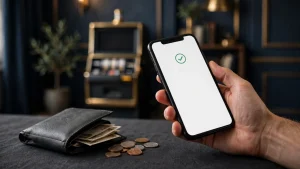
A Boku payment begins in the casino’s cashier, not in a separate Boku account. The method has to appear among the deposit options offered by that operator; where it does, the player selects it, enters the amount and supplies a mobile number. The transaction is then confirmed through a verification code sent by SMS. The code links the payment request to the phone number being used, rather than to a card or bank-account form.
The sequence is simple, though each step depends on the previous one: an available Boku option, an amount the cashier accepts, a working number and a successful SMS confirmation. If one part is absent, there is no completed deposit. Boku casinos therefore do not share a universal cashier layout; the operator decides how its payment screen presents the option and the details to be entered.
Boku Deposit Process
Selection
Choose Boku from the deposit options in the casino cashier.
Details
Enter the deposit amount and provide a valid mobile number.
Verification
Submit the verification code received via SMS to authorise the payment.
Credit
Once approved, the funds are credited to the casino account almost instantly.
A specialist review describes Boku deposits as available only in amounts divisible by ten, giving £10, £20 and £30 as examples. That is a reported payment condition, not a guarantee that every casino will display each amount. The cashier remains the place where an accepted amount is shown for that particular transaction. The distinction matters: a search for casinos that accept Boku in the UK may produce a name, but only the active cashier can show whether Boku is available to a specific account at the time of payment.
After the phone number is entered, the SMS code must be submitted to confirm the transaction. Once approved, the casino account is credited; Boku payments are described as reaching the account almost instantly in the usual course. The exact presentation can differ between operators, but the essential hand-off is the same: the casino starts the request, the phone receives the confirmation message, and the code authorises the payment.
This is why a Boku deposit is not completed merely by choosing the method or typing a number. The confirmation is part of the payment itself. A phone number entered incorrectly, or an SMS code left unconfirmed, cannot be treated as a finished deposit. The cashier’s final status is what separates a pending request from funds available in the casino account.
The process has the unceremonious precision of a small administrative ritual: choose, enter, confirm. Boku makes the phone the point of payment, while the casino cashier remains the place where the deposit is initiated and recorded.
A Boku deposit is not an ordinary card charge: it is routed through the mobile account. For a monthly contract, the amount is added to the phone bill; for a pay-as-you-go plan, it comes out of the available credit. The same payment method therefore feels different depending on how the phone is funded. One appears later among telecoms charges, while the other reduces a balance already set aside for calls and data.
That distinction matters when a deposit is close to the available PAYG balance. A specialist payment review describes prepaid deposits as limited by the credit remaining on the phone, with insufficient credit resulting in a declined payment. It is not an extra pot of money attached to the casino account.
The limits are less tidy than a single figure suggests. One account of UK Boku payments describes £30 as the standard maximum for a transaction, while noting that some casinos or network operators may permit £40 or £50. Other descriptions put the network-level daily ceiling at £30 and differ over whether there is a separate per-transaction cap: some specify a cap of about £10 per payment, while others give no per-transaction figure. Those accounts cannot be merged into a dependable universal limit.
A specialist review also attributes daily limits to the mobile operator rather than the casino. That distinction is plausible within the payment arrangement, but limits can depend on the operator and may change; the cashier’s displayed terms and the network’s own rules are more useful than assuming a single ceiling applies everywhere. Small limits, plainly stated.
This is why a casino may show Boku as an available method while a particular payment still fails: the amount can exceed the permitted transaction limit, the day’s remaining allowance or the credit on a prepaid phone. A monthly-billed customer avoids the prepaid-balance constraint, not necessarily the operator’s or casino’s own limits.
The phrase “minimum deposit” can also mislead. A casino’s stated minimum and the amount the mobile payment service will accept are not necessarily the same rule. The available terms should be checked before relying on a small Boku payment; a result found at one casino or network need not describe the whole UK market.
“Boku slots” can sound like a distinct class of games, or a special collection available only to people paying by phone. It is neither. The phrase describes a payment route to a casino account, with slot play as the intended use. Boku handles the deposit; it does not create a separate catalogue of games.
That distinction matters because the payment method and the games belong to different parts of the experience. A casino’s slots are selected by the operator, while Boku is one of the options a cashier may offer for adding funds. A deposit made through Boku does not, by itself, identify a particular game, change its rules or promise access to a special Boku-only title. The label is about how money reaches the account, not what appears on the screen afterwards.
Nor does the phrase establish that a casino has a special offer attached to this payment route. A specialist review reported that the platforms it examined did not impose Boku-specific deposit restrictions, and that Boku deposits did not generally come with a dedicated bonus. That is a report about the sites assessed, not a promise applying to every casino or every promotion. Payment acceptance and offer eligibility remain separate matters; the promotion’s own terms determine whether a particular deposit qualifies.
The same separation applies to limits. A casino can display a maximum amount for a deposit, but a daily ceiling may sit elsewhere in the payment chain. One specialist review described the mobile operator, rather than the casino, as enforcing the daily Boku limit. Because payment arrangements can change, that should be treated as a reported setup, not a fixed rule for every network and account. A casino cashier may accept the payment method while the mobile operator still declines a transaction under its own controls.
This is one reason the wording can mislead. “Best” may suggest that a payment option improves the games or the bonus; “mobile” may suggest that a phone is the only part of the arrangement that matters. In practice, the casino determines its games and promotions, while the payment route determines how a deposit is submitted. Those are related only at the point where the account is funded.
For slot players, then, Boku is a way to put money into a casino balance for play, not a slot category or a guarantee of an extra reward. The phrase compresses two separate decisions into one. Casinos have been doing that for years.
The phrase “Boku card” suggests a familiar object: a plastic card, or its digital equivalent, carrying payment details into a casino cashier. Boku is neither. It is a Pay by Phone method, with the cost attached to a mobile account rather than paid from a card balance. The distinction matters because a casino listing Boku among its payment options is not saying that it accepts a Boku-branded debit card.
There are two ways the charge can be collected. For a monthly mobile plan, the Boku payment is added to the phone bill. For a pay-as-you-go account, it comes out of the available prepaid credit. Either way, the mobile account is the source of funds. A bank account or card is not the instrument being presented to the casino.
That makes searches for casinos accepting Boku debit cards a small category mistake. The useful question is whether a casino’s cashier offers Boku or another Pay by Phone service. Payment labels can be untidy: one operator may name the provider, another the broader method, and a third may offer a different mobile-billing provider altogether. Similar wording does not make the services interchangeable.
The network names provide another clue, though not a guarantee that every casino will offer the same route. EE, O2, Vodafone and Three support Pay by Phone and Fonix. Boku and Fonix are distinct services; the fact that a network supports both does not mean that every site connected to that network accepts both. The cashier’s available options, not the mobile company’s name alone, determine what can be used at a particular casino.
Card payments sit in a different part of the payment system. A debit card draws on money held in a bank account; Boku places the charge through a mobile account. The UK’s gambling rules also prevent remote operators from accepting credit-card payments for gambling, including credit-card funds routed through a money service business. Calling a phone-billed payment a “card” does not turn it into one, and calling a card deposit mobile does not change its source.
This distinction is easy to lose in lists that group every cashier option under the broad heading of payments. Yet the route of the money shapes what a player needs to have available: a compatible mobile account for Pay by Phone, rather than a card number. It also explains why a casino might accept debit cards but not Boku, or offer a mobile-billing provider without offering Boku itself. Payment menus are not a single universal checkout.
The practical label is Pay by Phone. Boku is one route through it, not a card scheme and not a substitute name for every mobile payment. Small distinction. Useful one.
A payment option in a casino cashier answers one question: whether an account can be funded that way. It does not settle whether the deposit qualifies for a welcome offer. Those are separate operator decisions, and the distinction matters with Pay by Phone: a casino may accept a phone-billed payment while excluding it from a promotion.
The offer terms are the deciding document, not the presence of Boku in the cashier. Conditions can distinguish between payment methods, particular promotions and the kind of deposit that triggers an offer. A headline may describe a welcome bonus in broad terms, while its rules specify which deposits count. The cashier and the promotional terms therefore need to be read as two different parts of the same arrangement.
A specialist review identifies MrQ, Duelz, Mr Vegas and Videoslots as casinos where pay-by-phone deposits are accepted for bonus eligibility. That is a useful indication, not a permanent promise: operators can change payment and promotion conditions. Even where a method has been reported as eligible, the terms attached to the specific offer should be checked before a deposit is made.
This is especially important because a bonus is not simply extra cash placed in an account. It is a conditional credit, tied to rules about how it can be used and when it ceases to be available. Payment eligibility is one gate; the offer’s own requirements are another. A phone-billed deposit passing the first does not automatically pass the second.
A specialist review describes a familiar welcome-offer shape in the UK market: the casino matches a deposit pound for pound, with the match capped at £100, and applies a wagering condition of 35 times. The figures describe a reported typical structure, not a universal promise or a standard that every operator must follow.
The wagering condition is the part that can make a generous-looking headline less simple than it first appears. It requires play before bonus-related funds or winnings can be withdrawn, according to the operator’s rules. The precise wording matters: terms determine what balance the requirement applies to, which games count and how progress is measured. Those details should not be assumed from the headline alone.
A Pay by Phone deposit may also be treated differently from other qualifying deposits. If it is excluded, the payment can still reach the account, but it will not activate that particular welcome offer. If it is included, the bonus remains subject to the same offer conditions stated by the casino. Neither outcome can safely be inferred from the payment logo.
Promotions can also be limited by timing or account status, so the relevant terms are those displayed for the offer at the point it is claimed. An old description of a bonus may no longer match the current promotion. A careful reading is less glamorous than a bright welcome banner. It is also more useful.
A specialist review reports a 30-day validity period for bonus funds and a 72-hour period for bonus spins. These are reported time limits, not rules that can be applied to every casino promotion. The offer’s own terms establish the applicable deadline, and the countdown may be attached to the bonus credit or spins rather than to the date of the original deposit.
That difference can matter. Bonus funds may remain visible in an account while still being subject to an expiry date and wagering conditions. Spins may disappear sooner. The promotional page and account terms should make clear when the offer begins, what must be done before it expires and what happens to unused bonus value. A deadline is a condition, not decoration.
The same care applies to the distinction between a bonus balance and withdrawable money. A displayed balance may include promotional funds that have not met their requirements. The mere fact that a deposit qualified does not mean the bonus can be cashed out immediately, or that all associated winnings are free of conditions. The operator’s rules govern those stages.
Pay by Phone offers a way to fund an account through mobile billing, but it does not soften the terms attached to a promotion. A casino can accept the payment without granting a bonus, or accept it as qualifying while still imposing the offer’s wagering and expiry rules. Before depositing, the current terms should be checked for payment eligibility, qualification steps, wagering conditions and deadlines; the casino’s UK Gambling Commission licence should also be verified on the public register.
The attractive figure is only the entrance. The conditions are the room.
When Boku is missing from a casino cashier, the nearest substitute may still be a phone-billed payment, though the provider can differ. A specialist review identifies Fonix at MrQ and Duelz, and Siru Mobile at Mr Vegas and Videoslots. These are separate services, not alternate names for Boku; seeing one in a cashier does not establish that another is available there.
That distinction matters because “Pay by Phone” describes the broad route of charging a payment to a mobile account, while the cashier names the service actually handling it. The experience may resemble Boku, but the provider’s own terms and the casino’s payment options determine whether it can be used. Availability can change, so the cashier is the practical record of what an account can use at the time.
The e-wallet route is less direct. A specialist review reports that Boku can be used to add funds to Neteller, after which Neteller can be selected at a casino that accepts it. In effect, the phone payment funds the wallet first; the casino deposit is then made from the wallet. The casino need not accept Boku itself for this route to be relevant, but it must support Neteller.
There are two separate points of acceptance, not one. Boku must be available for adding money to Neteller, and the casino must accept Neteller for a deposit. If either link is absent, the route stops. Neteller’s presence in a cashier alone does not mean Boku can be used to fund that wallet, just as Boku’s presence at a casino does not imply that the casino accepts Neteller.
This layered arrangement is a small piece of payment infrastructure: a mobile operator bills the customer, a wallet holds the resulting funds, and a casino accepts the wallet as its payment method. Each intermediary has its own terms. The convenience is real, but so is the extra hand-off.
A useful distinction, then, is between a direct Boku deposit and a deposit made through a Boku-funded e-wallet. The latter may widen the choice of casinos, but it is not the same transaction and depends on support at both ends. Phone-billed alternatives such as Fonix or Siru Mobile may be simpler where they appear directly in the cashier; Neteller offers another route where its funding and casino options align.
Payment labels are not promises of permanent availability. A service listed in a review may no longer appear, or may be offered only to some customers. The cashier settles the question. Just not the whole one.
If Boku is unavailable, other phone-billed services like Fonix (at MrQ and Duelz) or Siru Mobile (at Mr Vegas and Videoslots) may be available. Alternatively, Boku can be used to fund a Neteller wallet, which is then used for the casino deposit.
Boku works in one direction: it can put money into a casino account, but it cannot carry winnings back out. A casino that accepts Boku deposits therefore does not offer withdrawals to Boku. Searching for a Boku withdrawal option in the cashier will not reveal a hidden route; the payment method is deposit-only.
That distinction matters before money is deposited. A player using Boku needs to register a separate withdrawal method, such as a debit card, e-wallet or bank transfer. The casino’s cashier and account rules determine which methods are available and what details must be provided. Without an eligible method on file, a balance may be ready for withdrawal while the account still lacks the route needed to receive it.
Boku should not be treated as a Boku card, either. It is a phone-billed payment method, not a card account that can be selected later to collect casino funds. Nor does a casino’s acceptance of Boku imply that withdrawals are instant, fast or handled through the same system. Withdrawal processing depends on the casino and the method used to receive the money; no Boku-specific withdrawal time exists because Boku is not the payout channel.
The practical arrangement is asymmetrical: a phone payment can fund play, while a different financial route must handle any withdrawal. Before depositing, the casino’s payment terms should be checked and an alternative withdrawal method registered. The operator must also hold a valid UK Gambling Commission licence; its number can be checked on the Commission’s public register. A payment logo is not evidence of licensing.
This is also why claims about casinos offering direct Boku withdrawals are misleading. Acceptance at the deposit stage says nothing about whether the same method can return funds, and Boku cannot do that. A casino may support Boku for deposits while requiring a separately verified payout option. The two stages are not mirror images.
Nor does choosing a casino without a UK licence solve the withdrawal issue. Boku remains unable to pay out casino funds, regardless of the operator’s regulatory status. Payment convenience and licensing are separate questions, and neither changes the basic limitation: deposits in, withdrawals by another method.
A casino’s payment options do not reveal whether it is connected to GamStop. Boku’s presence in a cashier says something about how deposits can be made; it does not establish a site’s self-exclusion arrangements or regulatory status. The two questions are often folded together in searches for Boku casinos outside GamStop, but they concern different systems.
In Great Britain, the UK Gambling Commission regulates commercial gambling, including online casinos. Its remit over remote gambling offered to consumers there does not depend on where an operator keeps the equipment that runs its service. The Commission is the sole regulator for commercial gambling in Great Britain, issuing operating licences to businesses and personal licences to individuals working in the sector.
That distinction matters when a site is described as “not on GamStop”. The label is not evidence that a casino is licensed, nor does a Boku payment option provide such evidence. Payment availability and regulatory oversight are separate matters. A site’s claims about its status should be assessed independently of the methods shown in its cashier.
A licence is not a synonym for GamStop membership, and GamStop status is not a substitute for a licence. The Commission’s role is to regulate gambling and license operators and relevant individuals; a payment brand cannot answer either question on its behalf.
Before depositing, the operator’s current licence can be checked on the UK Gambling Commission’s public register. A casino that serves British customers under the UK regulatory system must hold the relevant operating licence. That check establishes a regulatory point; it does not turn Boku into a marker for whether the casino is connected to GamStop.
The separation is plain, if less marketable than a payment badge: Boku identifies a way to pay, while licensing identifies who is authorised to offer gambling. Neither should be inferred from the other.
Yes, a small number of UK-licensed casinos still accept Boku, although the available options have become fewer since 2023. The UK Gambling Commission has not banned Boku by name.
Yes. Some casinos use alternatives such as Fonix or Siru Mobile for phone-bill deposits; check the casino cashier to see which option it currently offers.
A deposit may be declined if it exceeds the limits set by your mobile operator or you do not have enough PAYG credit. Boku deposits must also be in amounts divisible by ten, and the available limit can vary by casino and network.
Yes, promotion eligibility varies by operator, and Boku deposits generally do not come with specific bonuses. Check the casino’s bonus terms before depositing.
Check the casino’s cashier while logged in and confirm that Boku is listed for your account and mobile network. Payment options can vary and may change.