A bank cheque is a written instruction to a bank, while Boku is a mobile phone payment; the two cannot be treated as interchangeable.
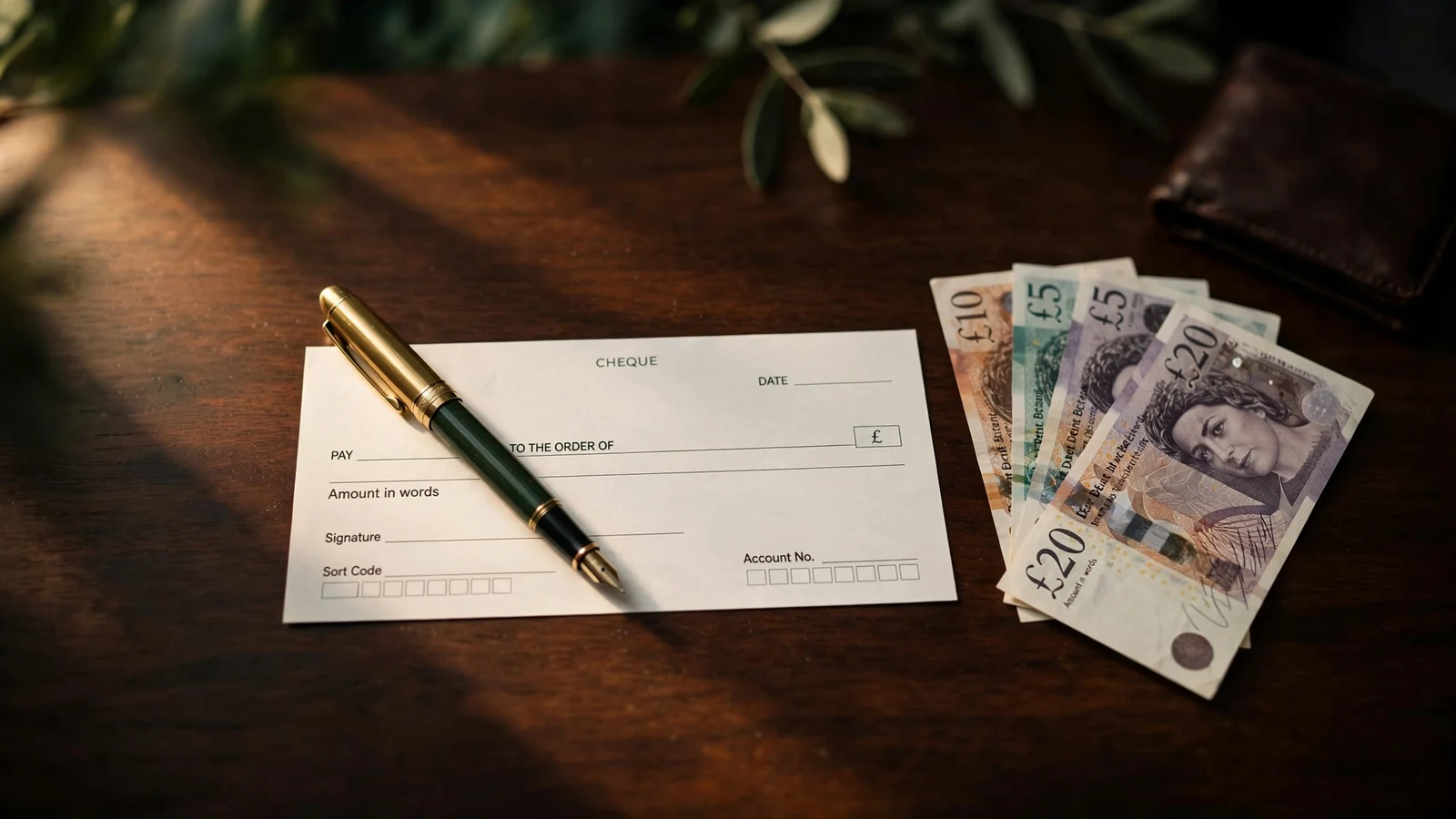
A bank cheque and a casino deposit made through a mobile phone belong to different payment systems. A cheque is a written instruction for a bank to pay a stated sum; Boku is a Pay by Phone service. The words may appear near one another in discussions of casino payments, but they do not describe interchangeable ways to fund an account.
That distinction matters for anyone looking for an online casino that accepts bank cheques in the UK. A page about Boku cannot establish that a casino accepts a cheque, and a list of Pay by Phone options is not a list of cheque facilities. Treating the two as equivalents would turn a search for one payment method into a claim about another.
The terminology can blur because both methods connect a payment to a person’s finances. But the resemblance ends there. A cheque is a paper-based instruction to a bank; Boku is associated with a mobile phone payment. One does not become the other simply because a casino payment page groups several methods under a broad heading such as “banking” or “deposits”.
When looking for a UK casino that accepts bank cheques, check the available payment details and how quickly withdrawals are processed. This list provides a brief reference for considering payout speed.
Zombillion
Zombillion lists a payout speed of 1–3 business days.
Amunbet
Amunbet lists a payout speed of 1–3 business days.
Britsino
Britsino lists a payout speed of 1–3 business days.
Chanze
Chanze lists a payout speed of 1–3 business days.
SpinFormula
SpinFormula lists a payout speed of 1–3 business days.
Dieselwin
Dieselwin lists a payout speed of 1–3 business days.
NightLuck
NightLuck lists a payout speed of 1–3 business days.
Jetsetspins
Jetsetspins lists a payout speed of 1–3 business days.
x3bet
x3bet lists a payout speed of 1–3 business days.
WinBeast
WinBeast lists a payout speed of 1–3 business days.
This leaves a practical gap between the wording of a request and the payment information that is often discussed alongside it. Someone looking for a bank-cheque deposit needs a clear statement that the casino accepts cheques specifically. A reference to Boku, or to Pay by Phone more generally, answers a different question. The distinction is not fussy bookkeeping. It determines whether the named method is the one being sought at all.
The phrase “best online casinos that accept bank cheques” also implies that there is a dependable set of casinos to compare. A comparison can only do that work if its entries actually support cheque deposits. Substituting names associated with Boku would create the appearance of a useful shortlist without establishing the feature the shortlist promises. A neat table cannot repair a mismatch of method.
Boku has its own, narrower place in the UK casino landscape. A small number of UK Gambling Commission-licensed casinos still accept Boku deposits, but that group has been shrinking since 2023. The remaining presence of a phone-based payment option should not be read as evidence that bank-cheque deposits are available, or that the two methods are connected. They answer different payment needs.
The change in Boku’s availability also makes older descriptions less dependable as a guide to what a cashier offers now. A casino payment menu is not a permanent catalogue: an option that once appeared may no longer be there, while the continued existence of Boku at a small number of licensed casinos says nothing about cheque acceptance. The category needs to be named accurately before any comparison can be useful.
There is a small irony in the way payment language travels. “Bank” can suggest a familiar route through a financial institution; “phone” can sound like a separate convenience; “cheque” can evoke a physical document and a signature. Yet a shared association with money does not make these routes equivalent. Casinos, like other businesses, use labels for particular payment arrangements, and those labels matter more than the loose family resemblance between them.
For a person seeking a casino that takes a bank cheque, the central issue is therefore not whether a site offers a payment method that feels broadly financial. It is whether the site explicitly supports cheque deposits. Boku’s presence, where it remains, is evidence only of a Pay by Phone route. It cannot stand in for a cheque facility.
The shrinking number of casinos offering Boku is worth understanding on its own terms, but it does not turn Boku into a substitute answer to a cheque question. Payment names are not interchangeable shorthand. A cheque is a cheque; Pay by Phone is something else.
A bank cheque belongs to the banking system; Boku belongs to the phone account. The distinction matters because the payment can look unfamiliar in a casino cashier, where several methods may sit side by side under headings such as deposits or payments. Selecting Boku does not send a cheque to the casino, nor does it draw money directly from a bank account. It starts a Pay by Phone transaction linked to the mobile number entered during the process.
Boku Deposit Process
Selection
Sign in to the casino account, open the deposit area, and select Boku from the available payment methods.
Details
Enter the desired deposit amount and the mobile phone number associated with the payment.
Verification
Enter the verification code sent by Boku via SMS to authorise the transaction.
Completion
Once verified, the payment is processed as a charge against the mobile account.
The cashier is the point where the casino account and the phone payment meet. After signing in, the player opens the deposit area and chooses Boku if it appears among the available methods. The amount is entered there, along with the mobile number associated with the intended payment. These details identify the transaction: the casino records a proposed deposit, while Boku routes the charge through the mobile service.
The phone number is not just a contact detail. It connects the request to the account that will bear the cost. For a customer on a monthly plan, the deposit is charged to the mobile phone bill. For a prepaid customer, the amount is taken from available PAYG credit. In either case, the phone account becomes the payment source. That is why this method may appeal to someone who wants to fund an online casino account without using a card or bank account, even though it is neither a bank cheque nor a conventional bank payment.
A text message provides the next checkpoint. After the amount and number have been submitted, Boku sends an SMS containing a verification code. The code has to be entered or confirmed as instructed to authorise the transaction. Until that confirmation is completed, the payment request has not passed through the full approval step. The process therefore involves two interfaces: the casino cashier creates the deposit request, and the phone confirms that the mobile account holder is authorising it.
This small sequence also clarifies what is being approved. The confirmation is tied to a particular deposit request, rather than being a general permission for the casino to bill the phone at any time. The player enters the transaction details in the cashier and then confirms through the phone. A mobile number entered incorrectly, or a text message that is not completed, can interrupt that path. The phone is doing the work a card form might otherwise do, but with a different account behind it.
Once the verification is accepted, the payment is processed as a charge against the mobile account. The casino cashier is where the deposit is initiated; the phone network is where the cost is assigned. The separation can be easy to overlook because the casino balance is the visible result, while the bill or prepaid balance is where the charge ultimately appears. Two accounts are involved, and neither should be mistaken for the other.
For a monthly customer, the charge becomes part of the phone bill rather than a direct debit from a bank account at the point of deposit. For a PAYG customer, the equivalent is a deduction from the credit already held on the phone. The underlying movement is therefore different for the two kinds of plan, even though the casino-side steps are alike: select Boku, enter the details, and confirm by SMS.
That distinction can make the method feel immediate in one place and indirect in another. The casino account is funded through its cashier, but the payment obligation is attached to the mobile service. A bank cheque would require a separate banking instrument and handling; Boku is an electronic instruction confirmed on the phone. Similarity ends at the broad purpose of moving value.
The cashier flow is plain enough once its two halves are visible. The casino asks for a deposit and a number; the SMS verifies the request; the mobile account carries the charge. The language of “deposit” can make every method sound alike, but the route underneath is specific. No cheque changes hands. A phone does.
Boku’s retreat from casino cashiers can look like the result of a new prohibition. It was not. The UK Gambling Commission did not introduce a rule banning Boku by name. The change came from individual operators, which moved away from the payment method over compliance risk.
That distinction matters. A regulator’s general oversight of gambling and an operator’s decision about which payment services to offer are not the same thing. A cashier can lose an option without a law naming that option. In this case, Boku’s declining presence reflects commercial and compliance decisions made by casinos, rather than a Boku-specific UKGC ban.
The pattern has been visible since 2023. A specialist review of UK casino payment options describes operators replacing Boku with Fonix or Siru Mobile, while others removed Pay by Phone altogether. The change has not been uniform: some cashiers shifted to another mobile-payment provider; others stopped offering this route. A familiar label disappearing from one site does not establish what another site will provide.
Compliance risk is a broad reason, not a claim that Boku itself was declared unlawful. Operators have to weigh the payment routes they make available against the obligations that apply to their gambling services. Choosing to withdraw a method is one way of managing that exposure. It may leave the service less convenient for customers who relied on phone billing, but the decision belongs to the operator.
That is the quieter story behind a thinning cashier menu. Payment options are not permanent fixtures. A provider can remain available in the wider market while a casino stops accepting it; a replacement can appear on one site without being adopted across the industry. What looks like a single national change is often a collection of separate decisions.
The distinction also helps explain why there is no simple answer for someone looking for UK casinos that accept cheques. A bank cheque and Boku are different payment methods, and the reduction in Boku availability says nothing about cheque acceptance. It would be misleading to treat a mobile-payment service as a substitute for a bank cheque, or to assume that a casino removing Boku has replaced it with a cheque option.
The practical effect is a narrower set of direct Pay by Phone choices, not a prohibition announced by the regulator. Some operators have changed providers; others have dropped the category. That leaves the cashier’s current options dependent on the particular casino, and on whether its payment arrangements have changed.
No grand announcement. Just fewer doors.
Boku’s appeal is partly a matter of scale: it is designed for relatively small deposits, not for moving a large balance into a casino account in one go. The figures attached to it, however, do not form a single dependable tariff. Published descriptions differ, and a limit can depend on the mobile network as well as the casino.
One specialist review gives a per-transaction ceiling of £30, with some casinos or network operators said to permit £40 or £50. Other descriptions put the transaction amount at about £10 and the network-level daily allowance at £30. A further account specifies a daily limit of £30 but gives no separate per-transaction cap. These accounts disagree about the transaction limit; the £30 daily figure appears in more than one version, but it should not be mistaken for a universal promise.
That distinction matters. A cashier may show a deposit amount that appears acceptable, yet the phone network can still refuse it because the customer has reached its own allowance. A specialist review attributes the daily cap to the mobile operator rather than the casino. That is a useful indication of where the restriction may sit, not a guarantee that every network applies the same limit or calculates it in the same way.
The casino and the network therefore have different roles in setting the practical ceiling. The operator can determine which deposit amounts its cashier offers, while the mobile provider may apply a separate daily restriction to charges made through the phone account. Where both limits apply, the lower one governs what can actually be deposited. A casino’s displayed maximum does not cancel the network’s rules.
Nor does a figure found in a review settle the matter for every account. Boku limits can vary, and the descriptions available do not agree on whether there is a fixed transaction cap in addition to the daily one. The higher amounts reported by one specialist review should be treated as conditional possibilities, not as a standard that any particular casino or network must allow. Small print, in this case, belongs partly to the phone company.
This is an unusual division of control for a casino payment. The account balance sits with the gambling operator, but the spending route runs through a telecommunications provider, whose own limits can determine how much reaches that account. The phone line becomes a narrow financial channel. A modest one.
That is also why a search for cheque deposits and a decision about Boku are not interchangeable. A bank cheque is not a phone-network transaction, and Boku’s limits say nothing about whether a casino accepts cheques. They describe only the constraints attached to a pay-by-phone deposit.
For anyone comparing stated limits, the important point is not to combine every published figure into a supposed maximum. The figures conflict, and the network may impose its own cap independently of the casino. The available information supports a picture of low, variable limits, but not a single amount that applies across the UK.
For someone searching for online casinos accepting cheque payments, Boku is a different proposition altogether. It uses a mobile phone balance rather than a paper cheque or bank account, and prepaid users face a limit set by the credit already on the handset. A specialist review states that a PAYG customer cannot deposit more through Boku than the remaining phone balance. If the balance falls short of the chosen amount, the deposit cannot be funded from that prepaid account.
That restriction makes the phone’s credit part of the payment decision. The money is not held in a separate casino-payment pot: Boku’s charge comes out of the available PAYG balance. A player may have enough in the casino account to choose a deposit amount, yet still lack the mobile credit needed to complete it. The two balances answer different questions.
There is also a denomination rule to consider. A specialist review describes Boku deposits as available only in amounts divisible by ten, giving £10, £20 and £30 as examples. An amount between those steps would not fit the stated pattern. This is a separate constraint from the prepaid balance: having enough credit does not make an unsupported amount acceptable.
The combination narrows the practical choice. A PAYG user needs both sufficient remaining credit and a deposit amount that matches Boku’s stated increments. A balance of £20, for instance, could cover a £20 deposit under that description, but not a larger one; a smaller amount that is not divisible by ten would still fail the denomination condition. These figures illustrate the rule described in the specialist review, not a promise that every casino’s cashier will offer the same options.
That distinction matters because the search for casinos accepting bank cheques in the UK can lead towards payment methods that have little in common with cheques. Boku does not turn a prepaid phone into a bank account. It offers a way to charge a casino deposit to mobile credit, subject to the balance and amount constraints attached to that route.
For PAYG customers, the available credit is therefore not a minor technical detail. It is the ceiling on what can be funded through Boku, while the permitted denominations determine which deposit choices fit at all. The cashier may present an amount, but the phone balance has the final word.
Boku has a one-way role in a casino account: it can put money in, but it cannot carry winnings back out. A deposit made through a phone bill or prepaid balance does not create a matching route for a later cash-out. The distinction is easy to miss when payment methods appear together in a cashier, where a row of logos can suggest that every option works in both directions.
It does not. Boku is deposit-only. Once a balance includes winnings, the casino cannot send them to the phone account used to fund play. A separate withdrawal method must therefore be registered, such as a debit card, an e-wallet or a bank transfer. The account’s route into the casino and its route back to the player are separate arrangements.
That separation reflects the different systems involved. Boku charges through a mobile network, while a withdrawal requires a method the casino can use to return funds to the account holder. The phone bill may show the cost of a deposit, but it is not a receptacle for casino winnings. A payment method can open the door without providing the way out.
This matters to anyone comparing casino payment options, including those looking for cheque deposits. A bank cheque and a phone-billed deposit are not interchangeable descriptions, and Boku’s deposit function says nothing about whether a casino accepts cheques. Nor does using Boku mean that winnings can be collected by cheque. The withdrawal method has to be considered on its own, and registered separately.
The practical consequence is not a minor cashier detail. If no suitable withdrawal route is in place, a player may be able to fund an account yet lack the method needed to receive a payout. The casino’s available options and account requirements determine which routes can be registered; Boku itself does not solve that problem. Its job ends at the deposit.
There is something distinctly modern about this split: a phone can authorise a payment in a few taps, while the return journey belongs to another financial channel. Convenience, in this case, has a boundary. A casino deposit made through Boku should be paired with a registered withdrawal method capable of receiving funds. No reverse gear.
A casino’s payment menu and its legal standing answer different questions. A bank cheque, Pay by Phone or another deposit route may describe how money reaches an account; none of those labels establishes that the operator is authorised to offer gambling to people in Britain. The licence is the more consequential detail.
The UK Gambling Commission regulates commercial gambling in Great Britain and oversees online casinos serving consumers there. Its reach does not stop at the operator’s office or the location of the equipment running the website: remote gambling offered to Great Britain consumers falls within its remit even when key equipment is elsewhere. In that sense, the digital border is less important than the market being served.
There is one regulator for commercial gambling in Great Britain. The Commission grants operating licences to gambling businesses and personal licences to individuals in relevant roles. These are distinct permissions: a business’s operating licence is not interchangeable with an individual’s personal licence, and a familiar brand name is not proof that the licence is current.
That distinction matters when a casino advertises a particular way to deposit. Payment methods can change, and a cashier can make an operator look established without showing whether it has the required authority. A bank-cheque label, in particular, should not be mistaken for a regulatory category. It says something about a proposed payment route, not whether the casino may lawfully offer its games to British customers.
The Gambling Commission’s public register is the place to verify an operator’s licence before depositing. The register connects the commercial name to the permission behind it; that check is more reliable than a payment logo or a polished cashier page. UK-licensed casinos must also verify a customer’s age before permitting deposits. The rules therefore reach beyond the moment money is transferred: they govern who may offer gambling and who may be allowed to fund an account.
This framework applies to remote gambling offered to consumers in Great Britain regardless of where the company or its technical infrastructure is based. A site operating from abroad does not escape the requirement simply by placing its servers elsewhere. The market, not the scenery, is decisive.
Northern Ireland sits outside the Gambling Act 2005 framework that governs England, Wales and Scotland, so “UK” and “Great Britain” are not always interchangeable in legal descriptions. For online casino licensing, the practical point remains clear: before treating any payment option as a reason to deposit, establish that the operator holds a current Gambling Commission licence. Payment convenience is not permission.
When Boku is absent from a casino cashier, a different Pay by Phone service may still appear. A specialist review identifies Fonix at MrQ and Duelz, and Siru Mobile at Mr Vegas and Videoslots. These are separate services, not alternative labels for Boku: a casino’s support for one does not establish that it accepts another, or that it will accept Boku.
That distinction matters because payment menus are built operator by operator. The mobile-payment route available at one site may be missing at another, even where both serve the same market. A name found in a review is a lead, not a standing promise; the live cashier is where availability has to be confirmed. Payment arrangements change. Cashiers do not keep a museum catalogue.
There is also an indirect route described by a specialist review: use Boku to add funds to a Neteller account, then use Neteller to deposit at a casino that accepts it. In that arrangement, Boku is not the casino’s payment method. It funds the e-wallet; Neteller makes the onward casino deposit. The casino therefore needs to support Neteller, while Boku must be available for funding the wallet.
This distinction can be easy to miss when a payment method is discussed as though it travels unchanged from phone to gambling account. It does not. Each step has its own provider and acceptance conditions. A casino that accepts Neteller is not thereby a Boku casino, and a Boku-funded Neteller balance does not create direct Boku acceptance at the cashier.
These routes may be relevant to someone looking for a way to move money from a phone account into online gambling, but they are not bank-cheque deposits. Pay by Phone and e-wallet funding are different payment arrangements; neither should be presented as evidence that a casino takes a cheque. The wording of a payment search can point toward a practical need while still naming a method that operators do not offer.
Boku can be used to add funds to a Neteller account, which is then used to deposit at a casino. In this case, the casino must support Neteller, but it does not need to support Boku directly.
The useful question, then, is not whether one service can stand in for every other one. It is which link in the chain a casino actually supports: a direct mobile-payment provider, Neteller, or neither. A substitute route can preserve a way to deposit, but it cannot turn one payment method into another.
A casino bonus is not automatically available simply because a deposit goes through. Pay by Phone eligibility is set by the operator and can differ between casinos, so the payment method matters as much as the offer headline. A specialist review records MrQ, Duelz, Mr Vegas and Videoslots as accepting phone deposits for bonus eligibility; that is a dated snapshot, not a standing promise. The terms attached to the offer remain the deciding document.
This distinction matters for anyone comparing casinos that appear to accept familiar payment routes. A bank cheque and a phone deposit are not interchangeable, and an offer’s eligibility rules may treat each method differently. The advertised bonus can be visible to every account while a particular deposit route is excluded from triggering it. The small print is where that difference lives.
A specialist review describes a common welcome-offer format as a 100% deposit match capped at £100, with a 35x wagering requirement. Those figures describe an offer pattern reported by that source, not a rule binding UK casinos or a reliable description of every promotion. A match bonus also is not cash free of conditions: wagering requirements govern how bonus funds must be played through before any associated winnings can be withdrawn.
Timing can matter just as much. One specialist review reports bonus funds expiring within 30 days and bonus spins within 72 hours. These are reported conditions, not universal deadlines; individual promotions can set their own terms. A bonus that is technically available but expires before its conditions are met has little practical value.
The useful distinction is between whether a phone deposit qualifies at all and what happens after a bonus is credited. Eligibility answers the first question. The offer terms explain the match, wagering conditions, expiry and any payment-method exclusions. Reading only the banner leaves the consequential clauses out of view. A cautious assessment therefore treats the promotional headline as an invitation to inspect the rules, not as the rules themselves.
Direct Boku acceptance has contracted to a small, identifiable corner of the UK casino market. A specialist review identifies Jackpot Mobile Casino and Peachy Games among the remaining examples. The names are useful not as a ranking, but as a distinction: direct acceptance means Boku appears as a payment choice at the casino itself, rather than somewhere along a longer route to a deposit.
That distinction matters because payment labels can blur different arrangements. A casino accepting another phone-payment service is not thereby a Boku casino; nor is a service that lets someone fund an e-wallet the same as Boku appearing in the casino cashier. The route, not the general resemblance, defines the method.
BoyleSports has also been reported by a specialist review as having added Boku to its cashier as a UK-based payment option. Such details describe a reported operator choice, not a permanent feature of the market. Cashier menus change, and the shrinking number of direct options makes an old mention particularly easy to mistake for a current one.
The phrase “bank cheque online casinos in the UK” points to a different payment instrument altogether. Boku is a phone-billed or prepaid-mobile payment method; its presence says nothing about cheque acceptance. The two methods should not be folded together simply because both involve moving money into a gambling account.
A small remnant, then—not a broad category. And not a cheque.
Boku’s standard UK limit is £30 per transaction, although some casinos or network operators may allow £40 or £50. Network limits are typically about £10 per transaction and £30 per day; PAYG deposits are also capped by your remaining phone credit.
Yes, a small number of UKGC-licensed casinos still accept Boku, though operators have been dropping it since 2023.
Check whether Boku appears in the casino’s cashier and whether your mobile operator supports Pay by Phone; EE, O2, Vodafone and Three are listed as supporting pay-by-mobile services.
Choose Boku in the casino cashier, enter the deposit amount and your mobile number, then confirm the transaction using the SMS verification code.
Yes. Jackpot Mobile Casino and Peachy Games are among the small number of sites identified as still offering direct Boku deposits.