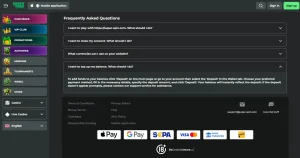
The guide covers cashier confirmation, card-linked wallet limits, deposit checks and why withdrawals may not match deposit speed.

A payment method belongs to the transaction; a slot belongs to the game. The distinction sounds obvious until the two are joined in a phrase such as “slots with Google Pay”, which can make a payment option seem like a property of particular games. It is not. A slot does not acquire a different reel, pace or set of rules because a deposit was made through a phone wallet.
There is no basis for naming particular slot titles as Google Pay games. The question of whether a payment method is accepted concerns the operator and its payment arrangements. The question of which games are available concerns the casino’s catalogue. Neither answer, on its own, describes how a slot must operate under British rules.
That last point is less decorative than it may sound. In Britain, online slots cannot offer autoplay. Each spin must take at least 2.5 seconds. These requirements apply to the play itself, not to the route by which money reaches an account. Tap to pay or not, the slot cannot be set to keep spinning automatically, and a round cannot be compressed below the required duration.
When looking for a UK casino that accepts Google Pay, check the available payment methods as well as withdrawal information. The details below give the stated payout speed for each operator; they do not confirm Google Pay availability.
Zombillion
Zombillion has a stated payout speed of 1–3 business days. The available information does not confirm whether it accepts Google Pay.
Amunbet
Amunbet has a stated payout speed of 1–3 business days. The available information does not confirm whether it accepts Google Pay.
Britsino
Britsino has a stated payout speed of 1–3 business days. The available information does not confirm whether it accepts Google Pay.
Chanze
Chanze has a stated payout speed of 1–3 business days. The available information does not confirm whether it accepts Google Pay.
SpinFormula
SpinFormula has a stated payout speed of 1–3 business days. The available information does not confirm whether it accepts Google Pay.
Dieselwin
Dieselwin has a stated payout speed of 1–3 business days. The available information does not confirm whether it accepts Google Pay.
NightLuck
NightLuck has a stated payout speed of 1–3 business days. The available information does not confirm whether it accepts Google Pay.
Jetsetspins
Jetsetspins has a stated payout speed of 1–3 business days. The available information does not confirm whether it accepts Google Pay.
x3bet
x3bet has a stated payout speed of 1–3 business days. The available information does not confirm whether it accepts Google Pay.
WinBeast
WinBeast has a stated payout speed of 1–3 business days. The available information does not confirm whether it accepts Google Pay.
The rules impose a deliberate interval between one decision and the next. That interval may not feel dramatic; it is not meant to. A screen can still make play look brisk, with animation and sound filling the space, but the regulated spin has a minimum length. Autoplay, meanwhile, would remove the need for the player to initiate each spin. The prohibition keeps that small act of participation in the sequence.
There is a social history in such small constraints. Gambling has long borrowed the language of leisure: a game, a pastime, a moment’s diversion. Digital design can make the activity feel almost frictionless, reducing a succession of choices to a continuous flow. Rules about pace and autoplay put friction back in—not enough to make a slot slow in any ordinary sense, but enough to distinguish a sequence of chosen spins from a process left running by itself. It is regulation expressed through seconds and buttons.
The stake rules add another boundary. For online slots, the maximum stake per game cycle is £5 for customers aged 25 and over, while customers aged 18 to 24 face a £2 maximum. The £5 limit for adults aged 25 and over took effect on 9 April 2025. These limits concern the amount risked on a game cycle; they do not depend on whether the account was funded by a card, a wallet or another route.
That separation matters because payment language can suggest more than it establishes. A casino described as accepting a particular payment method is not thereby offering a special category of slot, nor does the payment route override rules governing speed, autoplay or stake. Money entering an account and a game being played are related events, but they are not the same regulatory question.
Nor does a search for the best slots associated with Google Pay produce a meaningful ranking of games by payment compatibility. Game titles do not process the deposit. A particular operator may offer a catalogue of slots, but a payment method does not tell anyone which titles appear there or what features they contain. Treating “Google Pay slots” as a distinct genre confuses the doorway with the room.
The same confusion can arise around casino accounts and deposits. A payment label may describe one part of an account’s use, while the experience of playing remains governed by the rules for remote gambling and by the operator’s game offering. The slot does not know how the deposit arrived. Its legal limits do not change with the tap that preceded it.
This is not a technicality designed to spoil a tidy phrase. It is a useful boundary: payment describes funding; game regulation describes play. In Britain, the relevant facts about slots are concrete—no autoplay, a minimum 2.5-second spin, and age-related stake caps. A wallet does not soften them. Nor does it make a slot title its own.
A payment logo on a casino’s page is not the same thing as a working deposit route. The cashier is where an operator presents the methods available for an account and transaction; that is the useful place to establish whether Google Pay is actually offered, rather than infer availability from a general payment page, an old review or a search result.
That distinction matters because payment arrangements are not fixed labels. An operator may describe a method in broad terms, while the cashier determines what can be selected at the point of deposit. A mention of mobile payments, for instance, does not by itself confirm that Google Pay appears as an option. Nor does the presence of another familiar payment brand establish that Google Pay is supported alongside it.
The cashier is a practical boundary, not a promise. It can show an option currently presented by the operator, but it cannot guarantee that every attempted transaction will be accepted. A displayed method and a completed payment are different stages. The former is information about availability; the latter depends on the transaction being processed successfully. Treating them as interchangeable makes for a tidy advert and a less tidy account history.
For a casino to accept Google Pay as a deposit method, the route must be visible and selectable in that casino’s cashier for the relevant account. A general statement that a site supports digital payments is too broad to settle the question. So is a page that lists payment brands without explaining which are available to customers in the UK or under what conditions.
A specialist review of casino payment pages lists Visa and Mastercard among the methods mentioned by the sites it examined. That is not a standing guarantee that either card brand will be available to every UK customer, or that every product issued under those brands will be eligible. The cashier remains the place to check current availability and card-product eligibility. The same caution applies more strongly when a particular wallet or mobile payment service is in question: one payment method cannot be inferred from another.
This is a modest distinction, but payment language often blurs it. “Supports payments” can mean that a brand appears somewhere in an operator’s material; “available in the cashier” means that the account can see it as a route. Neither statement should be stretched into a claim about a named casino unless its live cashier confirms the method. A list assembled from logos can look definitive while omitting the one detail that matters: what the customer can actually select.
The cashier also makes the account’s transaction setting more concrete. A specialist review of casino payment information reports that GBP is supported on the pages it examined. That does not remove the need to confirm the account currency before making a first transaction. If the account is set to another currency, conversion may enter the process; the payment brand alone does not settle that question.
Currency is not a decorative setting. A deposit amount can be presented in one unit while the account records funds in another, leaving conversion as part of the transaction. Checking the account’s stated currency alongside the chosen payment route helps distinguish a straightforward deposit from one involving an exchange. The point is not that every account will convert, but that the cashier and account settings are where the applicable arrangement becomes visible.
Google Pay availability should be approached with the same precision. A casino’s general reputation for accepting online payments says little about whether this specific option appears. A cashier that does not display Google Pay cannot be turned into a confirmation by a broad claim about cards, wallets or mobile checkout. Conversely, seeing Google Pay listed establishes that the operator presents it as an available method at that moment, not that every transaction will necessarily pass.
Payment information can age quickly. A review, comparison page or promotional graphic may remain online after the cashier’s options have changed, and a broad description can omit account-specific availability. The live cashier is therefore the relevant point of comparison when assessing a casino’s payment claims. It is less glamorous than a badge. It is also closer to the transaction.
The wording around a method deserves attention. “Deposit method” says something about putting money in; it does not automatically establish anything beyond that. “Available” should be read in the context of the cashier, the account and the transaction being considered. A generic payment page may explain what an operator has offered, but it does not substitute for the option actually presented inside the account.
For a search for casinos accepting Google Pay deposits in the UK, the meaningful distinction is not between sites with polished payment pages and those without them. It is between a general mention and a selectable cashier option. That is the limit of what a cashier can confirm, and also its value: it replaces inference with a current, account-facing view. A logo is not a route.
A payment option and a welcome offer answer different questions. Google Pay may describe how a deposit is made; it does not, by itself, establish that a particular promotion applies to that deposit. Bonus eligibility depends on the promotion’s terms and the payment route named there. Treating the method’s presence in a cashier as proof of bonus qualification would confuse two separate parts of the transaction.
That distinction matters because payment exclusions do exist. A specialist review reports that PayPal, despite its appeal for speed and convenience, may be excluded from bonus eligibility. The same kind of review notes that Skrill and Neteller are offered at some sites and are often excluded from promotions. These are not universal rules for every operator or offer; they are reasons to read the terms for the specific promotion rather than infer eligibility from a familiar payment logo.
The sensible comparison is therefore not simply whether a casino advertises a bonus alongside Google Pay. The relevant detail is whether the offer’s conditions permit deposits made by that route, and whether any other restrictions apply. A headline can describe an offer without spelling out every payment condition. Terms do the less glamorous work.
Games require a different kind of evidence. Google Pay is a payment service, not a game title or a guarantee of what appears in a casino’s catalogue. Its acceptance cannot identify which slots are available, and it offers no basis for naming particular games as Google Pay slots. A list of titles would need to be grounded in an operator’s current catalogue, not assembled from the payment method attached to a search or promotional label.
The same separation applies on a mobile device. A casino’s mobile access and its accepted payment methods are distinct features; one does not establish the other. Nor does a payment option prove that a new casino, a particular game or a promotion is available through every version of its site or app. Those details belong to the operator’s own current information.
For anyone comparing offers, the useful question is narrow: does the promotion allow the chosen payment route? For game choice, the useful question is separate: what titles does the casino actually list? Combining both into a single “Google Pay games and bonuses” category may sound tidy, but it can make unrelated details look like a verified package.
There is no dependable shortcut from payment acceptance to bonus eligibility or game availability. A cashier entry can establish a payment option at that point; it cannot settle the terms of an offer or supply a games list. Those distinctions are less marketable than a ranked list. They are also more exact.
Google Pay sits within a payment landscape in which familiar card routes remain prominent. UK casinos commonly accept debit cards, including Visa and Mastercard. That does not make every cashier identical, nor does the presence of a card logo establish that a digital wallet using that card will be accepted. Payment methods have their own entries and conditions; one route cannot simply borrow the status of another.
Apple Pay offers a useful point of comparison, but only a limited one. Some UKGC-licensed casinos accept Apple Pay for deposits. This shows that mobile wallet payments are present in parts of the regulated market. It does not show that those same casinos accept Google Pay, or that a cashier supporting one wallet will support another.
The distinction is easy to blur because the services can look similar from the customer’s side: a device presents a payment credential, and the transaction is authorised without entering card details in the usual way. But similarity of interface is not evidence of shared acceptance. The operator’s payment menu is what determines which methods are available for that account and transaction. A logo on a general information page may describe a route in broad terms; the cashier is where its availability becomes concrete.
There is also a quieter point about the word “casino”. A UKGC-licensed site is part of a market where payment acceptance operates within a regulated framework, not an informal promise that every familiar service will be supported. The licence governs the operator, while the cashier describes the routes it makes available. Those are related questions, not interchangeable ones.
That matters particularly when a search for Google Pay turns into a hunt for the “best” sites that accept it. A list built from debit-card acceptance or from Apple Pay support would be making a leap. Neither establishes Google Pay availability, and neither says whether a Google Pay deposit would be offered to every customer. Payment menus can differ between operators, so the general shape of the market cannot substitute for an individual check.
The broader picture is therefore modest but clear: debit cards are common, and Apple Pay is accepted for deposits at some UKGC-licensed casinos. These facts describe established alternatives in the market; they do not answer the Google Pay question on their own. The distinction is less exciting than a ranked list, but more useful than one assembled by treating all digital payments as aliases.
Commonly accepted in UK casinos, including brands like Visa and Mastercard.
Accepted for deposits at some UKGC-licensed casinos as a mobile wallet alternative.
Availability depends on the specific operator's cashier and is not guaranteed by the presence of other digital wallets.
A payment brand is not a family resemblance. It is a cashier entry, or it is not.
A card logo is a starting point, not a promise that every card bearing it will work. A specialist review of casino payment pages lists Visa and Mastercard, but the cashier is where current UK availability and eligibility for a particular card product have to be checked. The distinction matters: a payment network can be familiar while a specific card, issuer or route is not supported.
That is especially relevant to searches for casinos accepting Google Pay cards in the UK. A debit card stored in a digital wallet is not automatically the same thing, from the casino’s point of view, as entering the card details directly. Nor does a casino displaying Visa or Mastercard necessarily confirm that it accepts Google Pay payments, or that a card linked to Google Pay will be eligible. The cashier’s listed methods and any conditions attached to them are the practical evidence of what can be used.
The same caution applies on mobile. A payment option appearing on a phone does not establish that the casino’s mobile cashier supports it. Device, wallet, card and operator all sit in the same chain, but compatibility at one point does not settle compatibility at the others. A card may be valid for ordinary purchases and still fail a gambling transaction because the casino or the relevant payment route does not accept that product.
There is also a firmer boundary than compatibility. The UK regulator banned credit-card gambling on 14 April 2020, and the rule has not been relaxed. UK-licensed casinos cannot accept credit-card payments for gambling. This is not a question of whether a card carries a familiar logo or whether its payment is routed through a phone: credit-card funding cannot be made acceptable merely by changing the interface.
The restriction also reaches credit-card funds routed through a money service business. Remote gambling operators cannot accept those payments for gambling. They cannot accept wallet payments where the wallet allows credit-card funds to be used for gambling, either. A digital layer does not turn a prohibited source of gambling funds into a permitted one. The rule follows the funding, not the polish of the checkout screen.
That leaves a practical distinction between card acceptance in general and eligibility in a particular transaction. Visa or Mastercard may appear in a casino’s payment information, while the cashier applies conditions to the exact product being used. The term “card” covers more than one arrangement; the logo alone says little about the card’s funding type or whether that route is accepted.
For Google Pay-linked debit cards, the answer therefore cannot be inferred from a card-network logo alone. The casino must list the relevant payment route, and the card product must meet its conditions. For credit cards, the boundary is not uncertain: gambling deposits are prohibited. Familiar names, different rules.
A missing Google Pay button does not leave a single obvious substitute. The cashier may offer a bank route, a prepaid voucher or an e-wallet, and those methods do not all move money in the same direction. A payment option shown by one casino is not evidence that another offers it.
Open banking and bank transfers are alternatives worth distinguishing from card payments. A specialist review describes these routes as capable of providing instant deposits and fast withdrawals at many sites. That is not a promise about every cashier: availability and processing depend on the operator and the method displayed for the account. “Bank transfer” can cover different payment flows, so the label alone does not establish how a particular transaction will work.
Paysafecard has a narrower role. It is a prepaid voucher for deposits, not a route for receiving withdrawals. That distinction matters because a convenient way to put funds into an account may not provide a corresponding way to take them out. Closed-loop rules and the casino’s own payment arrangements can shape what happens later.
Skrill and Neteller are e-wallet alternatives listed at some casino sites, according to a specialist review. Their availability is not universal, and the cashier is the practical place to establish whether either appears for a particular account. The same review notes that these wallets are often excluded from promotions; payment choice and promotional eligibility are separate matters, rather than two sides of one button.
E-wallets also have an important boundary in the British market. Remote gambling operators cannot accept wallet payments where the wallet allows credit-card funds to be used for gambling. A wallet name in a list therefore does not settle whether a particular funding route is acceptable. The payment chain matters, not just the brand printed on the screen.
There is no universal “best” alternative to Google Pay. A deposit-only voucher may suit someone who needs a way to fund an account but cannot serve as a payout route. A bank option may support more than one direction at some sites, while an e-wallet’s presence still needs to be checked in the cashier. Each method has its own limits.
The useful comparison is functional: whether the method is offered, whether it can be used for deposits, and whether it is available for withdrawals. These are separate questions. A list of payment logos can make them look like one. It is not.
A deposit screen can make a payment method look like a simple button: choose it, enter an amount, continue. The amount is not necessarily simple. A specialist review puts the minimum deposit at £10–£20, with the figure depending on the payment method, but that is a reported guide rather than a dependable Google Pay minimum. A cashier’s own terms are the relevant place to confirm the amount attached to a particular route.
The same caution applies when looking at how much can be deposited. A site may set separate maximums for a single transaction, a day or a month, and those limits can depend on the payment method and the status of the account. A number shown beside one route should not be treated as a rule for another. For anyone comparing casinos that accept Google Pay in the UK, the method’s name alone cannot settle the minimum or the permitted deposit ceiling.
There is another check before the money enters the account. Remote gambling operators must verify a customer’s age before allowing a deposit. This is not a decorative step added after the cashier has done its work: it is a condition of opening the door to real-money play. A payment method can be ready while the account is not.
UKGC rules also require a prompt for new customers to set a financial limit before their first deposit. The operator must provide accessible controls for account-level limits as well, so the choice is not confined to a one-off screen. The sequence matters: the first deposit is preceded by a chance to set a boundary, rather than the boundary being left until after spending has begun. Paperwork before play.
The limit prompt is separate from a payment provider’s transaction cap. One concerns how much a customer chooses to make available for gambling; the other concerns what a payment route or casino will process. Neither tells the whole story by itself. The displayed minimum, the cashier’s maximums and the account’s own financial settings each govern a different part of the transaction.
For Google Pay deposits, no universal minimum follows from the payment label. Availability, eligible amount and account checks are distinct questions, and the cashier may present different conditions as the account progresses. A deposit that can be initiated is not necessarily one that can proceed immediately: age verification and the required financial-limit prompt come first.
A payment that appears on a casino balance promptly has not thereby acquired a matching route back to a bank account. Deposits and withdrawals are separate stages, with different checks and, sometimes, different delivery times. A Google Pay deposit therefore says little by itself about how a later payout will be handled.
UK anti-money-laundering rules generally direct winnings back to the original payment source. This closed-loop principle helps operators establish where funds came from and where they are going. It can also make a wallet or card-linked payment less straightforward as a withdrawal route: the cashier may not offer the same method for both directions. Google Pay should not be assumed to receive withdrawals simply because it was available at deposit.
The payment route is only part of the wait. A withdrawal passes through the casino’s internal approval process before the payment provider or bank handles it. A specialist review notes that this processing period can be longer for a first withdrawal, when KYC checks may still be under way. Account verification is not an ornamental pause; it is part of the operator’s control over who is receiving the money. Still, “fast” has more than one clock.
A specialist review identifies PayPal, open banking services and debit cards connected to fast payout systems as methods associated with quicker withdrawals. That is a broad comparison, not a promise about any particular cashier, account or transaction. The operator’s approval stage remains relevant, and the payment method must be available for withdrawals at the site in question.
For anyone considering casinos that accept Google Pay in the UK, the useful distinction is between depositing through Google Pay and withdrawing through an accepted payout route. The two should not be treated as a single feature. A casino may apply the original-source rule, while an alternative payout method can bring additional verification. A neat route on the way in may become a more involved one on the way out. No magic mirror.
Withdrawal terms in the cashier are therefore more informative than the deposit button alone: they show which methods can receive funds, whether the original source is expected, and what checks may delay approval. Speed begins with eligibility, not with the tap that funded the account.
A deposit is easier to trace when the casino account and payment route belong to the same customer. Matching the account information to the details attached to the chosen payment method reduces the chance that a basic ownership mismatch will complicate a transaction. It is a small piece of administrative tidiness, but payment systems tend to notice untidiness.
That principle matters when considering whether to deposit with Google Pay at an online casino. The payment name alone does not settle how a particular cashier handles a transaction or what information it may need to establish ownership. Before confirming a deposit, the account holder and the payment route should be consistent; a familiar digital wallet is not a substitute for that consistency.
There is also a difference between money arriving and money leaving. A card deposit may appear instantly, while a payout can take several business days. A specialist review describes that contrast, but it is not a promise about every casino, card or transaction. Deposit speed and payout timing are separate parts of the process, and the first does not establish the second.
This distinction can shape expectations around any payment method, including Google Pay. A quick confirmation on the deposit side says little about how a later payout will be handled. The account’s payment details, the casino’s procedures and the checks attached to a transaction all matter; convenience at the point of funding does not make those processes identical.
For a Google Pay deposit, the practical question is therefore not only whether the cashier displays the option. It is whether the payment route can be used consistently with the account holder’s details, and whether that setup fits the casino’s transaction process. A mismatch can create avoidable friction; a matching route reduces one basic source of it, without guaranteeing a particular outcome.
The same caution applies to searches for a specific Google Pay minimum or a deposit-linked offer. Those details cannot be inferred from the payment label itself. A payment method and the conditions attached to an account are separate matters. Clear details first; speed second.
A payment option and a self-exclusion arrangement answer different questions. Google Pay indicates a possible way to fund an account; it does not show whether a casino participates in GamStop, whether an account is covered by a particular exclusion, or what protections apply. The same distinction holds for claims about Google Pay casinos “not on” or “outside” GamStop: the payment method cannot establish that status.
Nor does the presence of Google Pay make a casino suitable for someone seeking to avoid self-exclusion controls. Payment acceptance is not a shortcut around them, and it says nothing about whether a person’s exclusion will be recognised. No casino should be named or recommended on that basis.
In Great Britain, remote gambling licensees serving local customers must hold a UK Gambling Commission licence. UKGC-licensed casinos must provide self-exclusion tools, alongside other responsible-gambling controls. That requirement is not the same as evidence that a particular casino is registered with GamStop. The two should not be casually treated as interchangeable.
The distinction matters because a payment badge is visible and simple, while exclusion arrangements concern access to gambling. One belongs to the cashier; the other belongs to safeguards and account access. A logo can settle neither question.
A request for casinos not covered by GamStop, paired with Google Pay, therefore needs two separate checks: the operator’s current UKGC status and reliable information about its self-exclusion arrangements. Neither can be inferred from the other. A casino advertising Google Pay does not thereby prove it is outside GamStop, just as a GamStop claim does not prove that Google Pay is available.
For anyone who has chosen self-exclusion, seeking an alternative route to gambling would undermine the purpose of that choice. The responsible distinction is plain: a payment method is not an exclusion status, and a payment listing is not evidence that safeguards can be bypassed. No shortcut.
PayPal, open banking services and debit cards linked to fast payout systems are generally among the quickest. The casino’s approval process and whether your account is verified also affect how soon you receive the money.
UK casinos commonly accept Visa and Mastercard debit cards, and some offer PayPal, bank transfers or open banking, Skrill and Neteller. Paysafecard is for deposits only; check the cashier to see which methods are available for your account.
Yes, Skrill is available at some UK-friendly casino sites. It may be excluded from promotions.
There is no universally cheapest method: costs can include casino and provider fees, bank or issuer charges, currency conversion and network fees. Compare the total cost for your payment amount, including any exchange-rate spread.
Minimum deposits usually start at £10–£20, depending on the payment method.
No. Withdrawal speed depends on the casino’s approval process and whether your account is fully verified.