Monzo uses a banking channel, while Boku charges a mobile bill or pay-as-you-go credit; availability and withdrawal rules can differ.
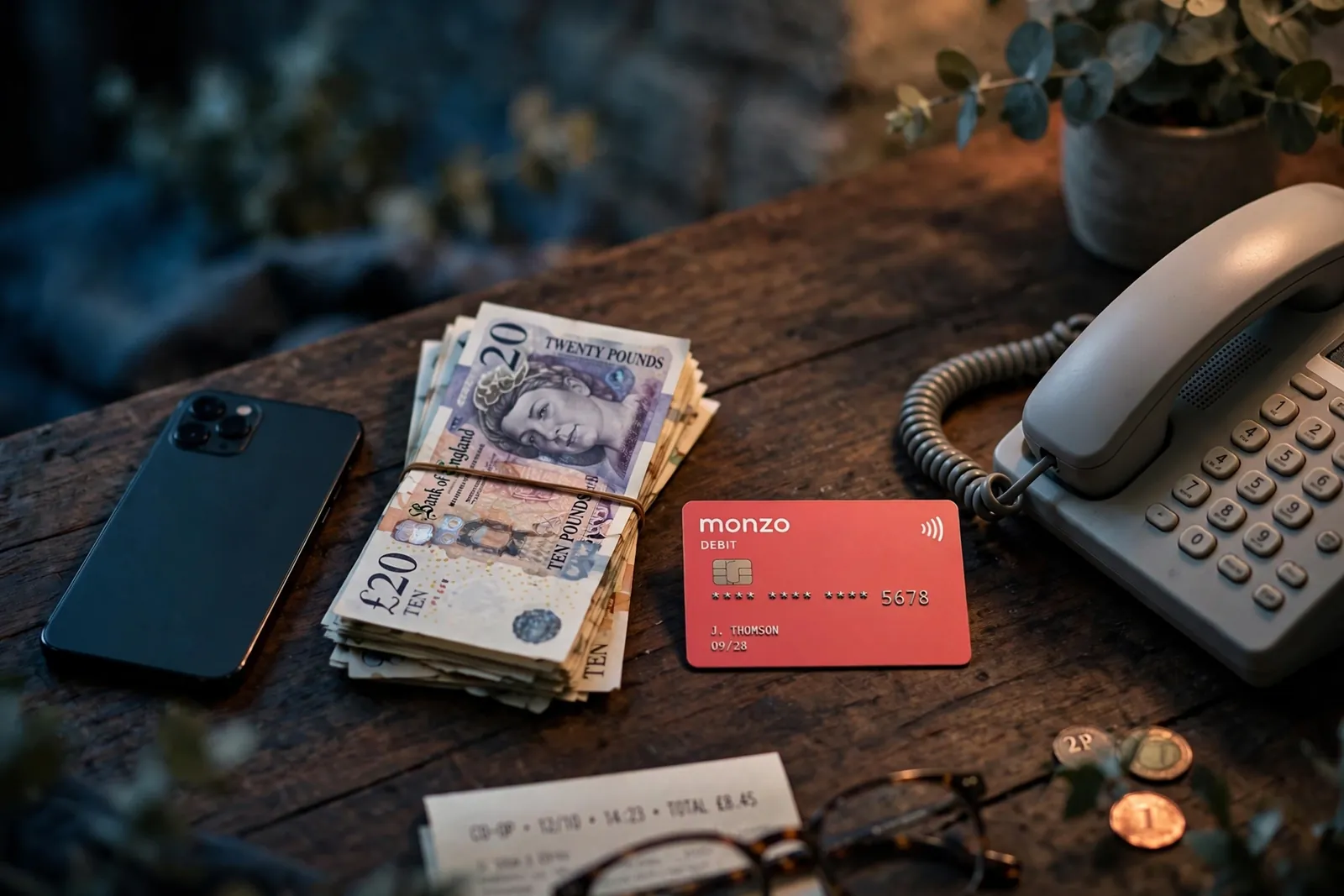
A casino cashier may offer several ways to move money into an account, but similar-looking labels can conceal very different payment routes. Monzo and Pay by Phone are not interchangeable names for one service. The distinction matters because a deposit described as “mobile” could mean a payment charged through a phone network, not a payment made from a bank account accessed on a phone.
Boku is a Pay by Phone method. When it is used for a casino deposit, the cost is placed on the player’s mobile phone bill or deducted from available pay-as-you-go credit. The phone network is therefore part of the payment chain: the deposit is settled through the mobile account, rather than being taken from a Monzo account simply because the transaction was started on a handset.
A Monzo payment belongs to a different category. Where a casino accepts a Monzo-linked card or account route, the payment is made through that banking channel. The fact that the transaction might also be initiated on a mobile device does not turn it into Pay by Phone. A phone can be the screen for a bank payment, a tool for confirming one, or the account that receives a bill. Those are different roles.
When choosing a casino that accepts Monzo in the UK, check the payment options and withdrawal terms before signing up. This list gives a concise point of reference for the operators covered.
Zombillion
Zombillion lists a payout speed of 1–3 business days.
Amunbet
Amunbet lists a payout speed of 1–3 business days.
Britsino
Britsino lists a payout speed of 1–3 business days.
Chanze
Chanze lists a payout speed of 1–3 business days.
SpinFormula
SpinFormula lists a payout speed of 1–3 business days.
Dieselwin
Dieselwin lists a payout speed of 1–3 business days.
NightLuck
NightLuck lists a payout speed of 1–3 business days.
Jetsetspins
Jetsetspins lists a payout speed of 1–3 business days.
x3bet
x3bet lists a payout speed of 1–3 business days.
WinBeast
WinBeast lists a payout speed of 1–3 business days.
This is the small distinction that gets lost in broad descriptions of “mobile casino payments”. One method uses the handset as a way to access a bank payment; another uses the mobile subscription itself as the source of the charge. Boku belongs to the latter. The deposit appears on a mobile bill or reduces PAYG credit. That is not the same as withdrawing money from Monzo or using a Monzo card.
The distinction also explains why information about Boku cannot establish that a casino accepts Monzo. A cashier displaying Boku is evidence of a Pay by Phone route, not evidence of a Monzo card or account route. Conversely, a casino that accepts a particular bank-card payment does not thereby accept Boku. Payment methods are separate arrangements, even when both can be used on a phone and both lead to a casino balance.
The same care is needed around phrases such as “mobile deposit”. In ordinary speech, the phrase can refer simply to a deposit made through a mobile website or app. In payment descriptions, it may mean a transaction billed by a mobile operator. The first describes the device used to reach the cashier; the second describes how the money is collected. Confusing the two turns a matter of payment infrastructure into an assumption about a named bank.
For someone looking for casinos that accept Monzo in the UK, the useful question is therefore not whether the casino has a mobile-friendly cashier, or whether it lists a phone-billing service. It is whether the cashier specifically offers a Monzo-compatible card or account payment route. That answer can vary by operator and by the options shown in an individual account. A general statement that a casino takes mobile payments does not settle it.
Nor does the reverse inference work. A casino’s Boku option does not imply that a player can move money from Monzo through Boku. The Boku charge is tied to the mobile bill or PAYG balance; the Monzo route, if offered, is a separate choice. They should be treated as distinct at the point of deposit, rather than grouped together because both involve a phone somewhere along the way.
That separation is especially important when reading lists of casino payment methods. A list may use “mobile” as a broad label and leave the underlying mechanism unclear. The details matter: a phone-bill charge is not a bank-account transfer, and a card payment is not a phone-bill charge. The label alone cannot show which route is available or whether a particular Monzo payment will be accepted.
In practical terms, Boku information answers a narrow question: whether a casino supports a deposit charged to a mobile subscription or taken from PAYG credit. It does not answer whether that casino accepts Monzo. For that, the cashier’s own payment options need to identify the Monzo-linked route rather than merely mentioning Boku or Pay by Phone.
Different pipes. Different money.
A Boku deposit begins in the casino’s cashier, among the payment methods available for adding funds. The player selects Boku, enters an amount and provides a mobile phone number. The phone is not merely a way to receive a receipt: it is part of the payment route, because the transaction is confirmed through a text message sent to that number.
The next step is SMS verification. Boku sends a code to the phone, and the player enters it to confirm the transaction. That confirmation links the requested deposit to the mobile number and authorises the charge through the mobile payment system. In practical terms, the sequence is short: choose the method, enter the details, then verify by text.
The number matters. A mistyped digit can send the verification message elsewhere or prevent the transaction from matching the intended account. The phone must also be available to receive the message while the cashier process is under way. Without the code, the payment cannot be confirmed through the described flow. This is why Pay by Phone is not quite the same experience as choosing a saved card and waiting for the cashier to respond: the mobile handset sits inside the authorisation process.
Boku bills the deposit through the mobile network. Depending on the mobile plan, the amount is charged to the monthly phone bill or taken from prepaid credit. The casino cashier is where the deposit is started; the phone network is involved in processing the payment. The SMS step makes that division visible. A screen may show a casino transaction, but confirmation arrives through the mobile service.
One detail reported in a specialist review concerns the amounts that can be entered. It describes Boku deposits as restricted to sums divisible by ten, giving £10, £20 and £30 as examples. That is a specific account of the denomination rule, not a guarantee that every casino cashier or network presents the same choices. The available amounts can depend on the payment option shown at the operator, so an amount that seems suitable in theory may not appear as an available selection.
This restriction affects the shape of the transaction, not just its size. A cashier may ask for an amount before displaying the next step; if the entered figure does not fit the supported denominations, the deposit may not proceed as expected. The payment screen is therefore the place where the permitted choices become concrete. A general description of Boku cannot substitute for the options displayed by a particular operator.
After the code is entered, the request is submitted for processing. Boku deposits are described as being credited almost instantly, although the cashier remains the practical record of whether the transaction completed. A submitted SMS code is not, by itself, proof that funds have appeared in the casino balance. The confirmation and the account balance are separate parts of the process: the first authorises the payment, while the second shows whether the operator has credited it.
That distinction matters when a player is moving quickly between screens. A text message can arrive while the cashier is still open; the code must be entered in the casino flow rather than treated as a separate deposit. Conversely, closing the cashier before completing verification can leave the process unfinished. The interface is built around a small exchange between casino and handset, not a single tap.
Boku Deposit Process
Selection
Choose Boku in the casino cashier, enter the deposit amount and provide a mobile phone number.
SMS Verification
Receive a code via text message and enter it into the cashier to authorise the transaction.
Processing
Submit the code for processing; the funds are then credited to the casino balance, usually almost instantly.
The overall process has a clear division of labour. The casino presents Boku as an option and requests the deposit details. The mobile number receives the confirmation code. The network carries the charge through the phone account or prepaid balance. Each stage has its own screen or service, though the player experiences them as one payment.
That is the cashier’s basic choreography: selection, amount, number, text, code. The denomination restriction reported by a specialist review adds a further condition to the amount entered, while the precise choices remain visible only in the operator’s own payment screen. No card details are part of this sequence. The phone does the authorising.
A casino cashier is not a permanent catalogue. Payment methods can be added, replaced or removed as an operator revises its service, so a list of casinos accepting Pay by Phone can become stale even when the casino itself remains open. Boku is a clear example: a small number of UKGC-licensed casinos still take it, but the number has been falling since 2023.
A specialist review describes operators moving away from Boku and, in some cases, adopting Fonix or Siru Mobile instead. Others have removed Pay by Phone altogether. These changes are not evidence that every operator has followed the same path; they show why a payment option cannot be assumed to appear across the market, or to remain in a cashier indefinitely.
The replacement services matter because “Pay by Phone” is a broad label, not the name of one fixed arrangement. A casino that removes Boku may retain a different phone-payment service, while another may offer no such route. The label can therefore make two cashiers sound alike when the underlying options are not the same.
This shifting landscape also explains why a list of casinos accepting Monzo cannot be inferred from a list of casinos accepting Boku. The latter concerns a particular Pay by Phone option. A change from Boku to Fonix or Siru Mobile is a change in that category of payment service, not confirmation about Monzo. Nor does removing Boku establish anything about whether another payment route is available.
There is a small, identifiable group of casinos still associated with direct Boku deposits, but that should be read as a limited snapshot, not a promise of continuing availability. Operators control the options presented in their own cashier, and a payment method mentioned in an older review may no longer be selectable. The cashier is the live detail; third-party lists can lag behind it.
That makes the search for a single “best” Monzo casino list especially liable to confusion. A page may use broad language about mobile payments, or describe Boku, without establishing that Monzo is accepted. Those are different claims, and a change in one service does not settle the other. Payment labels are not interchangeable simply because they sit near one another on a page.
For anyone comparing casino payment options, the useful distinction is between a named method still shown by an operator and a general description of how payments may be made. Boku’s shrinking presence tells a story about changing operator choices, not a market-wide promise. The menu moves.
A casino’s welcome offer and its deposit methods are separate parts of its terms. A payment option appearing in the cashier does not, by itself, mean a deposit made with it qualifies for a bonus. Pay by Phone eligibility varies between operators, so the relevant question is not merely whether the method is available, but whether the promotion’s conditions include it.
That distinction matters for people comparing mobile casino offers or looking for a bonus alongside a Monzo deposit. A casino may accept a particular way to pay while excluding it from a welcome offer; the payment label alone cannot settle the point. The promotion’s own terms are decisive, and they can specify which deposit methods count, which offer is available and what conditions apply after it is claimed.
A specialist review reports that MrQ, Duelz, Mr Vegas and Videoslots accept Pay by Phone deposits for bonus eligibility. That is a useful indication, not a permanent promise: offers and cashier arrangements can change. The terms attached to the specific promotion remain the place where eligibility is actually defined.
Boku is a narrower case. A specialist review describes Boku deposits as generally having no dedicated bonus attached, while also reporting no Boku-specific deposit restrictions on the platforms it assessed. Those points should not be mistaken for a universal rule across casinos. Nor does the absence of a special Boku bonus necessarily mean that a deposit is excluded from every ordinary promotion; only the operator’s current terms can establish that.
The distinction is easy to miss because casino marketing tends to put the attractive part first. A welcome offer may be presented as a match or a set of free spins, while the deposit-method exclusions sit elsewhere in the terms. When Pay by Phone is involved, that small-print check can decide whether the deposit triggers the promotion at all. If it does not qualify, the player may still be able to deposit, but the advertised bonus will not follow from that payment.
Bonus conditions also extend beyond the method used to deposit. The terms may set requirements for claiming, using or withdrawing bonus funds, and those conditions belong to the promotion rather than to Boku itself. A payment method cannot make an offer more generous, remove its wagering rules or guarantee that a particular game contributes towards them. The cashier and the promotion are related, but not interchangeable.
For anyone comparing mobile casino bonuses, the sensible order is to identify the offer, check its eligible payment methods, then read the conditions attached to it before making a deposit. That applies whether the intended payment is described as Pay by Phone or is being considered alongside Monzo. A casino’s willingness to accept a payment and its willingness to attach a bonus to that payment are two different decisions. The distinction is less glamorous than the banner. It is also the useful one.
A Monzo logo or card option in a casino cashier answers a narrow question: whether that payment route is being offered there. It says nothing about the operator’s authority to provide gambling. Payment availability and licensing are separate checks, and one cannot stand in for the other.
In Great Britain, commercial gambling is overseen by the UK Gambling Commission. Its remit covers remote gambling offered to consumers in Great Britain even when the operator’s equipment is located elsewhere. A casino cannot avoid that requirement simply by running its website or servers from another country. For online gambling offered legally to players in the UK, the operator needs the appropriate current licence.
The Commission licenses businesses that provide gambling and individuals who carry out certain regulated roles. Those are different permissions: an operator’s business licence is the relevant starting point when checking a casino, while personal licences apply to people working in specified positions. The distinction reflects the way gambling is supervised—not merely as a product on a screen, but as a business with accountable people behind it.
The Commission’s public register is the place to confirm an operator’s licence. A casino’s own footer, a payment logo, or a statement that it is “regulated” is not a substitute for checking the register. The operator name and licence details should correspond to the business actually running the casino. If those details cannot be matched, the appearance of a familiar payment option does not resolve the uncertainty.
That matters for searches about casinos accepting Monzo debit cards or other Monzo payments. A cashier may show a card method, but that does not establish that the casino is licensed to serve customers in Great Britain. Conversely, a valid licence does not guarantee that a particular card or payment method will be accepted. The regulator’s role is to license and supervise gambling activity; it does not certify every cashier option as a sign of legitimacy.
Great Britain has one commercial gambling regulator, the UK Gambling Commission. That central arrangement gives the licence check a clear purpose: it is a check on the operator’s standing, not on the convenience of its deposit menu. Remote operators are within the Commission’s reach when they offer gambling to consumers in Great Britain, regardless of where their key equipment sits.
A casino can make a payment route look routine. The register is less theatrical, and more useful. Before depositing, the licence number should be checked against the Commission’s public records, with attention to whether it belongs to the business named on the site. A payment method may be present; permission to operate is a different matter.
One route described in a specialist review is to use Boku to add funds to a Neteller account, then use Neteller at a casino that accepts it. This is an indirect path: the casino receives a Neteller deposit, not a Boku payment. It depends on both links being available, so the route is not a general workaround for every casino or every account.
That distinction matters when looking for alternatives to Monzo for online casino payments. A payment method that funds an e-wallet is not automatically accepted by the casino itself, and a casino that lists Neteller does not thereby accept Boku. The cashier’s options determine which part of the chain can be used. Labels can be misleading; the route is less so.
The arrangement also differs from paying directly with a Monzo debit card or account. Neteller sits between the mobile-payment transaction and the casino deposit. The specialist review’s description establishes that such a route has been reported, not that it is currently offered everywhere or that it will work for every player. Payment arrangements change, and operator cashiers can differ.
For anyone considering this approach, the practical question is whether Boku can be used to fund Neteller and whether the chosen casino currently lists Neteller as a deposit option. Both conditions have to hold. If either does not, the chain ends there. A casino’s general support for e-wallet deposits is not proof that a particular wallet is supported, and a payment provider’s presence in one service does not make it available in another.
This is a narrow alternative, rather than a ranking of the best Monzo alternatives or a list of Monzo casinos. It says nothing about whether a casino accepts Monzo directly. Nor does the existence of a Neteller route establish that Monzo can fund Neteller; that is a separate question about the services involved.
The useful principle is to follow the payment from its starting point to the casino cashier, rather than treating the names of providers as interchangeable. In this case, the reported sequence is Boku, then Neteller, then a casino that accepts Neteller. Each step is distinct, and the route should be treated as conditional rather than as a standing feature of casino banking.
An intermediary, not a synonym.
A casino described as accepting Pay by Phone is not thereby shown to accept Monzo. The labels refer to different routes through a cashier: Boku, Fonix and Siru Mobile are pay-by-phone services, while a claim about Monzo concerns the use of a Monzo card or account. Similar language about “mobile payments” can blur that distinction, but it does not make the methods interchangeable.
That matters when a page advertises casinos that take Monzo or promises a Monzo deposit. The useful question is not whether the operator supports a phone-based payment in general, but whether its cashier names the relevant Monzo payment route and states the conditions for using it. A Boku option alone is evidence of Boku acceptance; it is not evidence of Monzo debit-card acceptance, Monzo Pay acceptance, or an instant Monzo deposit.
Payment labels can also be less stable than the casino name beside them. A specialist review identifies Jackpot Mobile Casino and Peachy Games among a small remaining set of direct-Boku sites. That is context about Boku, not a recommendation or a Monzo list, and the cashier is the place to confirm what an operator currently offers. A named casino and a named payment service must match.
The same distinction applies to other Pay by Phone brands. A specialist review reports Fonix at MrQ and Duelz, and Siru Mobile at Mr Vegas and Videoslots. Those examples show that a casino may support a phone-billing route without supporting every other payment method associated with a mobile phone. “Mobile” describes the device or channel loosely; it does not identify the payment instrument.
For claims about casinos with Monzo, wording should be read literally. “Accepts mobile payments” is broad; “accepts Boku” is specific to Boku; neither establishes that a Monzo card will work. Likewise, a general statement that a casino accepts debit cards does not, by itself, confirm how a particular Monzo transaction will be treated. The cashier’s displayed options and the operator’s payment terms are more informative than a headline that compresses several methods into one phrase.
A test deposit is not a substitute for clarity in the terms. Payment availability can differ by operator and may change, while a review describes what it found at the time it was prepared. For a claim that a casino accepts Monzo in the UK, the decisive detail is explicit acceptance of the relevant Monzo route—not the presence of Boku, Fonix, Siru Mobile, or an undifferentiated “mobile payment” label. Categories are not confirmation.
A payment route into a casino is not automatically a route back out. Boku is a deposit-only method: it can be used to add money to a casino account, but winnings cannot be sent back through it. The phone bill or prepaid balance is the source of the deposit, not a withdrawal destination.
That distinction matters when a cashier displays a familiar payment logo. A method listed under deposits may be absent from the withdrawals page, and its presence in one place says nothing about the other. With Boku, the separation is clear: a different withdrawal method has to be registered.
The same care applies to searches for casinos that deposit to a Monzo card and pay winnings back to Monzo. A casino’s acceptance of a particular deposit option does not establish that it supports withdrawals to that option. Nor does the word “Monzo” in a payment description settle whether the method is a Monzo card payment, an account transfer or something else. Those are separate arrangements, and the cashier’s withdrawal options determine what the operator actually supports.
A player depositing with Boku therefore needs to have another eligible withdrawal method registered with the casino. That may be a debit card, an e-wallet or a bank transfer, depending on the operator’s available options. The chosen method must be one the casino accepts for withdrawals; a deposit method cannot be assumed to qualify merely because it was used to fund the account.
This is also why claims about fast or instant Monzo withdrawals need to be read narrowly. A payment brand alone cannot establish a casino’s processing time, or even confirm that the casino sends withdrawals to that account. Those details depend on the operator’s stated withdrawal routes and terms, not on Boku’s role at deposit.
The practical sequence is simple: identify the method used to deposit, then check the casino’s separate withdrawal list and register an accepted alternative where required. Boku can open the door in one direction. It does not carry the money back.
Boku limits are not a reliable guide to the minimum or maximum deposit accepted from a Monzo card. They belong to Pay by Phone: the charge is placed on a mobile account or deducted from prepaid credit. A Monzo payment follows a different route, so a figure attached to Boku cannot establish what a casino will accept from Monzo.
The published figures for Boku do not agree. One specialist review describes £30 as the standard UK transaction limit, with some casinos or networks allowing £40 or £50. Other payment information describes a limit of about £10 per transaction and £30 per day at network level; a separate version gives £30 per day without specifying a per-transaction cap. Those are competing descriptions, not parts of one dependable tariff. The amount available can depend on the casino and the mobile network, and a figure found in a review should not be treated as a current promise.
There is also a difference between the casino’s cashier and the network’s own controls. A specialist review attributes Boku’s daily limit to the mobile operator rather than the casino. That distinction matters: a deposit may fit the amount shown at the cashier and still be refused by the network. The network may impose its own ceiling independently of the casino’s settings.
For PAYG customers, the phone balance is another constraint. A specialist review says a Boku payment cannot exceed the credit remaining on the handset account. A low balance can therefore prevent a deposit even when the cashier offers the requested amount. On a monthly mobile plan, the charge is added to the phone bill instead, so the practical ceiling may reflect the network’s payment controls and any applicable account limit.
None of these Boku figures establishes a Monzo minimum, including whether a casino accepts a small card deposit. A search for a £5 Monzo deposit cannot be answered by citing a Boku limit: the payment methods are separate, and the cashier’s available options and amounts need to be checked for the specific account. No shared limit can be assumed.
A casino’s payment options and its GamStop status describe different things. Monzo is a way to pay; GamStop is a self-exclusion scheme. Seeing Monzo in a cashier does not show whether the casino participates in the scheme, and a casino’s absence from a list of Monzo-compatible payment options says nothing about its self-exclusion arrangements.
That distinction matters when comparing claims about Monzo casinos said to be outside GamStop. A payment method cannot establish that a site is not registered with GamStop, nor that using Monzo changes the reach of a self-exclusion decision. The same applies to Boku and other Pay by Phone services: the route used to add funds is not evidence of a casino’s GamStop status.
Self-exclusion is not a payment setting. Treating it as one turns a choice about access to gambling into a misleading promise about how money moves. A site’s deposit options, bonus terms and account controls belong to separate parts of its operation; none can be substituted for information about GamStop participation.
Searches for Monzo slots or casinos “not on GamStop” often join two concerns that need to be checked independently. Whether an operator accepts a particular payment method does not answer whether it is covered by GamStop. Nor does describing a casino as “not connected” establish what protections apply to an account or whether a self-exclusion request will prevent access there.
The reverse assumption is no safer: a familiar payment brand does not make a casino part of GamStop. Monzo’s presence is not a badge of participation, and its absence is not proof of the opposite. Payment compatibility is simply payment compatibility.
For anyone considering self-exclusion, the relevant question is the operator’s relationship with GamStop, not whether Monzo, Boku or another method appears at the cashier. Those labels should not be folded together. Different systems; different purposes.
Boku is usually capped at £30 per transaction, although some casinos or networks may allow up to £40 or £50. Mobile-network limits are typically about £10 per transaction and £30 per day; PAYG deposits are also limited by the available phone credit.
Yes. Some UK casinos offer other pay-by-mobile options, including Fonix and Siru Mobile; availability depends on the casino and the options shown in its cashier.
Fonix and Siru Mobile are alternatives offered by some casinos. MrQ and Duelz accept Fonix, while Mr Vegas and Videoslots accept Siru Mobile.