The guide explains the mobile-number and SMS steps, and the distinction between depositing by phone bill and cashing out.
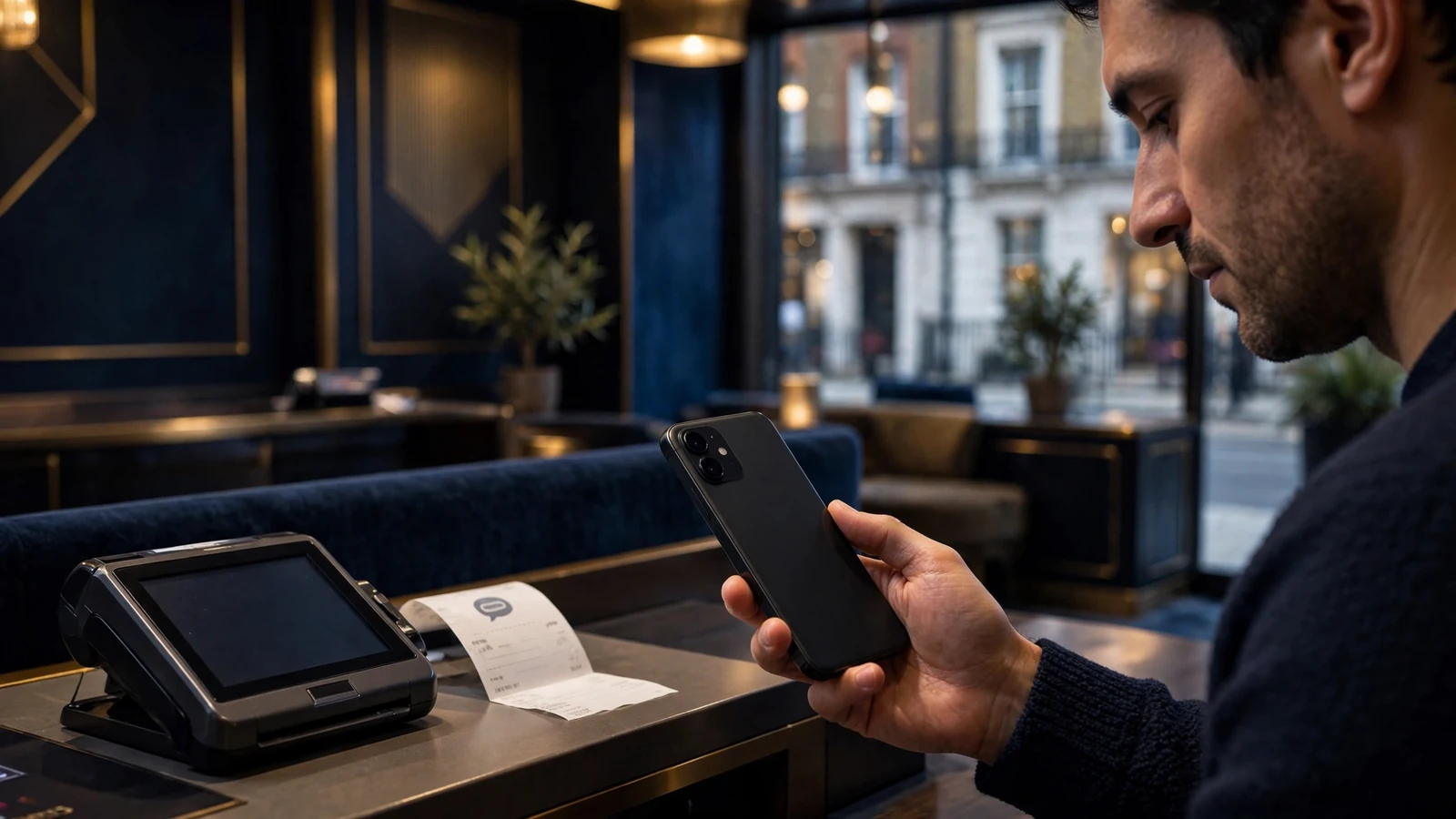
Payforit is built around a mobile phone, not simply around the idea of paying for something online. At a casino cashier, the process links the deposit to a mobile number: Payforit is selected, the number is entered, and a confirmation code arrives by SMS. The code must then be submitted before the deposit is made. The handset is both the point of entry and the place where the transaction is confirmed.
That design helps explain why Payforit is generally reserved for mobile players. A phone can receive the confirmation message while the casino account is open on the same device, so the steps sit close together. The player moves from the cashier to the messages app and back again. It is a small choreography, with the phone doing the work of both screen and confirmation channel.
The sequence is simple in outline, though it depends on each step matching the last. The mobile number has to be entered into the casino’s payment form; the message must reach that number; and its code has to be returned to the cashier. The SMS is not decorative. It is the point at which the handset holder confirms the transaction.
This is one reason that “pay by phone” can sound more effortless than it is. The device removes the need to type card details into that particular deposit form, but it does not remove the need to move between screens or read and enter a code. A message may be easy to find, yet the payment still pauses if the phone is not to hand, the wrong number was entered, or the code is not submitted. Convenience here is a matter of proximity, not magic.
On a mobile casino, the cashier and the confirmation message occupy the same small territory. That can make the flow feel direct: open the deposit page, choose Payforit, enter the number, check the incoming SMS, then return to complete the step. The sequence is tied to the handset rather than to a separate payment card kept nearby. The distinction is practical, but also revealing. Digital payments often promise to make money invisible; Payforit makes the phone visible again.
A desktop computer creates a different arrangement. If the cashier is open on a computer while the confirmation arrives on a phone, the transaction involves two devices and a handoff between them. That does not alter the steps themselves, but it changes their rhythm: the computer displays the form while the handset receives the message. Since Payforit is generally intended for mobile players, the phone-based experience is the one the method most naturally fits. It is not a universal payment button that can be assumed to work identically wherever a casino account is open.
The phone also becomes part of the player’s sense of control. A confirmation code arriving by SMS gives the handset holder a moment to recognise that a payment is being attempted before completing it. That pause is modest, but meaningful: the transaction is not finished merely because a button was pressed in the casino cashier. The code has to be sent back through the process. A few seconds of friction.
There is a cultural history in that design. Phones were once mainly instruments for calls and messages; then they became wallets, tickets, maps and portals into services that used to require a desk. Payforit belongs to the period when a mobile number could stand in for a more elaborate payment credential. Its logic is still recognisable: use the device already in hand, send a confirmation to it, and keep the process close to the screen where the purchase began. The method makes the handset less like a window onto the internet and more like a small piece of payment infrastructure.
For a mobile casino player, that closeness may be the chief appeal. The deposit starts and is confirmed through the same personal device, without making a separate card form the centre of the process. Yet the arrangement also makes the phone essential. If the handset cannot receive or display the SMS, the confirmation step cannot be completed as designed. The casino account may be available on another screen, but Payforit remains oriented towards the mobile user and the number entered into the cashier.
Payforit Deposit Process
Selection
Select Payforit at the casino cashier and enter your mobile number.
Confirmation
Wait for the confirmation code to arrive via SMS on your handset.
Submission
Submit the received code back into the casino's payment form to complete the deposit.
This is why a mobile phone bill casino deposit is best understood first as a device-led experience. The important detail is not that the casino happens to fit on a small screen; it is that the payment procedure depends on the phone number and an SMS confirmation. The handset is not merely where the game appears. It is part of how the deposit is authorised.
A phone-bill deposit is a small transaction by design. Specialist casino-payment reviews describe Payforit minimums in the £3–£5 range, with £30 as the upper amount commonly shown for a single deposit. Those figures are useful as a guide to the scale of the method, not as a promise about every cashier: the amount available at a particular casino can differ, and the cashier’s displayed terms are the ones that matter when a deposit is being considered.
There is a separate boundary behind that £30 figure. Regulatory guidance for phone-paid services sets a £30 ceiling per Payforit transaction. It is a limit on one transaction, not permission to treat a series of deposits as one larger payment or to find a way around the cap. The point is less glamorous than the adverts for instant play, but more important: phone billing was built for relatively modest charges, not as a substitute for a bank account.
That shape affects the experience of a casino deposit by phone bill in the UK. A player considering a larger amount cannot assume it will fit in one Payforit payment, while even a small intended deposit may fall below the operator’s minimum. The specific minimum, transaction maximum and any fee need checking in the live cashier before proceeding. A payment page can change, and a figure remembered from an earlier visit does not establish what the account can use today.
Fees deserve their own glance. A listed deposit value may not tell the whole story if a charge is added to the transaction. The cashier should make clear what will be taken, and the amount should be understood before confirmation. If the total is not clear, the sensible response is to pause rather than infer that the displayed deposit is the complete cost. Small payments can still be opaque; their size does not make the terms self-explanatory.
The same care applies to limits attached to the gambling account. A transaction cap and a personal financial limit are different things. The former restricts the size of a Payforit payment; the latter is an account control intended to let a customer set a boundary on their own gambling spend. They answer different questions, and one cannot stand in for the other. A £30 maximum transaction does not mean that £30 is an appropriate amount for an individual, nor does it define how much an account may be funded over time.
For new remote customers, the UK requirement is that the operator prompts them to consider setting a financial limit before their first deposit. That prompt belongs before money enters the account, not as a reminder added after play has begun. Account-level limit facilities must remain accessible afterwards, so the decision is not frozen at registration. The principle is notably different from a payment ceiling: a personal limit is about control over an account, rather than the technical size of one charge.
In practice, that makes the first deposit a moment when two checks meet. The cashier shows the current Payforit minimum, maximum and any fee; the account process presents the financial-limit prompt. Neither should be treated as decorative text on the way to the game. A deposit may be possible within the payment cap and still be inconsistent with a limit the customer has set. Conversely, an account limit does not change the payment service’s transaction ceiling.
The £3–£5 minimum reported by specialist reviews should also be read cautiously. It describes a range reported across services, not a universal entry price for every UK casino or every account. The live cashier may set a different minimum, and it may display an amount that cannot be altered. A search result or an old review cannot settle that question for a current deposit; the cashier is where the present terms appear.
This is why “small” is not the same as “simple”. The ceiling is firm at the level of a single Payforit transaction, while the minimum and fee are operator-specific details that must be checked at the point of payment. The customer-facing limit prompt adds another layer: a regulated operator must invite a new remote customer to consider a financial boundary before the first deposit, then keep account controls available. One cap governs the payment. The other belongs to the person.
“Pay by phone bill” describes where a casino deposit is charged, not a way of moving money back out of the casino. With Payforit, the amount comes either from a monthly mobile account or from prepaid Pay as You Go credit. Those are two different arrangements at the phone-company end, even though the casino balance receives a deposit through the same named payment service.
On a contract phone, a Payforit deposit is added to a future phone bill. The player is not paying from a bank card at the moment of the transaction; the charge is attached to the mobile account and appears as an amount to be settled with the bill. In that sense, the handset becomes a small credit channel, though not a general-purpose one. It moves a deposit towards the casino account and leaves the cost for the phone bill to record.
Pay as You Go works differently. There is no future monthly bill to carry the charge: the deposit is taken from prepaid phone credit already available on the account. The transaction therefore reduces that balance. If the credit is not there, it cannot serve as the source for the deposit. The distinction is simple, but it matters: one player sees a charge added to a later bill, while another sees existing credit used up.
Neither arrangement turns the phone account into a casino cash account. Payforit can send a deposit into a gambling balance, but it cannot be used to withdraw casino funds. A player may see money arrive in the casino account after making a phone-bill deposit; that does not mean winnings can travel back along the same route. The name suggests a neat circle between phone and casino. The actual movement is one-way.
That difference is easy to miss because everyday payment language tends to flatten the details. “Paid by phone” can sound like a single, complete method, as though the phone were simply another card. But a monthly contract and a prepaid balance are not the same source of funds, and neither source provides a route for casino withdrawals through Payforit. The phone company is involved in collecting or accounting for the deposit; it does not become the casino’s payout counter.
Deposits are added to a future phone bill as a deferred charge.
Deposits are deducted immediately from existing prepaid phone credit.
For a contract customer, the cost is deferred to the next bill rather than taken from prepaid credit. For a Pay as You Go customer, the cost is drawn from credit that has already been purchased. The casino-facing result is a deposit, but the household-facing result differs: one is reflected in a later mobile charge, the other in a smaller remaining balance. That is the practical meaning behind the phrase “pay by phone bill” in a UK casino context.
The distinction also changes what “spending from the phone” means. A contract customer is adding a charge to an account that will be billed later; a Pay as You Go customer is using up a balance held in advance. In neither case does the casino balance become a continuation of the phone account. Once deposited, the money sits within the casino account, subject to the operator’s account arrangements. Payforit’s role is confined to bringing funds in.
This is why a deposit method should not be judged only by the first movement of money. The deposit can be completed through Payforit while the later question of receiving casino funds remains separate. A successful incoming payment does not establish that the same channel can handle a payout. In this case, the boundary is explicit: Payforit deposits are possible, but Payforit withdrawals are not.
The word “bill” can be misleading for anyone using prepaid credit, since no monthly invoice is involved. The shared label covers both the contract customer’s future phone bill and the Pay as You Go customer’s existing credit. It is a convenience of naming, not proof that the underlying accounts operate alike. One settles later; the other spends what is already loaded.
So, for a UK casino, pay by phone bill means a deposit charged either to a future contract-phone bill or against prepaid Pay as You Go credit. It does not mean that the mobile account can collect casino winnings. Money enters by one of those phone-account routes; it leaves the casino account by a separate arrangement, not through Payforit. One-way traffic.
A casino’s name is not a standing promise that Payforit will be available to every account. Payment options belong to the operator’s live cashier, where they can depend on what is currently offered to that customer. A name in a review, an old page saved in a browser or a familiar logo on a casino’s home page cannot settle the matter.
A current specialist review reports Payforit at the cashiers of Kwiff, NetBet, JackpotJoy and Virgin Games. That is a useful starting point for identifying operators to investigate, not a substitute for checking the payment screen itself. Cashier information can change, and a general description of an operator’s services may not match the options shown when a deposit is being considered.
The distinction is small but important. “This casino accepts Payforit” sounds like a permanent feature, as if it were part of the building. In practice, the cashier is the point at which an advertised method becomes a usable option—or fails to appear. The payment list there is more relevant than a third-party summary, however recent that summary may be.
A practical check is straightforward: open the operator’s cashier and look for Payforit among the deposit methods before choosing how to fund the account. If it is not shown, the operator’s general support for phone payments elsewhere does not establish that it is available in that account’s current cashier. Nor does its presence at one named casino mean that another casino, even one with a similar audience or ownership, offers it.
The cashier is also where the decision becomes specific to the proposed deposit. Before proceeding, the current screen and account controls should be checked for the minimum deposit, maximum transaction value and any fees. Financial-limit controls matter too. A new remote customer must be prompted to consider a financial limit before making a first deposit, and account-level limit facilities must remain accessible afterwards. This is not decorative paperwork around the payment button; it is part of the deposit decision.
That makes the method’s availability only one part of the check. A payment option may be listed, yet its displayed conditions may not suit the amount or account settings in question. A review can point towards a cashier worth inspecting, but it cannot confirm the live terms shown there. The cashier has the final word. Quietly, and without ceremony.
The same caution applies when casino apps are involved. An operator’s name alone does not prove that Payforit appears in every version of its cashier. The relevant evidence is the payment choice actually presented by the operator at the time of deposit, together with its stated conditions. This keeps the search for phone-bill casinos grounded in what can be used, rather than in what a page elsewhere says ought to be available.
For UK players, the names reported by a specialist review—Kwiff, NetBet, JackpotJoy and Virgin Games—therefore serve as leads, not a ranked shortlist or a guarantee. Checking the current cashier at the chosen operator is the decisive step. It separates a reported option from an available one.
A slot appearing on a phone screen and a deposit being payable through the phone are separate arrangements. Mobile casino play describes where the game is accessed; Payforit describes one possible way to add money to an account. The shared handset can make the two seem like a single feature, but one does not automatically provide the other.
Payforit is generally reserved for mobile players. That makes the phone central to the payment route, yet it does not mean every casino that works on a mobile device offers Payforit. Nor does the presence of a mobile slot imply that its deposit can be charged to a phone bill or deducted from prepaid credit. A game can be available on a phone while the cashier offers different ways to fund the account.
The distinction matters because a casino’s mobile site or app is often the visible part of a much larger system. Games are presented there; payment options are set out separately in the account cashier. A slot may open and run on a handset without the cashier providing any phone-bill option. Conversely, a cashier may show Payforit for an eligible mobile account even though payment is not a feature of any particular slot.
The boundary is practical, not mysterious. The mobile game uses the casino account balance. Payforit, when available, is a way of funding that account through the handset. It is not a special version of a slot, nor a promise that a particular game accepts a particular payment method. The casino’s current cashier is where the payment choice becomes visible; the game lobby cannot settle that question by itself.
That distinction also keeps “mobile slots” from being mistaken for a payment category. A mobile casino can mean a site adapted to a smaller screen, an app, or simply games played on a phone. None of those descriptions establishes whether Payforit is offered. For a phone-bill deposit, the relevant detail is whether the account’s cashier presents Payforit, not whether the slot loads cleanly on the device.
There is a modest irony in the arrangement: the same phone may be the screen, the account gateway and the billing instrument, while each function remains separate. The handset gathers them together; the operator’s systems do not. A mobile slot is still just a game on the account. Payment support has to be established elsewhere.
Payforit occupies a particular corner of the casino cashier: money is charged through a mobile account rather than entered as a card payment or sent from an e-wallet. That distinction can matter more than the label “phone bill” suggests. It is one route among several, not a universal substitute for the methods attached to a gambling account.
A specialist review describes debit-card deposits at UK casinos as free and more widely accepted than Payforit. That makes a card a practical comparison, though the cashier at any particular operator remains the place to establish what is available and whether a charge applies. Visa and Mastercard are among the card brands named in current independent casino reviews. Their presence in a review is not a promise that every casino accepts both.
The broader payment landscape also includes e-wallets and prepaid options. Independent current reviews list Skrill and Neteller alongside PaysafeCard, as well as Visa, Mastercard and several major cryptocurrencies. Specialist reviews also identify Boku, e-wallets and Paysafecard as alternatives to Payforit. These lists describe reported options across casino sites; they are not a menu shared by every operator.
Each route asks for a different kind of access. A card draws on a banking relationship, an e-wallet uses a separate account, and a prepaid product starts with funds loaded elsewhere. Payforit instead places the deposit against a phone account or prepaid mobile balance. The cashier’s available choices therefore reflect more than a casino’s general willingness to take deposits: they depend on the payment arrangements actually offered for that account.
The contrast is useful when a phone-bill option is absent, or when another method better fits the way an account is funded. It is less useful to infer availability from a familiar brand name. A review can provide a starting point, but payment arrangements change, and the live cashier is the operative record before a transaction.
There is no single best route in the abstract. A card may offer broader acceptance; Payforit may suit someone who wants the charge handled through a mobile account; an e-wallet or prepaid method may serve a different funding preference. Those are differences in structure, not guarantees of convenience or eligibility. The cashier is a narrow window onto the operator’s current arrangements. Better than guesswork.
A phone network’s name can look like the missing key to a pay-by-phone deposit. Searches for Vodafone, Three or giffgaff often reflect that hope: if the handset uses a familiar network, surely the payment should follow. But a network name alone does not establish that Payforit or Boku is available at a particular casino, or that the account’s tariff permits the charge.
The practical test is the casino’s live cashier. Payment options can differ between operators, and a method described elsewhere may not appear when a particular account opens its deposit page. Network arrangements and tariffs also matter. A contract phone and a prepaid account do not necessarily behave alike, and a network may apply its own conditions or charges. The label on the handset is only one part of the transaction.
Boku adds a confirmation step. After the deposit is started, an SMS asks for approval; the funds do not move until that confirmation is submitted. This is not merely a notification to ignore or a receipt arriving afterwards. It is part of the payment itself. If the message does not arrive, or the confirmation is not completed, the deposit may not proceed.
There can also be a network fee. Where one applies, the phone account or prepaid credit must cover both the deposit and that additional charge. A balance sufficient for the casino amount alone may therefore fall short. The amount and presence of any fee can depend on the network and tariff, so a blanket promise that a named provider is fee-free would be unreliable.
Before confirming a deposit, the cashier should be checked for its current minimum, maximum transaction value and fees, along with the account’s financial-limit controls. These details are not safely inferred from a network’s branding or from a general payment guide. A specialist review may describe what it found at the time of checking, but the operator’s current cashier is the more relevant place to confirm what is available now.
This distinction matters especially for Vodafone, Three and giffgaff users. None of those names guarantees that a casino accepts phone-bill payments through that network; nor does the absence of a network-specific label prove that every route is unavailable. The cashier and the tariff decide the matter together.
A small distinction. A network is not a cashier.
The rules draw a firm line around credit cards. Remote gambling operators must not accept them for gambling, and routing a card payment through a money service business does not make it permissible. A payment route cannot be used to disguise the source of the funds.
A phone-bill deposit is a different arrangement: Payforit charges the amount to a monthly phone account or takes it from prepaid Pay as You Go credit. The fact that a monthly charge appears on a later bill does not turn it into a credit-card payment. What matters is the payment source and how the transaction is handled, not simply when the charge is settled.
The boundary matters because paying in and cashing out are separate operations. Payforit can put funds into a casino account, but it cannot carry winnings back out. A specialist casino review advises checking whether a selected deposit method is also offered for withdrawals; that detail should be confirmed in the live cashier rather than assumed from the deposit screen. A familiar logo is not a payout promise.
Before a deposit, the account’s available payout routes, any outstanding identity checks and the operator’s current terms all deserve attention. These conditions can determine whether a withdrawal can be requested and which verified route the operator will accept. Withdrawal arrangements vary by operator and payment method, so a general description of phone-bill deposits cannot settle them.
This is also why a deposit option should not be treated as a universal payment channel. The UK Gambling Commission’s rules govern what licensed remote operators may accept, while the casino’s own cashier sets out the routes available to an account. The two questions are distinct: whether a payment is permitted, and whether that operator supports it for a particular transaction.
A small payment in is still money that may later need a different route out. The distinction is regulatory as well as practical.
A phone-bill deposit can change the promotional picture even when the intended play is on slot games. Specialist reviews of UK casino offers report that most casinos exclude Payforit deposits from welcome bonuses and other promotions. The important distinction is the funding route, not the game selected: a slot deposit made through Payforit may leave the account outside an offer’s qualifying terms.
That can matter at the point when a new account is opened. A welcome offer may look like part of the casino’s general invitation, while its conditions treat payment methods differently. Payforit is one of the methods commonly named as ineligible in specialist review coverage. The offer’s headline and its deposit rules are therefore not necessarily the same thing.
The same caution applies beyond welcome offers. A casino may have separate promotions, and eligibility for one does not establish eligibility for another. “Other promotional offers” is not a single set of rules: each offer has its own terms, and those terms determine whether a Payforit-funded balance qualifies. A slot player should not assume that a deposit accepted by the cashier also counts towards a promotion.
There is a small but useful distinction here. A casino can accept a phone-bill deposit for ordinary play while excluding it from an offer. Payment acceptance and promotional eligibility answer different questions. The first concerns whether funds can be added; the second concerns whether the deposit satisfies the conditions attached to a bonus.
For anyone considering phone bill slots in the UK, the practical check is the promotion’s current terms before depositing. Look for wording about excluded payment methods and Payforit specifically, rather than relying on a banner or general welcome message. If the method is excluded, the deposit may still be usable for play, but it should not be treated as a qualifying promotional deposit.
The offer is not the terms.
When considering a UK casino that accepts phone-bill payments, check how withdrawals are handled as well as how you plan to deposit. This list highlights the payout timing available for each operator.
Zombillion
Zombillion lists a payout speed of 1–3 business days.
Amunbet
Amunbet lists a payout speed of 1–3 business days.
Britsino
Britsino lists a payout speed of 1–3 business days.
Chanze
Chanze lists a payout speed of 1–3 business days.
SpinFormula
SpinFormula lists a payout speed of 1–3 business days.
Dieselwin
Dieselwin lists a payout speed of 1–3 business days.
NightLuck
NightLuck lists a payout speed of 1–3 business days.
Jetsetspins
Jetsetspins lists a payout speed of 1–3 business days.
x3bet
x3bet lists a payout speed of 1–3 business days.
WinBeast
WinBeast lists a payout speed of 1–3 business days.
A Payforit top-up begins in the casino cashier. After selecting Payforit, the player enters a mobile number; a confirmation code arrives by SMS and must be submitted to authorise the deposit. The money can then be used in the casino account, but the route stops there.
Before a first deposit, a new remote customer must be prompted to consider setting a financial limit. The operator must also verify the customer’s age before allowing funds to be deposited. These checks belong to the account, not to the phone transaction, and completing an SMS confirmation does not replace them.
Getting winnings out is a separate arrangement. Payforit cannot return casino funds to a phone bill or prepaid balance, so a player depositing this way needs another payout route. The casino’s cashier should be checked before the top-up: it shows which withdrawal methods are available for that account, along with their current limits, fees and processing information. Those details can change, and a deposit method should never be assumed to double as a withdrawal method.
The available route also has to match the account holder’s information. Any outstanding identity checks and the operator’s current terms matter when a withdrawal is requested. A debit card, bank transfer, PayPal or an e-wallet may be offered by a UK-licensed casino, but availability depends on the operator and the live cashier; none is guaranteed merely because Payforit accepted the deposit.
The sensible sequence is therefore plain: confirm the deposit, then check how winnings can be paid before relying on the balance. The handset takes the money in. It does not take it back out.
Usually not: most UK casinos exclude Payforit deposits from welcome bonuses and other promotions.
Yes. Payforit is capped at £30 per transaction, though a casino cashier may show a lower maximum.
No. Payforit is available at some operators, including Kwiff, NetBet, JackpotJoy and Virgin Games.
The maximum is £30 per transaction. Check the casino’s live cashier for its current deposit terms.
Payforit cannot be used to withdraw casino funds. UK-licensed casinos may offer withdrawals by debit card, bank transfer, PayPal or an e-wallet; check the live cashier for the available method and limits.
Usually not. Most UK casinos exclude Payforit deposits from welcome bonuses and promotional offers.